


In a joint conference, experts from Bayer and Siemens Healthineers discussed trends in imaging and new possibilities for enhancing patient outcomes in cancer care.
In a hurry? Here are the key points to know:
- A Century of Innovation:Bayer celebrates 100 years of contrast media, highlighting a transition from traditional diagnostic imaging to “Intelligence-driven” personalized care through the integration of AI platforms and smart injection systems.
- Clinical Impact on Oncology:Advanced MRI protocols using hepatobiliary contrast agents are now essential for non-invasive “virtual biopsies” and real-time treatment monitoring in HCC and liver cirrhosis, directly guiding surgical and immunotherapy decisions.
- Technological Synergy:Siemens Healthineers and Bayer are collaborating to bridge the gap between diagnosis and therapy. Key tools like the MyNeedle Companion and syngo DynaCT from Siemens Healthineers are standardizing interventional oncology, allowing for more precise, low-dose, image-guided tumor treatments.
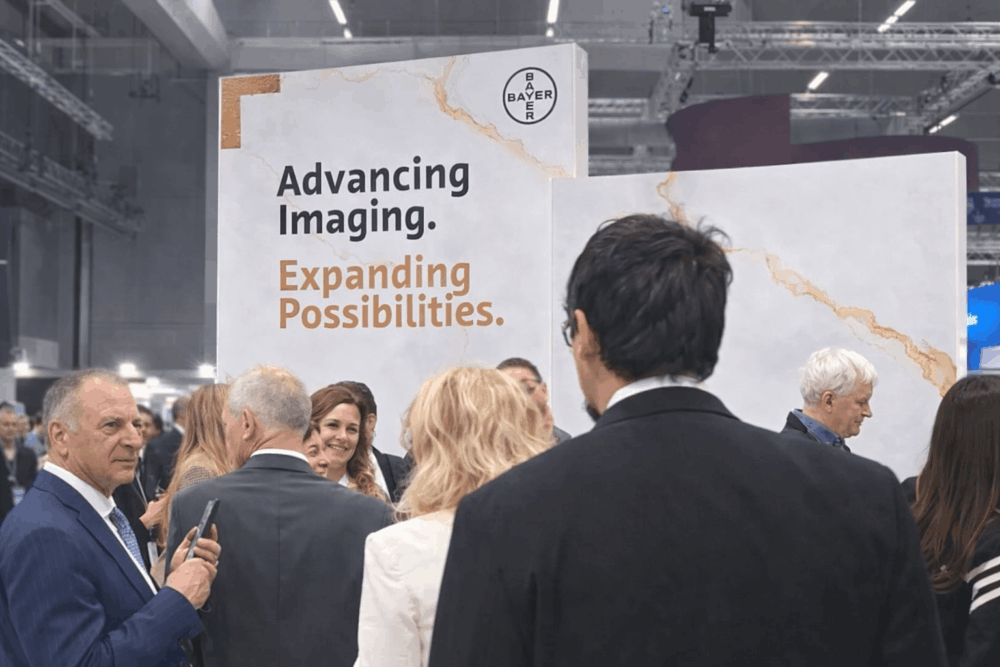
During ECR 2026, Bayer hosted a panel discussion that took invited media guests on a journey through the evolution and importance of radiology in the medical field. In close partnership with Siemens Healthineers, progressing simultaneously in their respective fields of innovation, the panel included experts from both companies, accompanied by an imaging specialist with clinical expertise.
The speakers included:
- Dr. Peter Seidensticker, Head of Medical Affairs Radiology, Bayer
- Dr. Ahmed Ba-Ssalamah, Department of Biomedical Imaging and Image-guided Therapy, Medical University of Vienna, Austria
- Dr. Michael Scheuering, Head of Interventional Radiology, Siemens Healthineers
From Images to Intelligence: A Century of Contrast
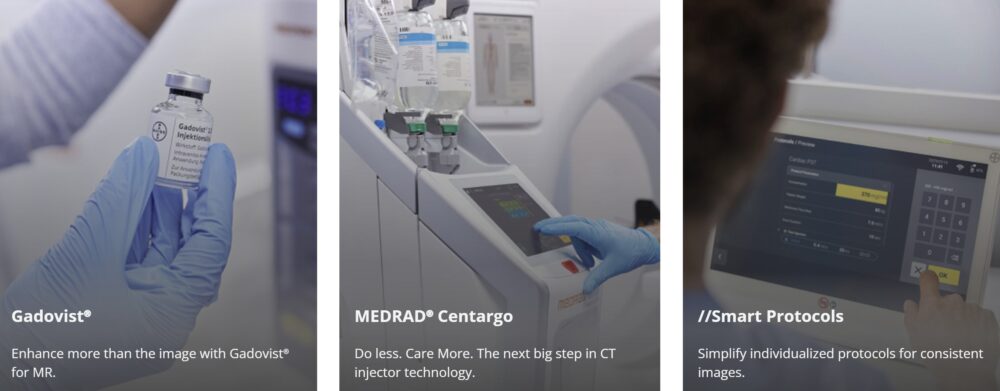
Opening the session, Dr. Peter Seidensticker traced Bayer’s trajectory from its foundational roots to its current role as a data-driven leader in radiology. Bayer’s legacy in the field began a century ago with the development of its first contrast media, a milestone that transformed the invisible into the visible. Over the decades, the company expanded its portfolio beyond chemical agents, notably entering the hardware space with its industry-leading injection systems. This evolution from a pure pharmaceutical provider to a device and software innovator marks a shift toward a more holistic, integrated approach to diagnostic imaging.
Today, Bayer is focused on moving “from images to intelligence.” Dr. Seidensticker emphasized that the future of oncology care lies in the synthesis of high-quality imaging, precision delivery via smart injectors, and AI-driven analysis to facilitate personalized patient pathways. By integrating these elements, radiology moves beyond mere detection into the realm of predictive diagnostics and therapy monitoring. As Dr. Seidensticker noted:
“We are not just looking at pictures anymore; we are looking at data that allows us to tailor the treatment to the individual patient, ensuring that the right therapy is delivered at the right time.”
READ OUR INTERVIEW with Dr. Konstanze Diefenbach, Head of R&D Radiology at Bayer, and Dr. Erin Bowman, Medical Affairs Lead for Molecular Imaging at Bayer.
In January 2026, Bayer announced its expansion into molecular imaging with the acquisition of Attralus, Inc., a clinical stage biopharmaceutical company focused on developing medicines and diagnostics for systemic amyloidosis. In our interview with Dr. Diefenbach and Dr. Bowman, we discuss the two investigational molecular imaging agents for the diagnosis of cardiac amyloidosis, from Attralus.
Precision Diagnostics in Oncology: The Clinical Perspective
Dr. Ahmed Ba-Ssalamah provided a compelling clinical perspective on how advanced imaging modalities are reshaping the management of complex cases, particularly in hepatobiliary oncology. He highlighted the critical role of multi-parametric MRI and gadolinium-based contrast agents in differentiating between benign and malignant lesions in patients with liver cirrhosis. Through the use of hepatobiliary-specific contrast agents, clinicians can now achieve a level of visibility that was previously unattainable, allowing for the detection of early-stage hepatocellular carcinoma (HCC) and the accurate mapping of tumor vascularity.
In the modern oncology workflow, imaging is no longer a secondary tool but the primary guide for surgical and systemic interventions. Dr. Ba-Ssalamah detailed how specialized imaging protocols enable “virtual biopsies,” reducing the need for invasive procedures while providing essential information on tumor progression or response to immunotherapy. This shift is fundamental to the multidisciplinary approach required for cancer care. Highlighting the weight of these diagnostic tools, Dr. Ba-Ssalamah stated:
“The imaging is influencing the decision for the treatment… the image guides us, and that is an early assessment for the treatment response, and we can detect the recurrence and the progression.”
Bayer’s low-dose MRI contrast agent gadoquatrane received its first approval worldwide under the brand name Ambelvist in Japan as of March 23, 2026. The product delivers the lowest gadolinium (Gd) dose of all macrocyclic MRI contrast agents, with a 60% reduction per procedure compared to current options on the Japanese market, while maintaining image quality.

Navigating the Interventional Frontier with Siemens Healthineers
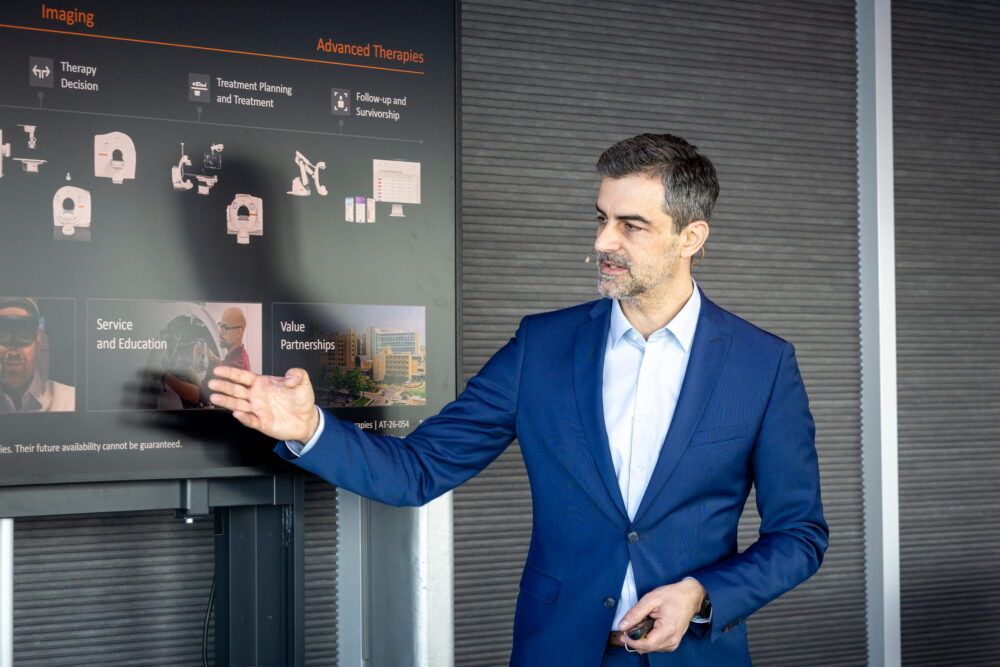
Bridging the gap between diagnosis and therapy, Dr. Michael Scheuering of Siemens Healthineers presented the company’s “holistic approach” to the cancer pathway. Central to this strategy is the integration of image-guided interventions that allow for minimally invasive treatments with high precision. Dr. Scheuering introduced several key innovations designed to streamline these workflows, most notably the MyNeedle Companion. This universal interface supports needle-based interventions across different modalities, such as CT and Angiography, reducing complexity for the radiologist and increasing accuracy for the patient.
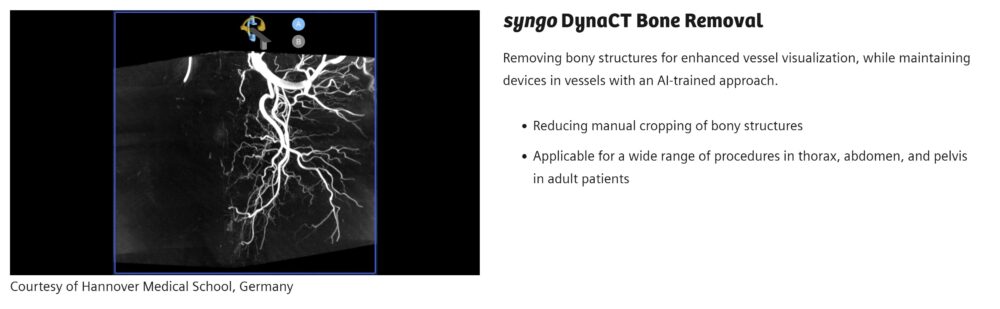
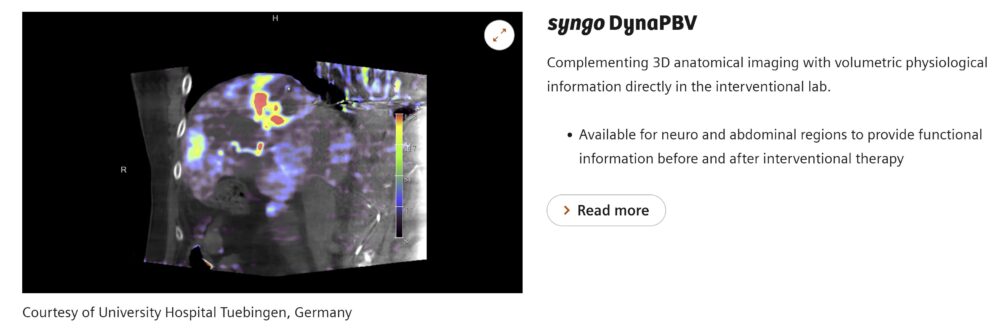
Further enhancing the capabilities of the interventional suite, Dr. Scheuering highlighted syngo DynaCT, which provides CT-like cross-sectional imaging directly on the angiography system, and Optiq AI, a technology that uses a structure-guided power control to ensure high image quality at the lowest possible radiation dose. OPTIQ AI delivers constant image quality defined by CNR in support of the ALARA principle, independent of patient or C-arm angulation.
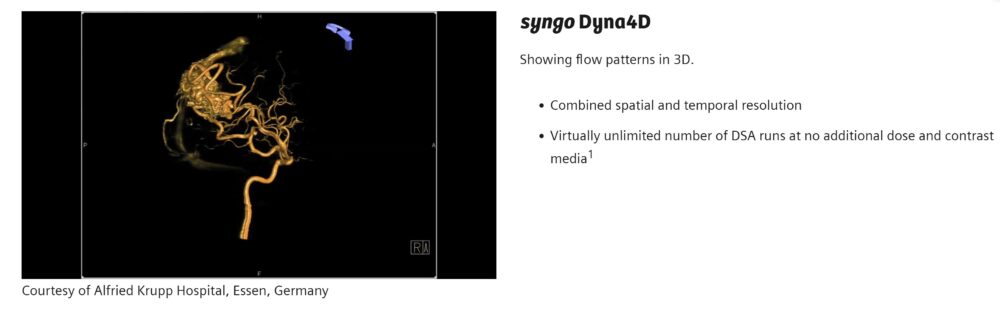
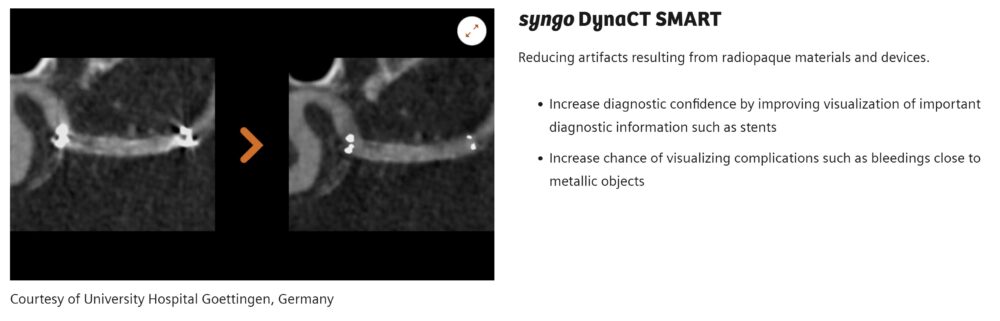
“We all breathe, we all have a heartbeat, we all move. During an intervention, this is difficult. It might cause artifacts in the images. [Our technology] corrects motion in 3D… providing more accuracy. And this results in a more successful procedure.”
- syngo DynaCT: To overcome the challenge of physiological motion such as breathing or heartbeats, syngo DynaCT (specifically through its new motion-correction technology) provides high-resolution 3D imaging by eliminating artifacts, ensuring that procedural planning and navigation are accurate without the need for repeated scans.
- Optiq AI: By utilizing artificial intelligence to “denoise” and sharpen real-time 2D fluoroscopy, Optiq AI enhances visual clarity and reduces image noise, allowing physicians to navigate catheters and inject materials with significantly higher precision and safety.
These tools are part of a broader push toward “Interventional Oncology,” where software applications like CT-Guided Interventions allow for real-time navigation during tumor ablation or embolization. By combining high-resolution imaging with advanced guidance software, Siemens Healthineers aims to make complex procedures more predictable and accessible globally.
NOTE: Siemens Healthineers launched its new ARTIS angiography portfolio on Thursday, March 5, at 10:30 am during ECR.
Did you miss our article from WHX on Siemens Healthineers? > Redefining MRI Imaging: Inside the Magnetom Flow Platform.