


By Kate Dee, MD | Founder & CEO, Medspa Board | Author, Med Spa Mayhem
In a hurry? Here are the key notes to know:
- Explosive growth is outpacing regulation: The U.S. medical aesthetics market is projected to approach $100B by 2030, but weak oversight has allowed widespread compliance failures such as unlicensed injectors, absentee medical directors, and illegal clinics—creating serious patient safety risks.
- Innovation is accelerating across injectables, devices, and AI: Advances include new neurotoxin competitors to products like Botox and Dysport, collagen-stimulating injectables, RF microneedling and laser devices, and AI-driven facial analysis tools that help practitioners deliver more personalized, data-driven treatment plans.
- The industry is approaching a regulatory and professionalization inflection point: Federal enforcement against illegal injectable supply chains is increasing, patient sophistication is rising, and voluntary certification programs—such as those developed by Medspa Board—are expected to become key trust signals as governments consider stronger regulation.
The medical aesthetics industry has undergone a remarkable transformation in just a few years. The US aesthetic medicine market is estimated to be around $40 billion. It’s estimated to grow at an annual rate of 10-15%, making it close to $100B by 2030. With that growth has come extraordinary innovation: new injectable formulations, AI-powered consultation platforms, and biologics that harness the body’s own healing mechanisms. But rapid growth without commensurate oversight creates serious risks. As a physician who has spent a decade in aesthetic medicine, founded the Medspa Board national certification organization, and written extensively about the industry’s underbelly, I see both the tremendous promise and the very real dangers ahead.
Patient Safety and Compliance: The Industry’s Most Urgent Challenge
Back in 2023, the American Medical Spa Association estimated that there were close to 11,000 medspas in the US, but that does not include those under dermatologists, plastic surgeons, and most importantly, the illegal clinics run by non-licensed business owners or back rooms of hair salons. In my estimation, at least 20,000 medical spas are operating across the United States with almost no federal or state oversight. The core compliance problems are well-documented but stubbornly persistent: unlicensed injectors, absentee medical directors, and business structures designed to evade medical regulations. These aren’t edge cases — they are endemic.
The stakes are life and death. In 2023, a 47-year-old Texas woman died after an IV infusion at a medspa whose supervising physician worked over 100 miles away and whose injector had no valid license. As of April 2024, the CDC has reported 22 people in 11 states who experienced harmful reactions linked to counterfeit injectables from illegal online pharmacies — some marketed through social media platforms that normalize self-injection of unapproved products.
Medical aesthetics is a cash-pay industry with no insurer friction and demand driven by social media trends — conditions that embolden bad actors. A 2025 wave of FDA enforcement actions against 18 illegal injectable pharmacies operating from China, South Korea, the Netherlands, and elsewhere illustrates how global the supply-chain problem has become. Organizations like the Medspa Board are working to fill the regulatory vacuum with voluntary certification standards — verifying provider licensure, medical director engagement, legal product sourcing, and emergency preparedness — but legislative action remains overdue.
Injectable Innovations, AI Tools, and the Science of Skin Renewal
Against this sobering backdrop, the pace of genuine clinical innovation is remarkable. The neurotoxin landscape has expanded well beyond Botox and Dysport. A wider range of competing products have driven prices down and made neurotoxin treatments as routine as a haircut for many consumers. In the filler space, the shift toward combination approaches, adding collagen-stimulating injectables to traditional hyaluronic acid fillers, reflects a more sophisticated understanding of facial aging. The old paradigm of chasing volume loss with ever-more filler is giving way to protocols that address collagen architecture, skin thickness, and structural support simultaneously.
In energy-based devices, RF microneedling and non-ablative laser resurfacing have become workhorses of the modern medspa. They’re replacing older, less robust tightening methods by delivering controlled dermal injury that stimulates collagen remodeling with better safety profiles and less downtime. These technologies address what filler cannot: the progressive loss of collagen and elastin that causes skin to thin and sag. For patients seeking lift without needles or downtime, new technologies that combine radiofrequency with facial muscle stimulation offer modest but meaningful lifting for the right patients.
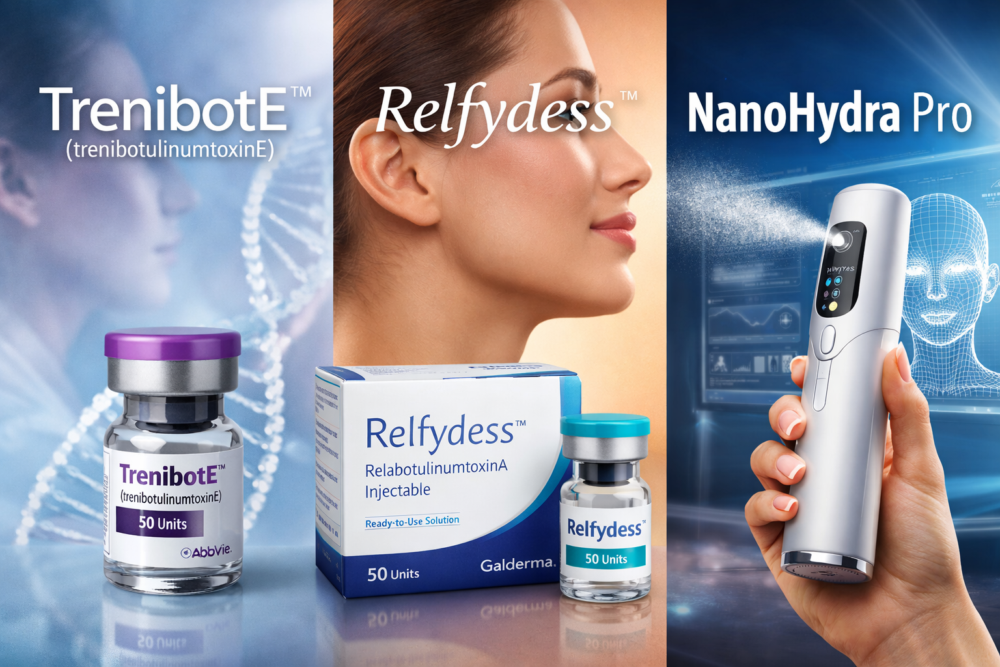
Next Gen of Aesthetics
- TrenibotulinumtoxinE (TrenibotE):Developed by AbbVie, this investigational botulinum toxin represents a new serotype-E neuromodulator designed for rapid onset and shorter duration treatments. The company announced the submission of a Biologics License Application to the U.S. FDA on April 24, 2025, supported by clinical data from more than 2,100 patients. If approved, it could become the first toxin of its kind, with effects beginning in as little as eight hours and lasting roughly two to three weeks. The product and related data were highlighted at aesthetic medicine meetings in 2026, including the IMCAS World Congress in Paris.
- Relfydess (relabotulinumtoxinA):Developed by Galderma, Relfydess is a ready-to-use liquid neuromodulator created using PEARL™ technology. The product launched in multiple European markets in 2025, with clinical data presented at scientific meetings such as TOXINS 2026 (Madrid, January 14–17, 2026) and IMCAS World Congress 2026 (Paris, January 29–31). The formulation eliminates the need for reconstitution and may produce visible results as early as one day after treatment, with effects lasting up to six months in many patients.
- NanoHydra Pro:Created by iNewMe, this AI-enabled skincare wand was first publicly introduced in December 2025 through product demonstrations and media coverage. The device uses sensors and ultrasonic technology to transform skincare serums into ultra-fine particles for deeper skin penetration and personalized treatment modes. The device has since been showcased in 2026 technology exhibitions such as CES, illustrating the growing convergence of AI, consumer devices, and professional aesthetics treatments.
AI-enabled Consultation Tools
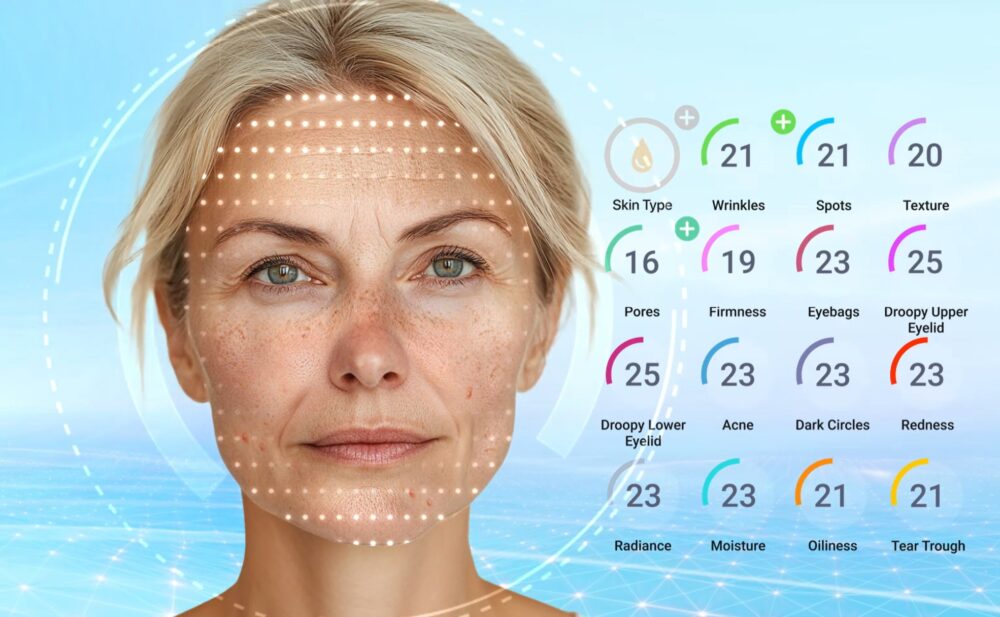
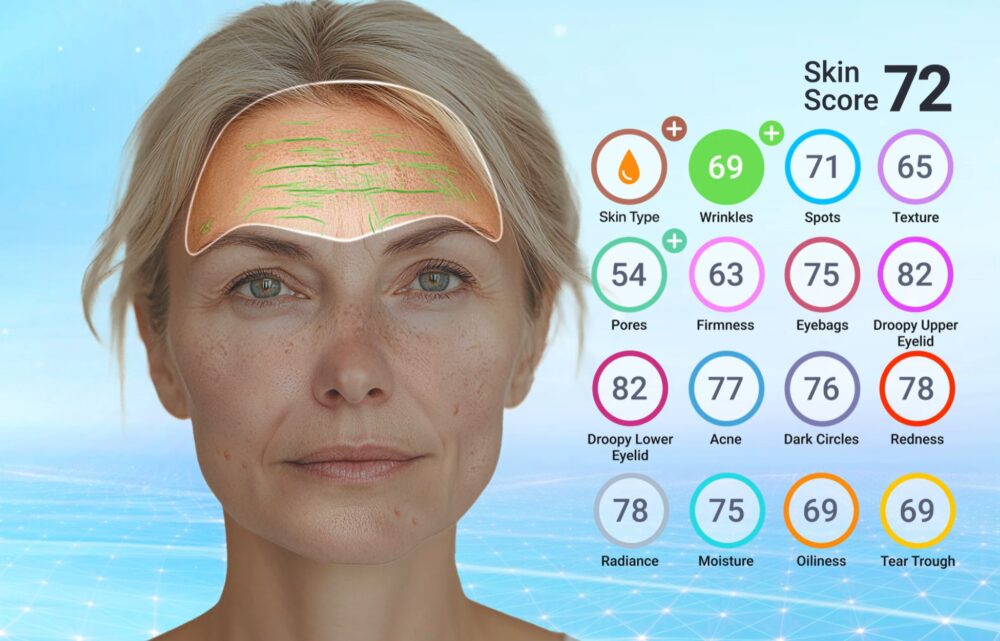
AI-enabled consultation tools round out the innovation picture. Facial mapping and skin analysis platforms now allow practitioners to objectively document baseline skin quality, track outcomes, and deliver data-driven recommendations. They’re replacing the subjectivity of a mirror with quantified metrics. The promise is better patient selection, more realistic expectations, and improved outcomes documentation, addressing some of the industry’s most persistent safety and liability gaps.
Perfect Corp.’s Skincare Pro exemplifies this point. It’s an AI-powered skin diagnostic platform designed for dermatology clinics and medical spas. Originally introduced for professional use on November 10, 2022, it’s built on deep-learning algorithms trained on more than 70,000 medical-grade images. The system analyzes facial photographs in seconds to detect multiple skin concerns, including wrinkles, pigmentation, texture, pores, and redness, producing a quantified “skin score” and visual facial mapping for patients.
The platform continued to evolve with new features, including a cloud-based CRM integration announced on March 12, 2024, enabling practitioners to store patient profiles, track treatment progress, and compare before-and-after results. The technology was showcased at Maison & Objet (Paris, January 16–20, 2025) and continues to appear at industry meetings through 2026, illustrating how AI-driven consultation tools are entering routine clinical workflows.
For practitioners, the system provides objective diagnostics, faster consultations, and data-driven treatment planning, helping clinicians document baseline skin quality and monitor outcomes over time.
Looking Ahead to 2026: Predictions for an Industry at an Inflection Point
Regulation will intensify. The FDA’s November 2025 warning letters to 18 illegal injectable websites and the DEA’s Operation Meltdown seizure of over 200 illegal online pharmacy domains in February 2026 signal that federal enforcement is taking the aesthetics supply chain seriously. Expect tighter scrutiny of injectable imports and growing pressure on online platforms to limit illegal product marketing. Consumer sophistication will rise. In today’s aesthetics, a patient arrives having researched treatments, compared devices, and read peer-reviewed summaries. Practices that lead with science and transparency will pull ahead of those that lead with marketing. The “overstuffed” filler era — filling ever-increasing volumes to compensate for laxity that actually requires structural correction — is finally receding as patients grow more attuned to natural-looking results.
Certification infrastructure will mature. Voluntary programs like the Medspa Board will become meaningful competitive differentiators as consumers grow more discerning, and several states are actively considering medspa-specific legislation. The industry’s best actors have every interest in helping that conversation succeed: a race to the bottom on compliance is a race to the bottom on patient outcomes — and on public trust.
My core philosophy has not changed since I opened my first medspa in West Seattle in 2014: nothing in aesthetics is worth any permanent harm. The technologies now available, and the science behind them, make this the most exciting moment in the field’s history. But that excitement is only valuable if it reaches patients safely — through qualified hands, with honest expectations and rigorous protocols. That is the standard worth holding, and building an industry around.
Dr. Kate Dee, MD
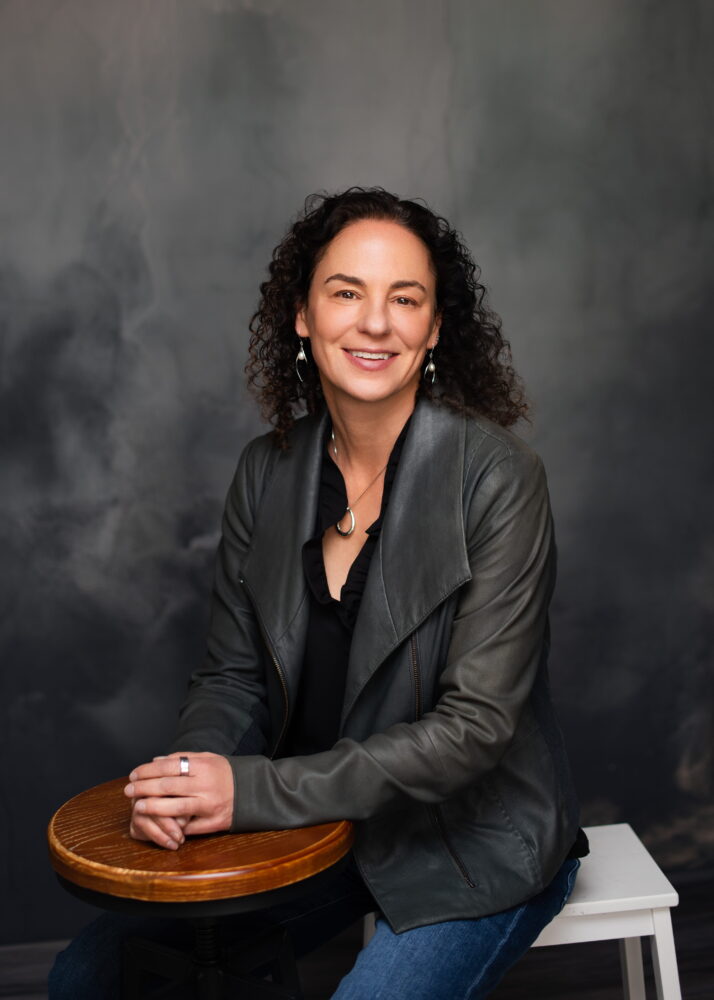
Kate Dee, MD is a board-certified radiologist, retired breast cancer specialist, and full-time aesthetic physician based in Seattle, Washington for the last 12 years. She is the author of Med Spa Mayhem: The Good, The Bad, and the Ugly Secrets of the Aesthetic Industry, host of the Med Spa Confidential podcast, and Founder & CEO of the Medspa Board (medspaboard.com). She can be reached at drkatedee.com.