



Bayer Pharma Media Days 2026 highlighted how advancing data, challenging gender-based disease misconceptions, and integrating digital innovation are transforming women’s healthcare into a more personalized and proactive field.
In a hurry? Here are the key takeaways:
- Women’s health is undergoing a paradigm shift from underreported, stigmatized conditions to data-driven, individualized care across the life course.
- Gender-based misconceptions in diseaseslike heart disease and lung cancer continue to delay diagnosis, reinforcing the need for sex-specific research and clinical frameworks.
- Digital health tools and targeted therapies—such as wearables and non-hormonal treatmentsare redefining early detection, symptom tracking, and personalized treatment in women’s health.
March 31–April 1, Bayer Pharma Media Days—Men and women are biologically different, and growing scientific evidence is pushing experts to better understand these distinctions to improve patient care. Signs of cardiovascular events, such as stroke, can present differently in women than in men, and treating the two as clinical equivalents risks overlooking critical physiological differences.
At this year’s Media Days, discussions spanned artificial intelligence in clinical workflows, advances in medical imaging, and emerging disease data, alongside a visit to Charité – Universitätsmedizin Berlin. Across sessions, a consistent theme emerged: women’s health remains under-recognized in both research and clinical practice. To explore this further, we spoke with Dr. Cecilia Caetano, Vice President, Global Medical Affairs, Women’s Health at Bayer Pharmaceuticals.
“When I worked as a clinician, I recognized Bayer as a leader in women’s healthcare and saw firsthand how its innovations impact patients’ lives,” Caetano said in an interview with MedicalExpo e-Magazine. Dr. Cecilia Caetano is board-certified in gynecology, gynecological oncology, reproductive medicine and obstetrics. “I wanted to be part of bringing forward the next generation of solutions for women.”
Dr. Cecilia Caetano joined Bayer in 2015, witnessing fourteen years of progress within the company and its impact externally. The media days provided Bayer experts with the opportunity to discuss novelties with international journalists. The company announced it has developed a treatment for vasomotor symptoms (VMS) associated with menopause or caused by adjuvant endocrine therapy (AET) related to breast cancer.
From Silence to Data: Understanding the Evolution in Women’s Health
During the event, one theme resonated across sessions and site visits: women’s health is no longer confined to reproductive care. It is a complex, lifelong continuum requiring dedicated data, dialogue, and innovation. In conversation with Dr. Cecilia Caetano, this evolution is as much cultural as it is scientific. Historically, women’s health has been shaped by silence.
“Women are so good at suffering in silence…that it sometimes really acts against us,” Caetano noted, reflecting on her years in clinical gynecology.


This silence has translated into systemic gaps, from underreported symptoms to underdeveloped treatment pathways. Menopause exemplifies this disconnect. Despite decades of available hormone therapy, two out of three women remain untreated, underscoring persistent barriers in awareness, access, and personalization of care.
Crucially, the narrative around menopause is shifting. Once stigmatized as a marker of aging and decline, it is increasingly recognized as a significant, and often lengthy, phase of life requiring active management.
“Menopause is a marathon, not a sprint,” Caetano emphasized, pointing to the variability of over 40 symptoms that can evolve over time for the same woman.
This variability challenges traditional one-size-fits-all approaches and highlights the need for individualized care strategies.
Scientific understanding has also matured. Early concerns surrounding hormone therapy—particularly following the Women’s Health Initiative study—led to widespread hesitation. Today, a more nuanced risk-benefit framework guides clinical decisions, emphasizing patient-specific factors rather than blanket prescribing or avoidance.
Beyond menopause, emerging evidence links symptoms such as hot flashes to broader cardiometabolic risks, reframing them from quality-of-life concerns to clinically relevant indicators. Together, these insights reflect a broader paradigm shift: from reactive treatment to proactive, data-driven, and patient-centered women’s healthcare.
Closing the Gender Gap in Medicine
A critical barrier to advancing women’s health lies in longstanding misconceptions that diseases manifest identically across genders. Presentations at Bayer Pharma Media Days, alongside expert commentary from Dr. Cecilia Caetano, highlighted how these assumptions have delayed diagnosis and compromised care, particularly in cardiovascular and pulmonary diseases. Cardiovascular disease remains a prime example.
“Until recently, women and men were treated as though no physiology separated them, but women are generally smaller than men and are different. The symptoms in men and women for a heart attack, for example, are different, and the training you need to provide to not only women to recognize symptoms but for healthcare providers as well, is different,” Caetano explained, underscoring how clinical frameworks historically failed to account for sex-specific physiology.

This oversight extends to symptom recognition: women experiencing cardiac events often present with atypical signs, contributing to underdiagnosis and delayed treatment.
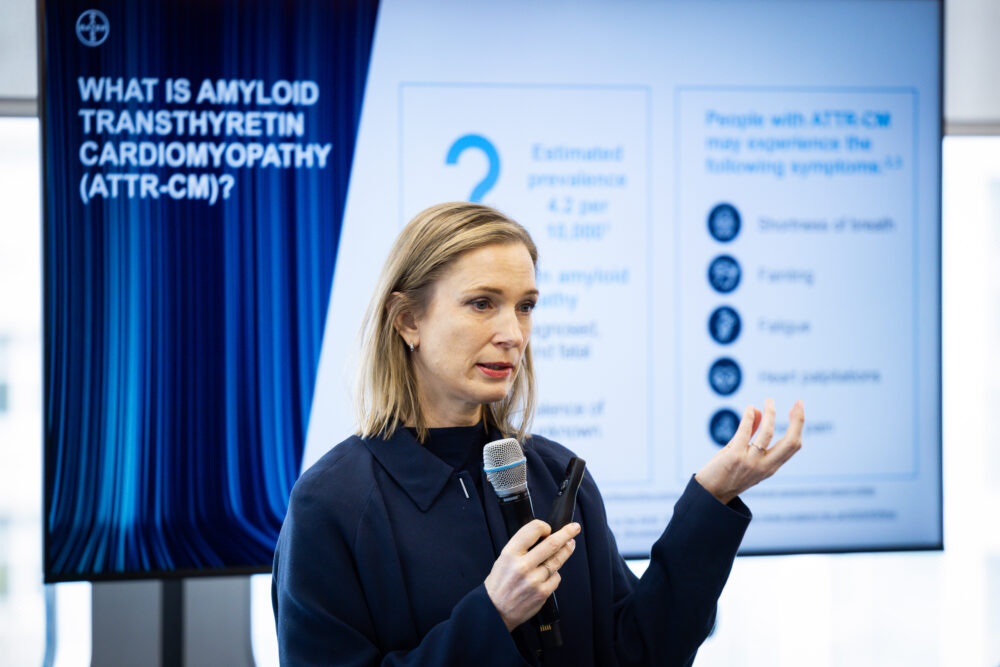
Insights from Dr. Willemijn Comuth on transthyretin amyloid cardiomyopathy (ATTR-CM) further challenge entrenched biases. Once considered predominantly a male disease, ATTR-CM is now understood to affect women at comparable rates. However, due to symptom overlap with more common conditions and a diagnostic delay that can span years, men and women remain underdiagnosed. Early manifestations, sometimes appearing a decade before diagnosis, emphasize the urgency of improved awareness and screening protocols.
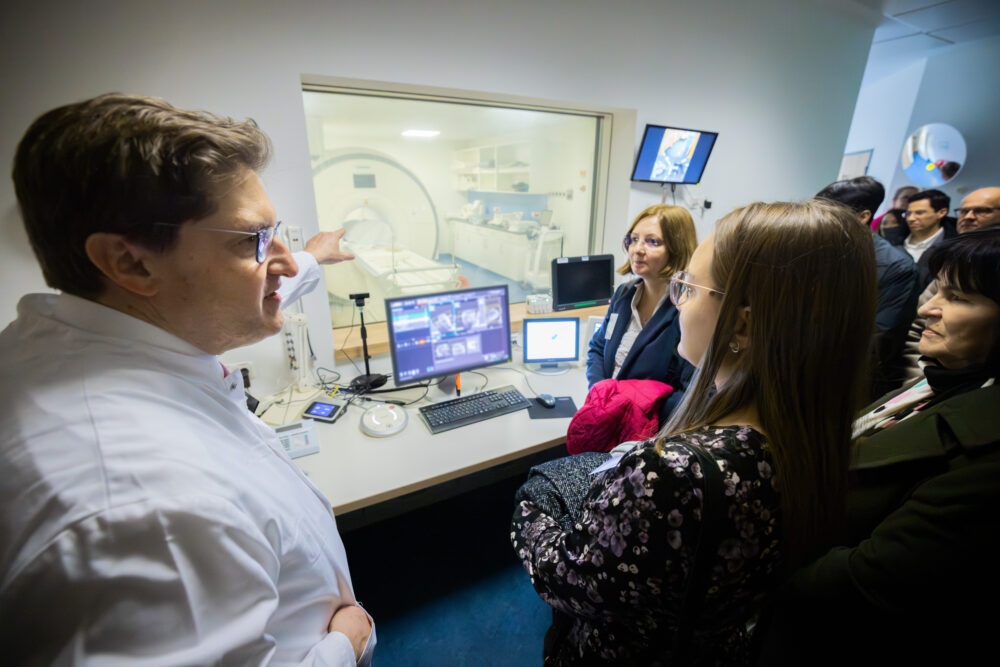
Parallel trends are evident in oncology. Data presented by Charité – Universitätsmedizin Berlin reveal that lung cancer incidence in women has now reached parity with men in Germany, making it a leading cause of cancer-related mortality among women. This shift has prompted the expansion of risk-based screening programs, incorporating AI-assisted imaging and structured patient selection tools to enable earlier detection.
Notably, technological integration is reshaping diagnostic pathways. Radiologists at Charité now operate in hybrid workflows combining artificial intelligence with dual-read validation processes, enhancing diagnostic accuracy while optimizing resource allocation.
These developments collectively underscore a central message: sex-specific data is not a niche consideration. It is fundamental to accurate diagnosis, effective treatment, and equitable care. Bridging this gap requires a systematic re-evaluation of long-held clinical assumptions.

Bayer’s Part in Smarter Women’s Health Innovation
Against this backdrop of evolving science and awareness, Bayer is positioning innovation as a key driver in closing persistent gaps in women’s healthcare. Central to this strategy is the integration of digital health technologies, targeted therapeutics, and collaborative partnerships.
One of the most forward-looking initiatives discussed by Dr. Cecilia Caetano is Bayer’s collaboration with Samsung, announced in 2024, which explores the role of wearable technology in capturing real-world health data. These devices provide continuous, individualized insights into symptoms such as sleep disturbances, physical activity, and physiological changes, data points that are often underreported in clinical settings.
“If you have a watch that captures the hours you don’t sleep…you really see, ‘this is happening,’” Caetano explained, highlighting how objective data can validate patient experiences and facilitate more informed clinical conversations.
Early observational studies from this collaboration have already demonstrated measurable declines in sleep quality during menopausal transition—patterns not observed in male cohorts—reinforcing the importance of sex-specific monitoring.
By 2030, the global population of women experiencing menopause is forecast to increase to 1.2 billion. In 2020, there were 2.3 million new cases of breast cancer globally, and nearly 70 percent of tumors found to be hormone-receptor positive, requiring anti-estrogen treatment that may trigger menopause symptoms.
Beyond diagnostics, Bayer is advancing therapeutic innovation. Recent developments in menopause treatment focus on non-hormonal, targeted mechanisms that address underlying biological pathways responsible for vasomotor symptoms and sleep disturbances. These approaches aim to expand treatment options for women who cannot or choose not to use hormone therapy, aligning with the broader goal of personalized care.
In cardiovascular health, Bayer’s partnerships, including initiatives with WomenHeart, emphasize education, early risk identification, and patient empowerment. Programs such as the “Understanding Her Heart” campaign seek to improve awareness of conditions like ATTR-CM while amplifying patient voices to accelerate recognition and diagnosis.
Artificial intelligence also plays an increasingly prominent role, supporting earlier detection of rare diseases and enhancing imaging workflows. Combined with digital risk assessment tools, these technologies are helping shift care models from episodic intervention to continuous monitoring and prevention.
Collectively, these initiatives reflect a strategic convergence of data, technology, and patient-centered design. This marks a new phase in women’s health innovation where visibility, personalization, and early intervention are paramount.