

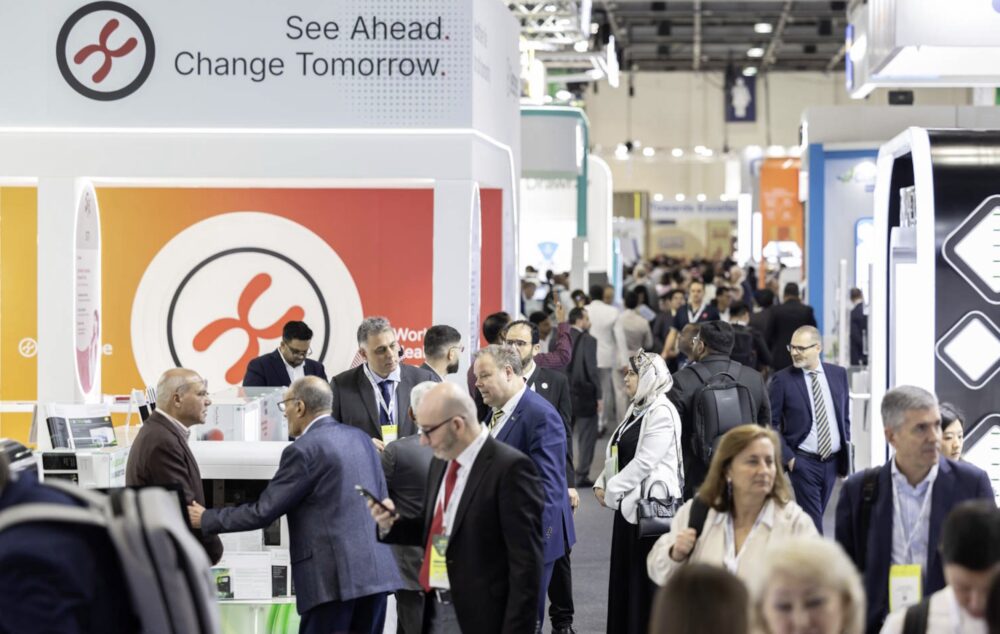

At WHX Labs, leaders in infectious diseases argued that while AI and digital innovation promise smarter hospitals, their true value will be measured by how well they strengthen antimicrobial stewardship and safeguard clinical judgment in the fight against resistance.
In a hurry? Here are the key notes to know:
- AI can reduce administrative burden but cannot replace judgment: Tools like speech-recognition documentation may restore time with patients, yet overreliance risks automated reassurance overtaking clinical reasoning.
- Interconnected systems bring both promise and vulnerability: Real-time data integration could shift care from reactive to predictive, but growing digital dependence increases exposure to cyberattacks and system-wide failures.
- Stewardship and human factors remain decisive: From diagnostic and antimicrobial stewardship to hand hygiene and bedside communication, outcomes still depend more on disciplined clinical decision-making and culture than on technology alone.
What will actually change inside hospitals over the next few years is not an abstract question for clinicians; it is a daily concern. At the AMR Leaders Summit during WHX Labs, a panel of infectious disease specialists, microbiologists and health system leaders, moderated by Najiba Abdulrazzaq, National Lead for Antimicrobial Resistance at the UAE Ministry of Health and Prevention; who was joined by David Livermore, Professor of Medical Microbiology at the University of East Anglia; Souha S. Kanj, Professor of Medicine and Infectious Diseases at the American University of Beirut Medical Center; and Steven M. Gordon, Chair of Infectious Disease at Cleveland Clinic Ohio, was asked to look ahead to 2028. The consensus was that while technology will transform hospitals, it will not do so in the way its advocates often suggest.
Much of the discussion returned to a familiar source of frustration: the legacy of digitisation itself. Electronic medical records were introduced to improve efficiency and coordination. Instead, they have come to dominate clinical life.
Electronic Medical Record for Effecient Documenting Gone Wrong
Doctors now spend a substantial share of their working day documenting care rather than delivering it, a shift widely blamed for rising burnout.
“We spend about 50 per cent of our time now in front of the screen,” Steven M. Gordon. The panellists argued for abandoning digital systems altogether, but several acknowledged that the first digital wave solved some problems while creating others.
Against this backdrop, artificial intelligence is being promoted as the next corrective. Steven Gordon, speaking from the perspective of a large US health system, described how speech-recognition tools that automatically document consultations have already changed his own clinical practice, allowing more time to focus on patients rather than screens.
“What I’m seeing now is that I can spend more time looking at the patient, as opposed to not,” Gordon added.
Used well, he argued, such systems could reduce clerical burden and restore some of the human elements of care. Used badly, however, they risk replacing clinical judgment with automated reassurance.
Smarter Hospitals or More Interconnected Healthcare Systems?
The panel framed the coming years not as a move towards “smarter hospitals” but towards more interconnected healthcare systems. AI, Gordon suggested, is beginning to link diagnostics, prescribing, outcomes and costs in real time. In theory, this could allow clinicians to see the likely consequences of a decision as it is being made – how long a patient might stay in hospital, what complications could arise and what the financial impact might be. The ambition is a shift from reactive medicine towards prediction.
That ambition, however, comes with vulnerabilities. David Livermore warned that hospitals are becoming increasingly dependent on complex and often fragile digital infrastructure. Recent cyberattacks and system failures, he said, have shown how quickly healthcare services can be disrupted at scale. As systems become more tightly interconnected, failures are more likely to cascade.
“He who claims to foretell the future lies,” Livermore said, refusing to say how will hospitals look like in 2028
The tension is especially acute in infectious diseases, where advances in molecular diagnostics have transformed practice. New multiplex tests can identify dozens of pathogens within hours.
“Sometimes people are ending up over-treating coloniser organisms,” said Souha Kanj.
While faster answers can save lives, there is an agreement that they can also create new problems. Highly sensitive tests frequently detect colonising organisms that are not causing disease, encouraging unnecessary treatment. Without careful clinical interpretation, she argued, diagnostic abundance risks overtreatment rather than precision.

Diagnostic Antimicrobial Stewardship to Optimize Antibiotic Use
This has given rise to a newer discipline: diagnostic stewardship. Just as antimicrobial stewardship aims to optimise antibiotic use, diagnostic stewardship asks when tests should be ordered, for whom and how results should guide decisions. Technologies that accelerate diagnosis must also embed guidance on when results should be acted upon – and when they should be ignored.
Stewardship itself, however, resists simple metrics. Counting antibiotic consumption may identify egregious misuse, Livermore added, but it struggles to define optimal care. In some cases, combination therapy or broader coverage may slow the emergence of resistance; in others, it may accelerate it. Decisions that protect future populations may conflict with immediate patient interests. There is no algorithmic shortcut through these dilemmas.
“What is the best stewardship? I don’t know the answer,” said Livermore.
If technology has limits, prevention remains stubbornly low-tech. Despite decades of innovation, hand hygiene continues to outperform most interventions in reducing hospital-acquired infections. Engineering decisions such as sink design, water flow and ventilation matter as much as pharmaceuticals. Surveillance, accountability and leadership culture often determine outcomes more reliably than access to the latest tools.
Automated Monitoring with AI
AI may still play a role here. Automated monitoring of hygiene compliance, wearable sensors that detect early deterioration and predictive alerts for sepsis could help target scarce resources. But panellists cautioned that such systems should augment, not replace, vigilance. Prevention succeeds when responsibility is shared, visible and enforced.
Perhaps the most striking consensus from the discussion was the enduring importance of human interaction. Clinical excellence depends on conversations- between laboratories and wards, junior and senior staff, clinicians and patients. Email alerts and dashboards cannot substitute for walking to the bedside or debating uncertainty face to face. Teaching, judgment and trust are learned socially, not downloaded.
The future of hospitals, then, is unlikely to be defined by technology alone. AI may remove drudgery, surface patterns and democratise access to expertise. But its value will be determined by whether it gives clinicians more time to care, to communicate and to think. In medicine, as in finance, the most dangerous illusion is that complexity can be automated away.