


A Covéa-supported transcranial photobiomodulation helmet enters double-blind clinical trials for dementia with Lewy bodies, aiming to standardize infrared light therapy in neurodegenerative care.
In a hurry? Here are the key points to know:
- The Fonds Clinatec has developed a digitally controlled, non-invasive near-infrared photobiomodulation helmet designed for double-blind clinical trials and home-based supervised use.
- A first randomized, double-blind study targeting dementia with Lewy bodies has begun in Strasbourg following ANSM validation.
- More than 150 devices are planned for production in 2026, signaling expansion toward broader neurological and psychiatric indications.
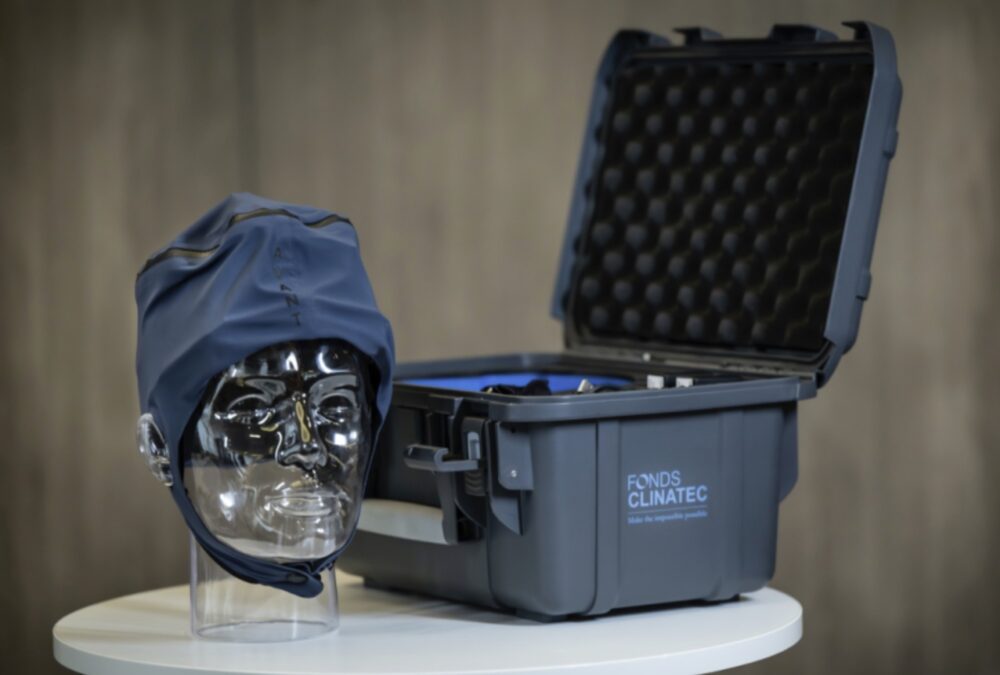
The Fonds Clinatec has unveiled a transcranial photobiomodulation (PBM) helmet designed to explore the therapeutic potential of near-infrared (NIR) light in a range of brain disorders. Supported by the Fondation Covéa, the device represents a significant step toward standardizing light-based neuromodulation within formal clinical trial frameworks.
Photobiomodulation relies on the controlled application of near-infrared light to targeted cerebral regions, aiming to modulate cellular metabolism and neuroinflammatory pathways without pharmacological intervention. Unlike earlier experimental PBM devices—often limited by imprecise dosing and heterogeneous protocols—this helmet has been engineered specifically to meet the demands of high-quality clinical research.
A Non-Invasive, Digitally Controlled Platform Designed for Rigorous Clinical Research
According to the February 3, 2026, press release, the system is non-invasive, ergonomic, and configurable depending on the pathology under investigation. Its design integrates electronic architecture capable of fine-tuned illumination control, ensuring stable and reproducible light delivery. Importantly, the device allows for double-blind study designs by maintaining strict control over emitted light parameters.
A distinguishing feature is its use of advanced digital skull twin modeling to simulate light propagation within brain tissues. This approach, developed in collaboration with the Commissariat à l’énergie atomique et aux énergies alternatives (CEA), aims to optimize dosimetry and anatomical targeting—two variables that have historically limited the reproducibility of PBM studies.
The helmet adjusts light intensity in real time and automatically verifies operational integrity before and during sessions. Embedded electronics record all treatment sessions and usage metrics, enabling traceability and protocol adherence. A dedicated software platform allows physicians to configure treatment parameters and remotely monitor patients, facilitating both in-clinic and at-home use under medical supervision.
The device complies with applicable international medical device standards and received regulatory validation from France’s national medicines and health products agency in December 2025, marking an important milestone toward translational application.

First Double-Blind Clinical Trial Targets Dementia with Lewy Bodies
The helmet’s first structured clinical evaluation is now underway at the Hôpitaux Universitaires de Strasbourg. Conducted in collaboration with Professor Blanc’s team, the double-blind trial focuses on dementia with Lewy bodies (DLB), a complex neurodegenerative disorder characterized by cognitive decline, motor impairment, sleep disturbances, and neuropsychiatric symptoms.
DLB affects hundreds of thousands of individuals in France alone and remains therapeutically challenging, with limited disease-modifying options. By targeting mitochondrial function and potentially enhancing neuronal resilience, near-infrared PBM is hypothesized to slow neurodegenerative processes, though robust clinical evidence remains limited.
The trial has been authorized by the French regulator (ANSM) and uniquely permits home-based treatment under medical oversight. This hybrid model could expand access while maintaining protocol integrity—an increasingly relevant feature in neurodegenerative disease management, where mobility and caregiver burden pose significant barriers.
The study is designed according to international standards for randomized, double-blind clinical trials. The device’s precise dose control and embedded monitoring systems are intended to reduce variability in light exposure, a known confounder in earlier PBM investigations.
By 2026, Fonds Clinatec plans to manufacture more than 150 medical devices and is already preparing a next-generation iteration of the helmet. The production scale suggests an ambition to expand clinical indications beyond DLB, potentially encompassing traumatic brain injury and certain psychiatric conditions, as referenced in the press materials.
Toward Standardization of Brain Photobiomodulation in Clinical Practice
Interest in infrared light as a neuromodulatory intervention has grown steadily in recent years, with exploratory research suggesting potential benefits in neurodegenerative disease, traumatic brain injury, and mood disorders. However, heterogeneity in wavelength selection, irradiance, treatment duration, and anatomical targeting has limited comparability across studies.
The Covéa-backed helmet seeks to address these methodological gaps by embedding dosimetric precision and digital modeling into the hardware architecture itself. Its ability to log session data, verify device performance automatically, and maintain double-blind integrity may help bring PBM research closer to pharmaceutical-grade trial rigor.
Crucially, the project is funded through philanthropic support rather than commercial venture capital. The Fonds Clinatec operates as a biomedical research center dedicated to neurodegenerative diseases and severe disabilities, working in partnership with the CEA and academic hospital systems. Fondation Covéa’s long-term sponsorship underscores the role of corporate philanthropy in de-risking early translational innovation.
From a clinical standpoint, several questions remain: optimal wavelength and irradiance parameters, cumulative dose thresholds, patient selection criteria, and long-term safety data. While PBM is considered low risk compared with invasive neuromodulation strategies, rigorous outcome measures—including cognitive scales, neuroimaging biomarkers, and functional endpoints—will be essential to determine therapeutic value.
If the ongoing DLB trial demonstrates safety and signal efficacy, the helmet could represent a scalable, non-pharmacologic adjunct in neurodegenerative care. The potential for home-based supervised treatment is particularly noteworthy, aligning with broader trends toward decentralized clinical models and chronic disease management.
For now, the Covéa–Clinatec initiative positions transcranial photobiomodulation at a pivotal juncture: transitioning from experimental neuromodulation concept to standardized investigational medical device. The results of the Strasbourg trial will likely shape the trajectory of infrared-based brain therapies in Europe and beyond.