

As France moves to loosen telemedicine regulations, Tessan is expanding its augmented teleconsultation model into tele-expertise, positioning pharmacy-based medical cabins as structured clinical interfaces rather than simple access points.
In a hurry? Here are the key notes to know:
- Teleconsultation with Clinical Depth: Rather than simple video visits, teleconsultation cabins equipped with connected diagnostic devices serve to bridge remote diagnosis and in-person examination.
- Integration into Health Systems: France has a growing ecosystem of telemedicine booths and kiosks since 2014 that are legally regulated and embedded into healthcare pathways, especially to address access gaps in underserved regions.
- Evolving Professional Roles: These instrumented teleconsultation spaces reposition pharmacies and other local providers as supportive clinical access points, requiring thoughtful alignment with coordinated care, data privacy policies, and professional acceptability.
Telehealth is not new. From early audiovisual psychiatric consultations at the Nebraska Psychiatric Institute in 1959 to remote physiological monitoring developed by NASA in the 1960s, the concept of distance medicine has evolved alongside communication technologies. In France, telemedicine entered the legal framework with the 2009 HPST law, but teleconsultations were only fully integrated into routine care and reimbursed nationwide in 2018.
Today, a new phase is emerging: augmented teleconsultation, where kiosks and cabins are equipped with medical devices, hence “augmented”. French company Tessan has deployed more than 1,600 pharmacy-based booths and kiosks, partnering with 400 physicians and reporting 700,000 teleconsultations in 2025 alone. In a recent interview, Antoine Ducrocq of Tessan outlined how the company intends to move beyond access-driven teleconsultation equipped with medical devices toward structured tele-expertise while maintaining clinical rigor, data security, and professional integration.
For medical professionals navigating evolving regulations and practice models, the key question is no longer whether telehealth is viable, but how it is structured and by whom.
Augmented Teleconsultation: Regulation, Access, and Clinical Framing
In France, although telemedicine was formally recognized in 2009, it was the 2018 reimbursement reform that catalyzed national uptake. The COVID-19 pandemic accelerated adoption further, embedding teleconsultation into routine primary care workflows.
But the expansion of teleconsultation in France cannot be understood without acknowledging the structural access crisis that underpins it. As Antoine Ducrocq notes in our interview, nearly 6 million people in France do not have a declared primary care physician, and millions more live in territories where accessing a general practitioner or specialist requires extended waiting times or significant travel. In certain departments, patients may wait several weeks for a routine appointment, while emergency departments increasingly absorb non-urgent cases due to a lack of upstream access.
This context reframes teleconsultation from a convenience tool to a structural necessity.
Yet teleconsultation alone has faced criticism: fragmentation of care, insufficient clinical examination, and risk of commodification. Ducrocq argues that poorly integrated telemedicine risks becoming “telemedicine disconnected from the healthcare system,” a model detached from coordinated care pathways and longitudinal follow-up.
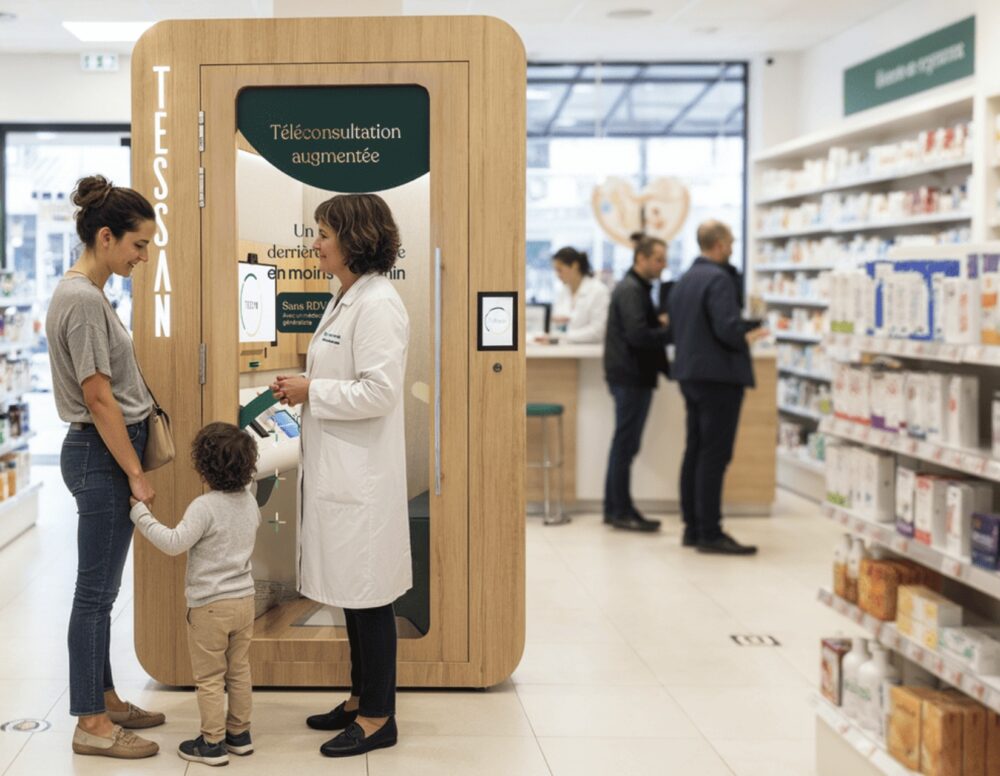
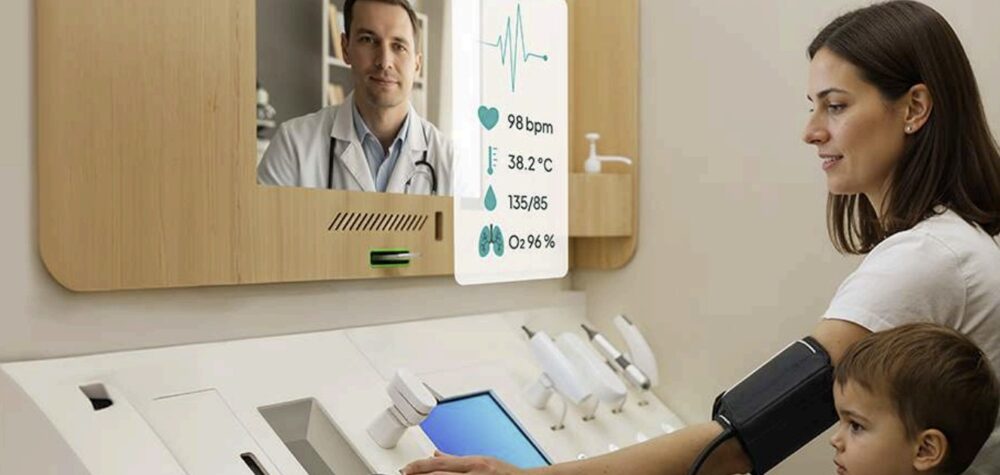
It is within this tension that what Tessan describes as augmented teleconsultation emerged: the integration of connected medical devices within supervised physical spaces such as pharmacies. Rather than relying solely on video exchange, “augmented” pharmacy kiosks and enclosed cabins equipped with devices allow remote physicians to access objective physiological measurements — blood pressure, otoscopy, dermatoscopy, and other parameters — restoring elements of the physical exam to the remote encounter.
According to Ducrocq, the objective is to reconcile access with structure. In a country where millions remain without a primary physician, pharmacy-based teleconsultation cabins function as geographically distributed clinical interfaces, not replacements for in-person medicine, but organized entry points into it.
The French government’s recent announcement to further loosen telemedicine constraints places renewed attention on quality safeguards. In underserved territories, these supervised, device-equipped cabins are positioned not as a “bonus” layer of innovation, but as a response to systemic strain, a way to expand access while preserving integration within the regulated care pathway.

Connected Devices, Clinical Quality, and Data Governance
The clinical legitimacy of augmented teleconsultation rests on three pillars: device reliability, procedural standardization, and data protection.
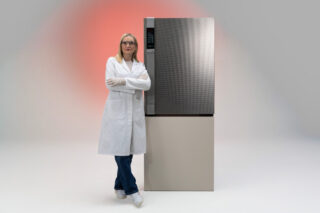
Tessan’s Premium cabin integrates six connected medical devices, enabling remote physicians to access parameters that approximate elements of in-office examination. The company highlights automated UV disinfection and opacity-controlled glass to preserve hygiene and confidentiality.
Ducrocq stresses that the objective is not technological novelty, but clinical robustness: the model is designed to ensure “a secure and structured environment for both the patient and the doctor.” This framing shifts the narrative from convenience to a controlled medical environment.
For healthcare professionals, the key issues are validation and interoperability. Device calibration, maintenance protocols, and training for pharmacy staff directly affect diagnostic reliability. Moreover, compliance with GDPR and French health data hosting requirements remains foundational. Augmented teleconsultation models must guarantee encrypted transmission, certified hosting of health data, and traceable consultation records integrated into existing care documentation systems.
Ethically, the presence of a physical, supervised space addresses one critique of direct-to-consumer telehealth platforms: the risk of decontextualized care. By embedding teleconsultation within a licensed pharmacy, the model reinforces a regulated healthcare intermediary, potentially reinforcing continuity rather than fragmenting it.
Professional Acceptability, Pharmacy Integration, and Economic Structure
Adoption among healthcare professionals depends on more than technology. It requires clarity of roles and economic sustainability.
In the Tessan model, the pharmacist does not act as a diagnostic intermediary but facilitates patient orientation, device usage, and coordination. This preserves medical responsibility while leveraging the pharmacy as a physical access point.
The economic structure must balance remuneration for physicians, investment costs for pharmacies, and reimbursement compliance. Ducrocq notes that scaling requires alignment with existing healthcare financing mechanisms rather than parallel, disconnected systems.
Tessan offers multiple formats, including its Premium cabin. As founder Jordan Cohen states:
“The Premium booth embodies the future of pharmacy healthcare: more modern, more comfortable, and more innovative than ever before.”
While design and patient experience are emphasized, the underlying strategic objective appears to be normalization of teleconsultation as a structured component of community-based care.
Professional acceptability also hinges on physician perception. When teleconsultation is supported by objective data streams and embedded in regulated environments, it is more likely to be viewed as complementary rather than competitive.
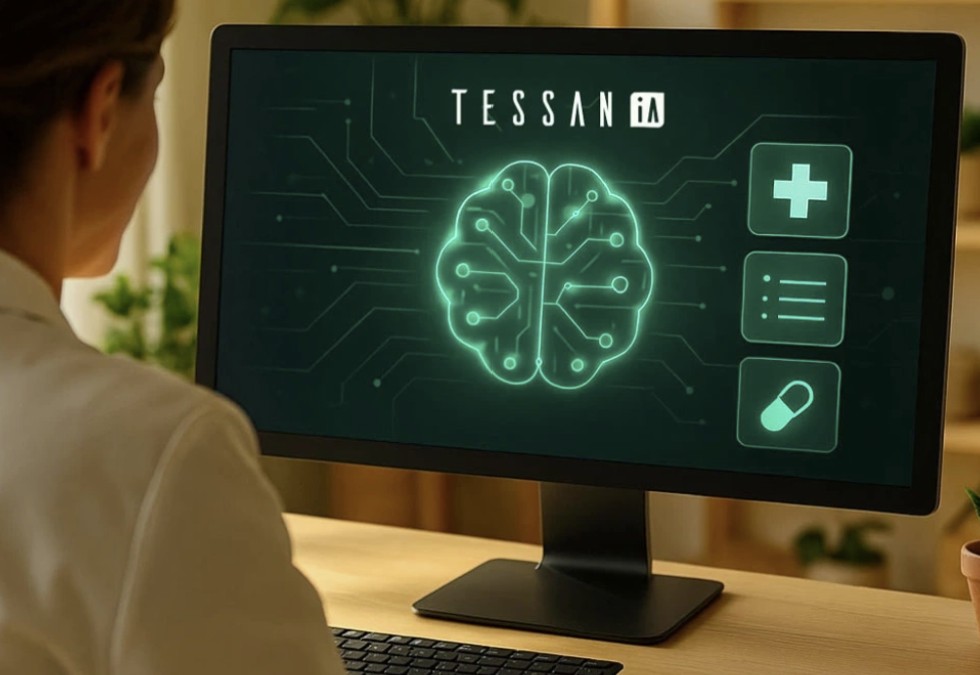
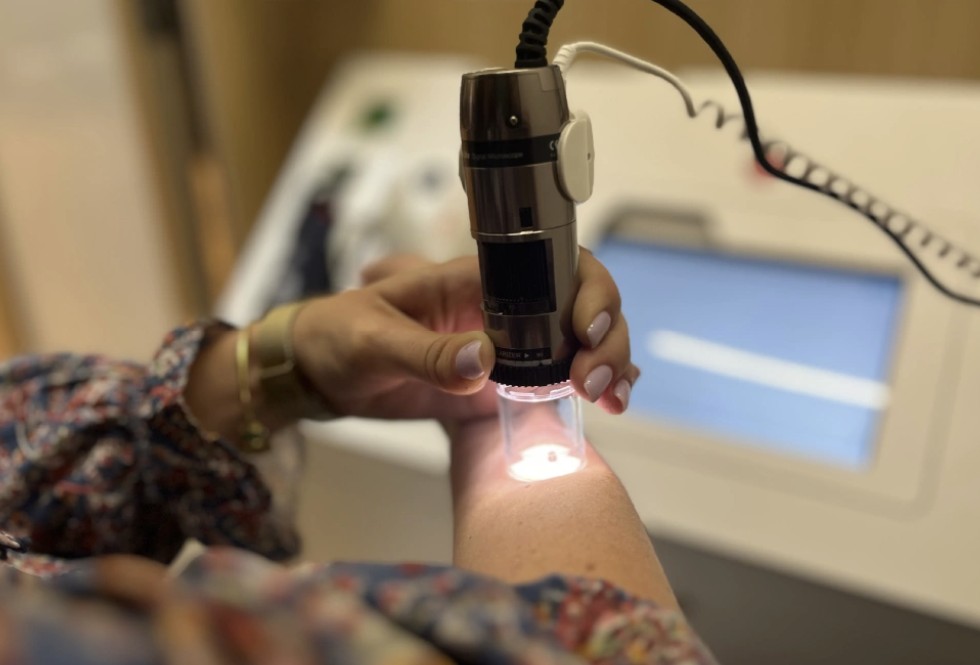
Image: Tessan AI Teleconsultation: The intelligent assistant for structuring symptom collection, pre-drafting reports, and optimizing medical time. Courtesy of Tessan.
Image: During a teleconsultation, the general practitioner examines skin lesions using a connected dermatoscope and, if necessary, initiates a tele-consultation with a dermatologist. Courtesy of Tessan
From Teleconsultation to Tele-expertise: Dermatology and the Next Phase
The most significant evolution discussed by Ducrocq is the extension into tele-expertise, particularly dermatology.
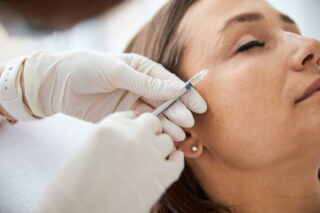
Tele-expertise differs from teleconsultation in that it facilitates physician-to-physician collaboration. In dermatology, high-resolution imaging and structured data capture make remote specialist input particularly viable. With February 4 marking World Cancer Day, the timing underscores the public health relevance of faster dermatological access. In line with this event, Tessan integrated a dermatoscope into all of its booths along with the full-scale tele-expertise experience.
Ducrocq describes tele-expertise as a logical progression, enabling pharmacies and primary physicians to access specialist input without duplicating consultations. Rather than merely expanding volume, the strategy reframes the cabin as a node within a broader clinical network.
This shift may prove pivotal with tele-expertise representing the next phase: coordinated digital specialization.
For medical professionals, the implications are substantial. Dermatology waiting times, particularly in underserved regions, could be reduced through structured image capture and rapid specialist review.
Telehealth’s trajectory, from experimental video links in the 1950s to reimbursed teleconsultations in 2018, and now to augmented pharmacy-based cabins, reflects an ongoing negotiation between access and rigor. Tessan’s expansion into tele-expertise suggests that the next frontier lies not in replacing clinical practice, but in digitally reinforcing it.
The challenge for healthcare systems will be ensuring that innovation remains anchored in quality, integration, and professional governance.