



Korean aesthetics, government policy, and innovation are positioning K-beauty as a global medical force heading into 2026. Dr. Jimmy Sung, MD, JD, FACS of Tribeca Aesthetics, provides his insights into what he spotted at the Korean Derma 2025 event in Seoul.
In a hurry? Here are the key points to know:
- KDerma 2025 reinforces South Korea’s position as a global leader in aesthetic medicine, attracting thousands of international physicians and industry leaders.
- Government policy and targeted investment continue to fuel K-beauty’s global expansion, even as certain incentives phase out.
- Small and medium-sized enterprises drive the majority of K-beauty innovation, exports, and manufacturing capability.
- Korean aesthetic technology leaders, such as TenTech are setting new standards in non-invasive energy-based devices.
- The next generation of K-beauty companies is focused on regenerative and cellular-level technologies shaping the future of aesthetics.
As we welcome the new year, there is no better way to preview 2026 in aesthetics than by featuring Korean Derma (KDerma) 2025 in Seoul. K-Beauty’s global phenomenon is clear, as reflected by concurrent international events like the Asia-Pacific Economic Cooperation (APEC) meetings, where even White House officials presented their K-Beauty finds. During the meeting, we hadthe opportunity to meet K-Beauty leaders to gain insight into their success and future trends.
Following this upsurge of global attention, KDerma is recognized as one of the top aesthetics symposia in the world. Now in its 6th year, over 4,600 participants from 87 countries have participated. KDerma’s growing success is a clear indication of South Korea’s focus on developing its influence as a “soft superpower” through arts, culture, and beauty.
The symposium took place in Seoul, the mecca of aesthetic medicine. In 2024, 1.17 million medical tourists visited South Korea—a record high. Over 68% underwent aesthetic treatments. Growing demand has made Korea’s medical tourism a key economic sector, valued at $1.9 billion in 2024 and projected at $3 billion by 2033.
Government Policy, Investment, and the Engine Behind K-Beauty’s Expansion
Two reasons explain this rapid rise: government policy and manufacturing capability. The South Korean government supports aesthetic tourism through its VAT refund policy. In 2016, South Korea launched a 10 percent VAT refund for plastic surgery. The incentive was so successful that the government will end the program on December 31, 2025, to recapture this significant revenue source.
Even with changes to these incentives, the continued worldwide appeal of K-beauty is evident. Recognizing this, the South Korean government continues to support the aesthetics industry in its global expansion through government investment and policy.
In 2024, the government initiated a $27 million K-beauty public-private venture fund, the K-Beauty Creator Challenge(October 2025), for beauty-tech startups. K-Beauty Network Loan offers a $ 13 million loan program for small and medium-sized enterprises (SMEs). Meanwhile, the Global K-Beauty Fund supports companies as they expand overseas. All funding programs are part of a national strategy for growth and worldwide influence.
Furthermore, the government will continue to lighten the burden of export regulations, align manufacturing standards with international norms, and provide data and business intelligence on emerging markets.
These investments and support are crucial to SMEs, which make up 63% of total K-beauty exports. SMEs drive K-beauty’s global expansion with their innovation and manufacturing capabilities.
Innovation on Display: SMEs Powering K-Beauty’s Global Expansion
These SMEs are well represented among the 311 exhibitors at KDreman2025’s exhibit hall in Coex Magok, Seoul’s largest convention complex. These companies embody the entrepreneurial spirit of the generation that created the “Miracle on the Han River” – the rapid rise of South Korea into a highly developed nation and the global ambition of the next generation of leaders who intend to deliver “miracle number two”.
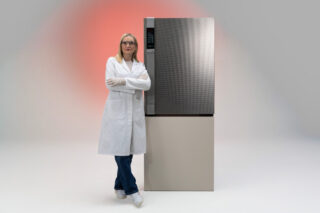
One of the success stories is TenTech. Founded in 2014, TenTech began as an OEM of energy-based devices (EBD) and has since transformed through its own R&D and an expanding global distribution network. Its flagship device is the TenTherma, known as Xtherma in the US. At the booth, TenTech CEO Dangok Han proudly stood next to the device and explained why TenTech developed the XTherma.
“Our goal is to develop and build a monopolar RF device to deliver the best clinical result,” he explained.
The Xtherma is a device for the non-invasive RF enthusiasts. The Xtherma interface is clean, intuitive, and provides all the functions a user needs. It is also one of the most powerful devices in its class, with an output power of 400W. This level of capability demands an effective cooling mechanism to ensure comfort and safety. Xtherma’s robust power, coupled with its unique instant evaporative cooling system, is ready to go with a flick of a switch, with no warm-up time, a key advantage for those with a busy practice and who demand an efficient workflow. The secret sauce of any RF device is the electrode. The clinical effect of non-invasive RF depends on stable and sustained energy delivery.
Xtherma’s facial electrode is the largest in its class, enabling greater energy distribution per shot and more cooling to increase comfort and ensure safety. Many providers in Korea describe Xtherma as a wolf in sheep’s clothing. While patients might not find the plain exterior body design exciting, they will be thrilled by the result.
Next-Generation Leadership and Regenerative Aesthetic Technologies
The KDerma exhibits also highlight K-beauty’s future leaders. James Kim, Director of UMECO Group, represents the next generation of entrepreneurs. Founded in 1986, UMECO manufactures and distributes biomedical aesthetics and rehabilitation technologies globally, with its headquarters in South Korea and a presence across the greater Asia-Pacific region. A Babson graduate with a business and finance background, James Kim leads UMECO’s current and future initiatives as it develops proprietary technologies and a portfolio of global brands. UMECO identifies and invests in promising innovations, leveraging its sourcing and distribution expertise. The company is closely aligned with K-beauty trends, including regenerative technologies and cellular-level solutions for clinics and homes.
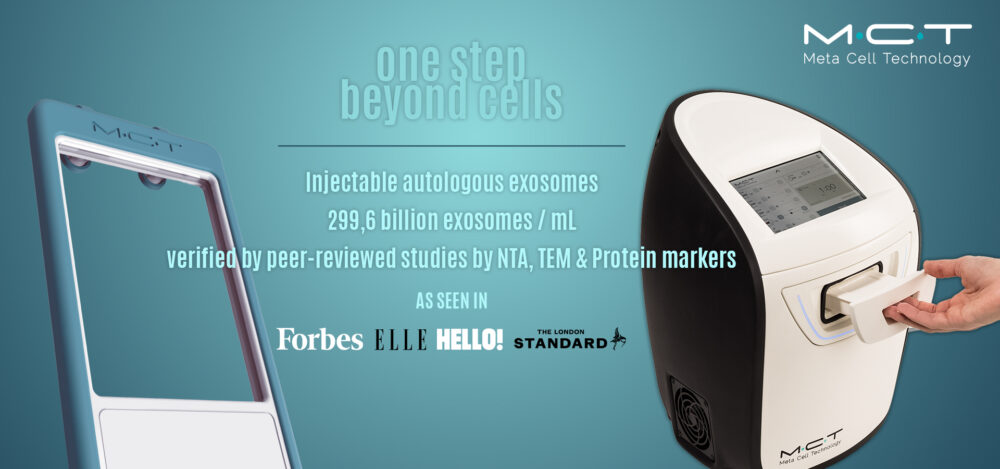
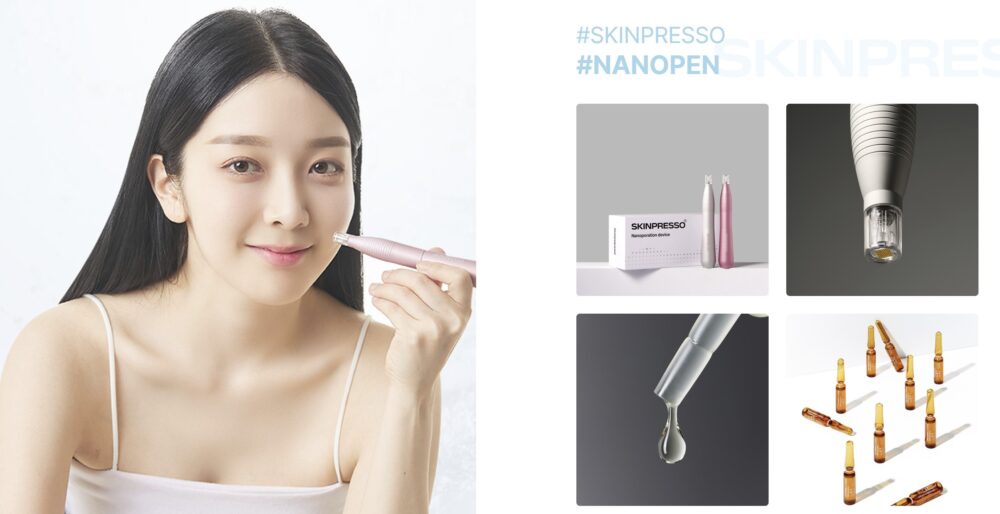
One example is MCT, specialized in autologous regenerative technology, for which UMECO serves as the official distributor in Korea and Japan, where it has already achieved strong clinical recognition. In addition, UMECO is preparing the global rollout of Novion, a next-generation regenerative medical technology platform, with international distribution targeted to begin around May 2026. Skinpresso, UMECO’s skincare brand, focuses on advanced home-use products addressing the growing interest in at-home therapies.
KDerma 2025 is an open ceremony for the “Golden” moment for K-beauty. What we witness is decades of innovation and policy culminating in a global movement. The stage is set for K-beauty’s influence to shine even further in 2026 and beyond.

Jimmy C. Sung, MD, JD, FACS
Dr. Jimmy C. Sung is a board-certified plastic and reconstructive surgeon with over 20 years of expertise in regenerative aesthetics. As the founder of Tribeca Aesthetics®, he combines his artistic sensibility with advanced surgical and noninvasive techniques to achieve naturally beautiful results. Dr. Sung sees aesthetic medicine as a blend of technical expertise and artistic vision, grounded in authentic human connection. He works closely with each patient to design personalized treatments that enhance their natural features.