

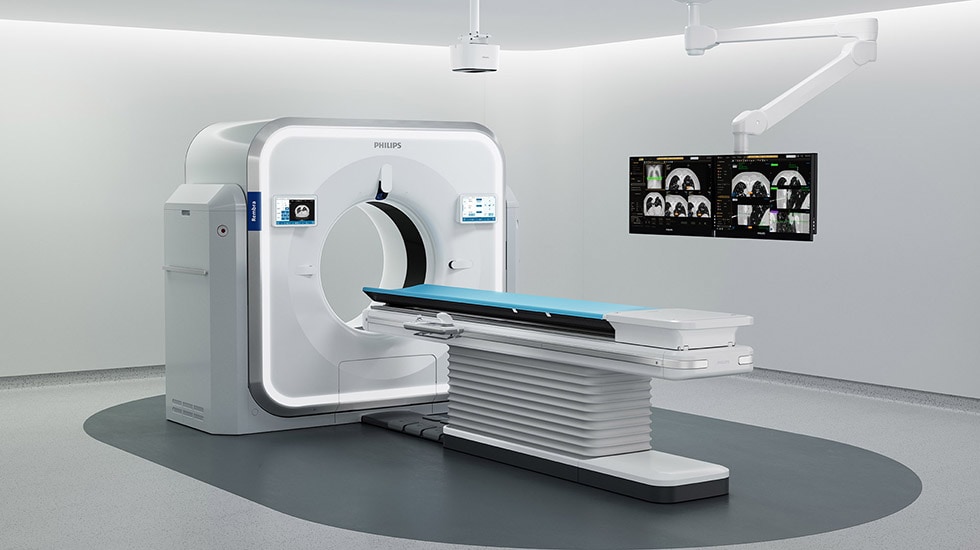

At the 2026 European Congress of Radiology, Philips introduced a suite of imaging innovations, from AI-enabled MRI planning to spectral CT. Its newly launched Rembra CT system drew particular attention for its speed, patient access, and workflow design for high-acuity environments.
In a hurry? Here are the key takeaways:
- Philips introduced multiple imaging innovations at European Congress of Radiology 2026.Announcements included the new CT platform Rembra CT system, spectral CT system Verida Spectral CT, AI-powered cardiac MR planning solution SmartHeart, and the ultrasound platform Elevate Plus.
- Rembra emerged as the centerpiece of the showcase.It offers reconstruction speeds up to 106 images/second, capacity for as many as 270 patients per day, and an 85-cm bore designed to improve access for trauma, bariatric, and interventional imaging.
- Philips’ broader strategy centers on AI-enabled workflows and spectral imaging.The company announced the first installation of Verida Spectral CT at Nuestra Señora del Rosario University Hospital in Madrid and ongoing research initiatives such as the SHERPA Consortium.
At the annual European Congress of Radiology 2026 (ECR) in Vienna this March, Philips presented a broad portfolio of imaging innovations aimed at addressing some of healthcare’s most pressing challenges: rising patient volumes, workforce shortages, and the need for faster diagnostic decision-making.
The company used one of radiology’s largest global gatherings to publicly debut multiple technologies across imaging modalities—including CT, MRI, ultrasound, and AI-driven clinical workflow solutions. Among them were the new Rembra CT system, the spectral Verida Spectral CT, the AI-enabled cardiac MRI planning solution SmartHeart, the ultrasound software platform Elevate Plus, and updates to the patient-focused Philips Ambient Experience environment.
Together, these developments reflect a broader shift in imaging technology: integrating AI into routine workflows while increasing throughput and improving patient experience. But at the center of Philips’ ECR showcase was Rembra, a CT system designed specifically for high-acuity and high-volume imaging environments such as trauma centers and emergency departments.
A Portfolio of Innovations Across Imaging Modalities
The announcements at ECR illustrated how Philips is pursuing innovation across the imaging continuum, from acquisition and workflow automation to patient experience.
The company highlighted the European debut of Verida Spectral CT, a detector-based spectral CT system integrating AI across the imaging chain. The technology captures both anatomical and functional information in a single scan while maintaining low radiation dose levels. Its first global installation has already taken place at Nuestra Señora del Rosario University Hospital in Madrid, positioning Spain as an early adopter of next-generation spectral imaging.
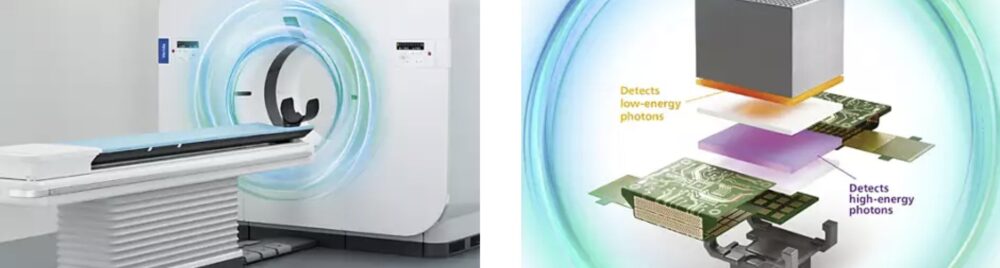
Images: Verida integrates AI and features the third generation, dual-layer NanoPanel Prism Precise detector. Image (left) AI-driven imaging chain for conclusive diagnostic answers; Image (right) The NanoPanel Prism Precise detector elevates performance. Courtesy of Philips.
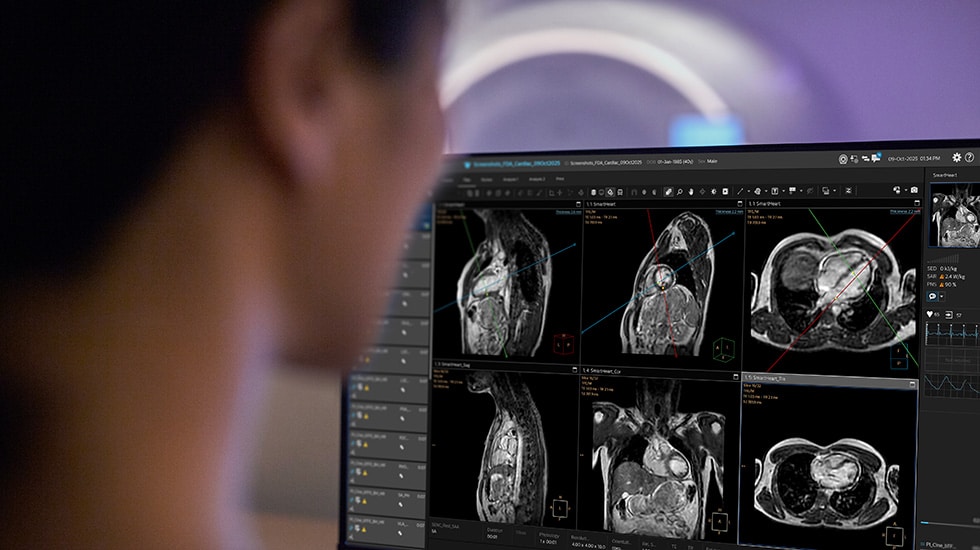
The company showcased the FDA-cleared SmartHeart solution for cardiac MRI planning. The AI-powered tool automates the planning of 14 standard and advanced cardiac views in under 30 seconds. By reducing operator variability and decreasing the number of breath-holds required for basic views by up to 75 percent, the system aims to make cardiac MR more accessible to technologists with varying levels of experience while improving patient comfort.
In ultrasound, Philips introduced Elevate Plus, a newly CE-marked software platform designed for its EPIQ Elite and Affiniti systems. The platform integrates advanced image processing with AI-driven decision support from KOIOS. This technology analyzes more than 17,900 features within a region of interest to assess malignancy risk in breast lesions and thyroid nodules in less than two seconds, potentially helping clinicians reduce unnecessary biopsies.
Philips also expanded its patient-experience platform, Philips Ambient Experience, with 21 new immersive MRI themes. The environments combine moving imagery, lighting, and music—including nature scenes developed with filmmaker David Huting—to reduce patient anxiety during MRI examinations.
While each technology reflects incremental progress in its own domain, the centerpiece of Philips’ ECR showcase was clearly Rembra, a CT system built for the operational realities of modern radiology departments.
Inside Rembra: speed, access, and interventional flexibility
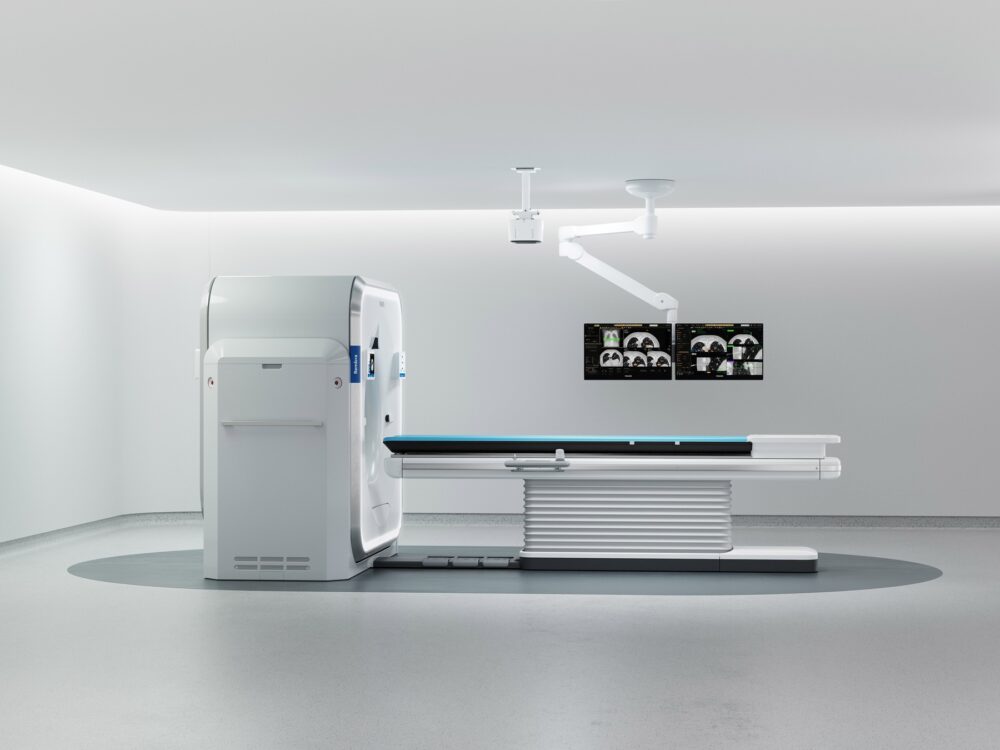
The Rembra CT system was unveiled publicly for the first time at ECR 2026, where Philips representatives demonstrated the platform’s capabilities in detail.
The system is designed around three priorities: speed, accessibility, and workflow efficiency. Its reconstruction engine produces up to 106 images per second. It enables clinicians to access diagnostic images in near real time and can support as many as 270 patients per day, particularly valuable in stroke, trauma, and other emergency scenarios where minutes can influence outcomes.
Equally significant is the system’s physical design. With an 85-centimeter bore—the largest in its class—Rembra is intended to accommodate complex cases, including bariatric patients, trauma imaging, and interventional procedures. The system incorporates a next-generation NanoPanel Precise XD detector designed for dose-efficient, high-resolution imaging while integrating AI-enabled workflow features intended to streamline routine tasks.
During demonstrations on the exhibition floor, Philips representatives emphasized the flexibility of the system’s controls and patient positioning capabilities.
“We designed the system so clinicians can control the table and imaging from multiple panels,” one representative explained during the live demonstration. “In interventional procedures, the table can move far back, but you still maintain control of positioning and imaging.”
The design supports procedures requiring significant physical access to the patient. Demonstrators highlighted that clinicians can adjust the table position incrementally—down to five-millimeter movements—using joystick controls while maintaining visibility of imaging data on large monitors.
Another key feature involves dose management during needle-guided procedures. In biopsy or ablation workflows, clinicians can perform a low-dose scan of a limited region, approximately four centimeters, to track the progression of a needle tip.
“That allows you to monitor the needle position without exposing the patient to unnecessary radiation,” the representative noted. “You can scroll through the images and track the needle progression while minimizing dose.”
The combination of speed, interventional access, and dose-management tools reflects a broader shift in CT design toward multipurpose platforms capable of supporting both diagnostic and interventional workflows.
Expanding capabilities through AI and spectral imaging
Philips is advancing imaging innovation in several strategic areas: AI-enabled workflows, spectral CT imaging, and patient-centered system design.
With Verida Spectral CT, capturing spectral data enables clinicians to derive both anatomical and functional information from a single scan, potentially reducing the need for repeat imaging. The installation of Verida at Nuestra Señora del Rosario University Hospital in Madrid marks the first global deployment of the technology. It’s an indicator of how rapidly spectral CT is moving from research environments into routine clinical practice.
Meanwhile, AI tools such as SmartHeart and the decision-support capabilities embedded in Elevate Plus demonstrate how automation is increasingly being used to reduce workflow complexity while expanding access to advanced imaging techniques.
Additional innovation is also emerging through collaborative research. The EU-funded SHERPA Consortium, coordinated by Philips, has launched seven clinical studies exploring how AI and robotics can assist with minimally invasive neurovascular and oncology procedures.
For radiology departments confronting growing demand and constrained resources, these developments point to a future in which imaging systems increasingly combine advanced hardware, AI-driven workflows, and improved patient experience.
The debut of Rembra provided a clear glimpse of that direction—one where speed, flexibility, and intelligent automation are becoming central design principles for the next generation of imaging systems.