

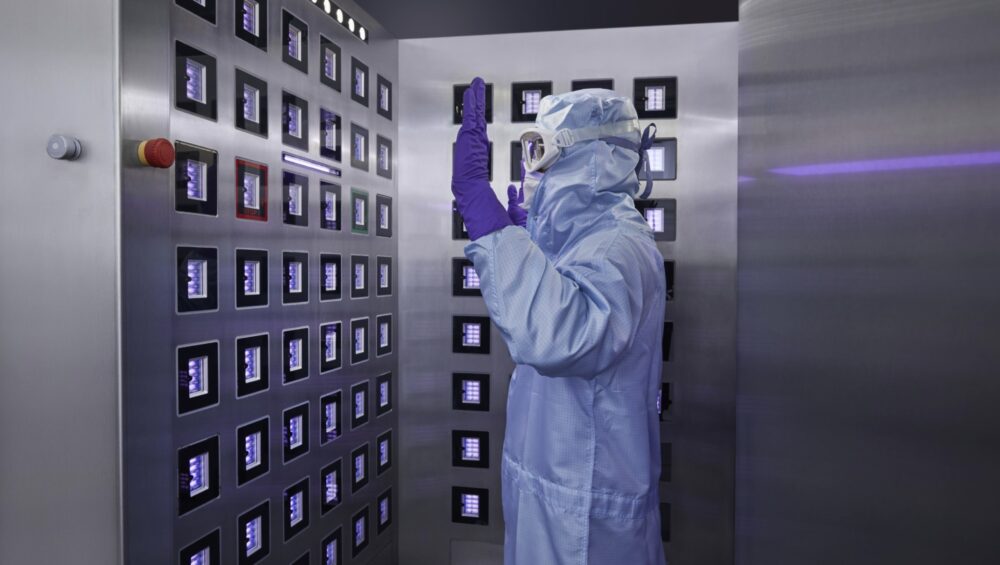
Human-safe Far-UVC technology offers continuous air and surface disinfection in operating theatres without disrupting clinical workflows.
In a hurry? Here are the key points to know:
- Far-UVC (222 nm) light enables continuous air and surface disinfection in occupied operating theatres.
- Unlike conventional UV-C, Far-UVC is considered safe for human exposure within defined limits.
- Studies show Far-UVC can significantly reduce airborne pathogens, complementing existing ventilation systems.
- The technology integrates into surgical workflows without adding staff workload.
- European hospitals are increasingly evaluating Far-UVC systems for high-risk clinical environments.
Conventional operating theatres rely on washer-disinfectors, steam sterilisation, chemical agents and HEPA-filtered ventilation to maintain hygiene. While effective, these methods are episodic and cannot continuously address airborne pathogens or recontamination caused by staff movement and door openings during surgery. Far-UVC light technology aims to close this gap by enabling continuous, human-safe disinfection in occupied operating rooms.
The Danish MedTech company UV Medico, exhibitor at this year’s MEDICA trade fair and headquartered in Aarhus, addresses this challenge. MedicalExpo e-Magazine asked Søren Aggerholm, Marketing Director at UV Medico A/S, how his company’s novel technology comes into play here.
Human-Safe Far-UVC: How the Technology Works
MedicalExpo e-Magazine: Can you provide more information on your product innovations for surgical site disinfection?
Søren Aggerholm: Our company has developed human-safe Far-UVC 222 nm disinfection systems. They are designed for continuous operation in occupied indoor environments. The solutions supplement existing hygiene measures by reducing airborne and surface microorganisms during normal room use, in compliance with applicable safety standards.
MedicalExpo e-Magazine: Can you name a few examples?
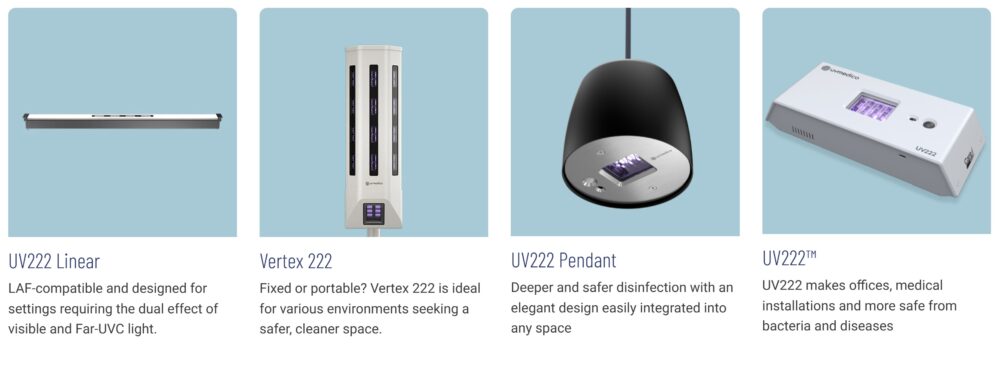
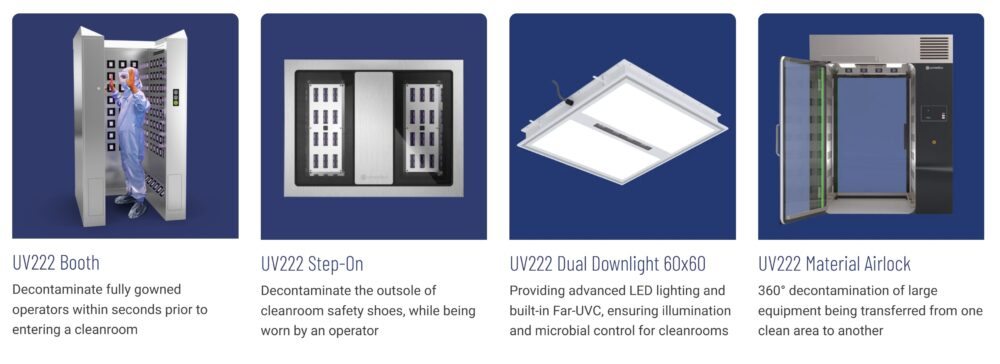
Søren Aggerholm: The latest product launched is the UV222 Surgical Table Lamp that complements the existing portfolio of solutions for operating theatres. We also have the UV222 Downlight for ceiling installations, the UV222 Linear that can be integrated into Laminar Airflow (LAF) systems, as well as Vertex 222 and UV222 for complete room coverage. Additional products are available for other areas in a hospital or clinic.
MedicalExpo e-Magazine: What is the main difference compared to conventional UV-C disinfection?
Søren Aggerholm: Conventional UV-C systems (254 nm) are effective but harmful to skin and eyes. Thus, they can only be used in unoccupied rooms. Far-UVC at 222 nm inactivates microorganisms while being absorbed in the outer, non-living layers of human skin and the tear layer of the eye. That makes it safe for humans and use in occupied rooms.
‘Far-UVC light (UV222) is considered safe for use in rooms where people are present’
At 222 nm, Far-UVC light can neither penetrate the tear layer of the eye nor the outermost layer of the skin. It is therefore safe for human exposure, when used within defined exposure limits. This is well established through multiple peer-reviewed published studies. Our systems at UV Medico are designed to comply with international safety standards and regulatory limits.
Continuous Air and Surface Disinfection in the Operating Theatre
MedicalExpo e-Magazine: To what extent does your UV222 technology enable continuous air disinfection in operating theatres?
Søren Aggerholm: A scientific study published in Nature shows that using human-safe 222nm Far-UVC light achieves a 92% reduction of airborne pathogens, corresponding to 35 air changes per hour. An operating theatre typically requires 20 air changes per hour.
MedicalExpo e-Magazine: What types of germs or particles can be effectively reduced with Far-UVC light?
Søren Aggerholm: A very broad range of microorganisms, including bacteria, viruses, spores and fungi, by inactivating their DNA or RNA. These include microorganisms found in healthcare families and the ones causing Healthcare-associated infections (HAIs), as well as antibiotic-resistant bacteria.
From Installation to Impact: What Far-UVC Means for Clinical Practice
MedicalExpo e-Magazine: What changes in the workflow of surgical teams or in infection control do you expect from the use of Far-UVC light?
Søren Aggerholm: Our systems are designed for continuous, automated operation. That means, no procedural changes are required for surgical teams. The expected benefit is enhanced environmental hygiene without increasing workload or affecting established clinical routines.
MedicalExpo e-Magazine: What can you report about the introduction and establishment of Far-UVC systems in European hospitals?
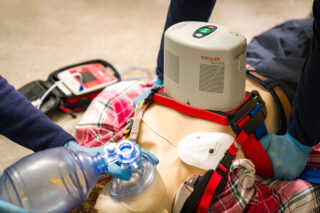
Søren Aggerholm: Far-UVC technology is currently installed in a vast number of facilities, and a growing number of European healthcare facilities are currently evaluating UV Medico’s solutions, particularly in areas with high hygiene requirements and in high-risk areas such as operating theatres and ICUs. Generally, installations can also be meaningful in highly populated areas such as waiting rooms and patient rooms. Some installations are being used in vehicles for emergency services such as ambulances, too.