

![[Genetics] Bystro AI Goes Beyond ChatGPT Health with “What Comes Next” in an Individual’s Healthcare](/wp-content/uploads/sites/9/medicine-and-biochemistry-concept-doctor-with-ste-2026-01-11-08-37-51-utc-1-1000x667.jpg)

Boston-based Bystro AIwas first to market with AI that unlocks insights directly from genetic data. It focuses on what comes after the record: the predictive power of the human genome.
In a hurry? Here are the key points to know:
- From Reactive to Predictive Care:While standard AI health tools focus on interpreting past medical records, Bystro AI utilizes genomic data to move healthcare “upstream,” identifying risks and potential treatment responses before clinical symptoms appear.
- Democratizing Precision Medicine through Efficiency:By automating complex statistical analysis, the platform reduces the time required for massive genomic datasets from “aggregate years” of human effort to just 10 or 20 minutes, making precision medicine accessible beyond elite research institutions.
- A “Verifiable” Agentic System for Clinicians:To avoid the “hallucinations” common in standard Large Language Models (LLMs), Bystro employs an agentic system that translates natural language into deterministic, expert-validated steps, allowing medical professionals to verify every step of the analysis.
The launch of ChatGPT Health in January 2026 marked a pivotal shift in the integration of artificial intelligence within the medical field. While OpenAI’s product focuses on organizing and interpreting existing medical records, a new contender, Bystro AI, is moving the needle further “upstream.” Founded by Alex Kotlar, Bystro focuses on what comes after the record: the predictive power of the human genome.
Alex Kotlar’s journey into the heart of precision medicine is deeply personal. Born in Ukraine just one month before the Chernobyl disaster, Kotlar and his family were irradiated in Kiev before fleeing to the U.S. when he was five years old. This history cast a “cloud of cancer” over his family, which eventually led to a cluster of diagnoses—including his own—during his college years.
Having a background in tech and business, Kotlar felt compelled to transition into medicine, specifically a PhD in genetics, to ensure others would have access to the therapies he wished his family had.
“It wasn’t something I felt I had much of a choice in,” Kotlar explains. “Once you see somebody go through… a really difficult health journey, you feel compelled to help that process along.”
Beyond the Medical Record: The Predictive Power of the Genome
The current medical landscape is largely built on electronic health records (EHRs), which provide a narrative of the past. Bystro AI, however, seeks to utilize genetic data—what Kotlar calls “probably the best healthcare document you can have”—to predict future risks. The challenge is that genomic data is incredibly complex; even brilliant molecular biologists often lack the statistical or programming background required to manipulate raw information.
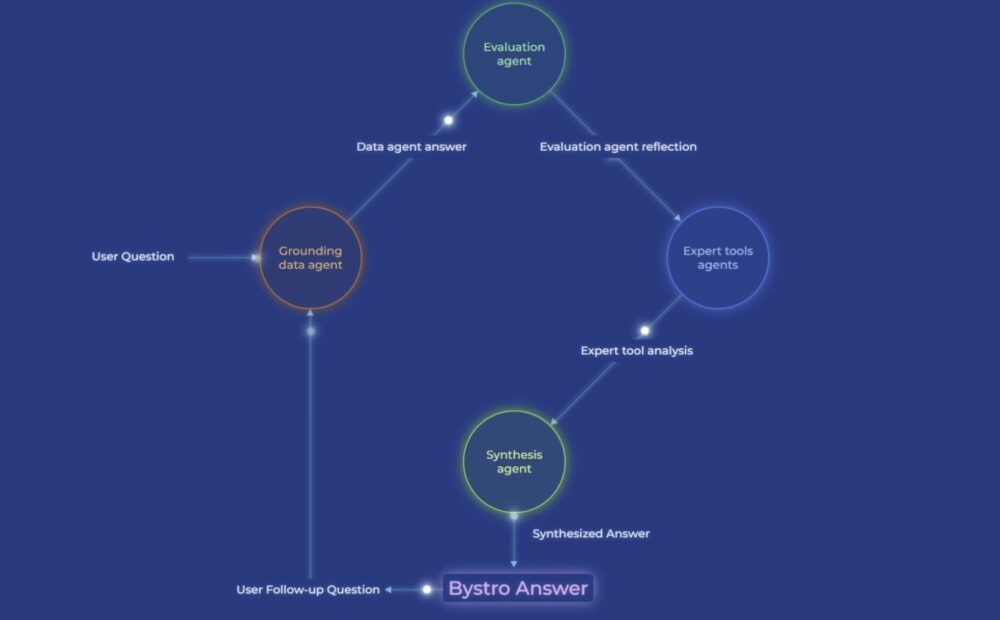
Bystro addresses this through a natural language interface that allows professionals to ask complex questions of raw data. Unlike standard chatbots, Kotlar describes Bystro as an agentic system.
“Large language models are way, way too inaccurate to do any kind of health work… They hallucinate way too much,” Kotlar notes.
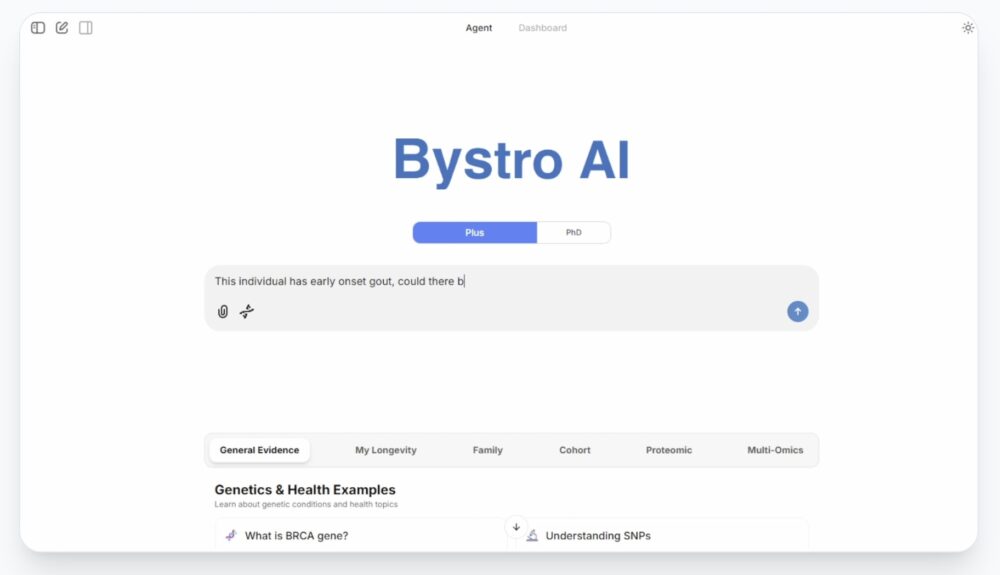
Instead of relying on the LLM to provide the answer, Bystro uses it as a guide to translate questions into deterministic steps executed by expert tools. This ensures that the analysis is as accurate as if a talented statistician had performed it manually, making genetics searchable and actionable in ways EHRs simply cannot be.
The Affordability Equation: Saving “Aggregate Years”
Historically, the cost of precision medicine has been inflated by the time and specialized labor required for analysis. Traditionally, a scientist might send data to a group of statisticians and wait weeks for results. Bystro collapses this timeline. During the interview, Kotlar highlighted that for massive datasets—such as an analysis of 12,000 individuals—the platform can generate beautiful, accurate figures in 10 to 20 minutes, a task that would otherwise take years of aggregate human effort.
By automating these “orders and orders of magnitude” of work, the platform significantly lowers the barrier to entry for complex genetic research.
“It’s actually amazing that this works at all,” Kotlar says, noting that researchers are choosing Bystro over manual teams because “it’s accurate and it’s so fast.”
This efficiency doesn’t just benefit elite labs; it democratizes access, allowing community-level providers to offer high-level genomic insights without a massive institutional budget or a fleet of PhD-level programmers.
Reactive vs. Predictive Care: Shifting the Paradigm
The ultimate goal of Bystro is to move healthcare away from its reactive roots toward a preventative model. Kotlar argues that by the time a patient presents with symptoms—whether it be joint inflammation or the early signs of Alzheimer’s—damage has already occurred.
“The future of medicine isn’t going to be that you go to your doctor when you’re feeling really bad,” Kotlar posits. “It’s that you get a… doctor-approved medicine… preventatively that will stave off the onset.”
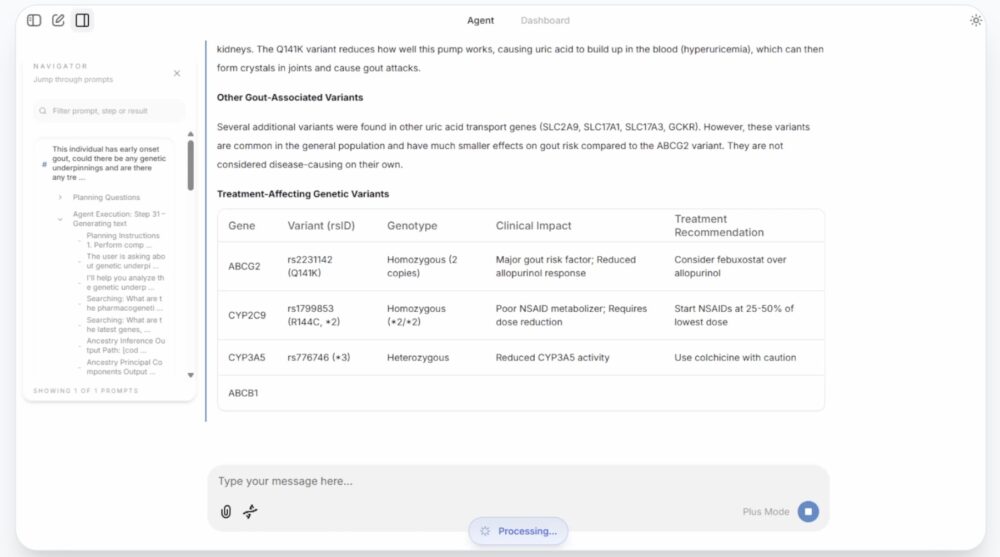
The platform is already being used by Alzheimer’s Disease Research Centers to predict causes decades before a clinical diagnosis would normally occur. By detecting problems 10 or 20 years down the road, clinicians can intervene before neurons sustain irreversible damage. This philosophy extends to simpler conditions as well. For example, the tool can identify if a patient with gout is genetically predisposed to be a “poor responder” to first-line medications, allowing the doctor to skip the trial-and-error phase and move directly to a higher dose or an alternative therapy.
Democratizing Precision Medicine for Every Patient
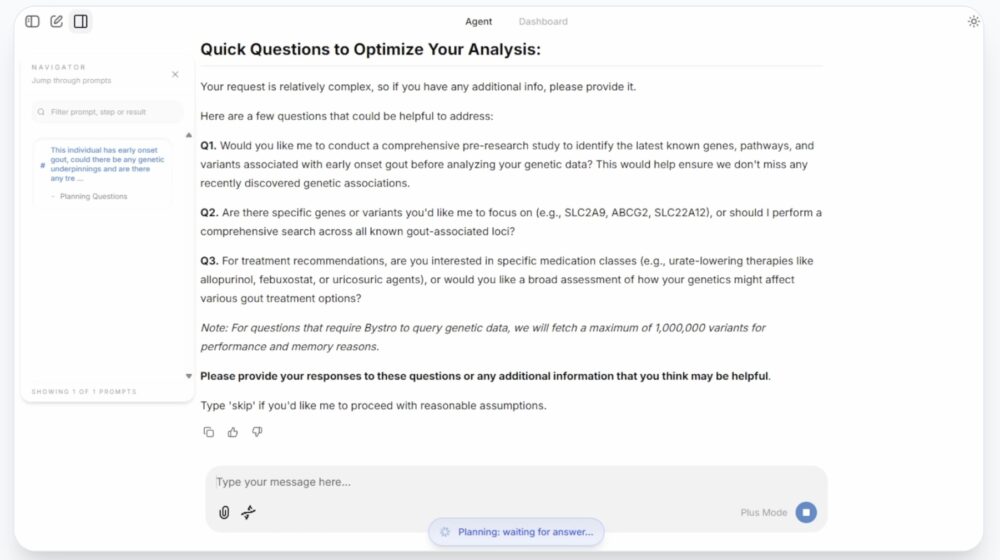
While the core of Bystro’s business remains B2B on the research side, its public-facing potential lies in patient empowerment. The tool allows individuals to upload their own whole genome sequencing or blood panels to receive scientifically grounded reports. Kotlar emphasizes that for these reports to be accurate, the system must account for ancestry, as genetic variants often present differently across populations.
“All of genetics is incredibly tightly rooted in your ancestral makeup,” Kotlar explains, which is why Bystro builds its own validated algorithms rather than relying on external, often flawed, tools.
For medical professionals, this provides a “research partner” that generates verifiable data.
“You can go and export the entire set of analyses… and verify them yourself if you need to, or give them to a colleague,” says Kotlar.
This transparency builds trust, bridging the gap between a patient’s curiosity and a doctor’s clinical expertise. Whether it is analyzing DNA for athletic performance—such as oxygen binding capacity (EPO)—or researching the biological benefits of curcumin, the platform provides a rigorous, data-driven starting point for the patient-physician dialogue.
As we move deeper into 2026, the success of Bystro AI suggests that the true value of AI in medicine isn’t just in summarizing our charts. It’s in unlocking the biological secrets we’ve been carrying all along.