

![[Genetics] Bystro AI Analyzes DNA for Athletic Performance](/wp-content/uploads/sites/9/motion-shot-of-basketball-player-in-black-hoodie-e-2026-01-06-00-38-44-utc-1-1000x667.jpg)

Bystro AI leverages agentic intelligence to decode genomic blueprints, empowering sports medicine professionals to transform raw DNA into verifiable insights for elite performance and proactive injury prevention.
In a hurry? Here are the key points to know:
- Shifting from Reactive to Predictive Care: While current AI tools focus on organizing existing medical records, Bystro AI moves “upstream” to analyze genomic data, identifying disease risks and drug response patterns decades before clinical symptoms appear.
- Massive Efficiency Gains for Precision Medicine:The platform collapses the time required for complex genetic analysis from weeks or years of “aggregate human effort” down to just 10 or 20 minutes, making high-level genomic insights accessible outside of elite research institutions.
- A Deterministic Alternative to LLM “Hallucinations”: Unlike standard chatbots, Bystro uses a grounded “agentic system” that translates natural language into verifiable, expert-level statistical code, ensuring that results are scientifically accurate and reproducible by medical professionals.
In the high-stakes world of sports medicine, the difference between a podium finish and a career-ending injury often resides in the invisible margins of a player’s biology. While the rise of athletic dynasties—where elite performance seems to be a recurring inheritance—captures the public’s imagination, clinicians are increasingly looking toward the genome as the ultimate performance blueprint. Enter Bystro AI, a platform designed to decode the complex genetic variables that govern an athlete’s endurance, recovery, and injury risk. By shifting the focus from generalized training to “biological precision,” this tool is positioning itself as the next essential asset in the sports medicine toolkit.
The vision for Bystro is rooted in a deeply personal mission of its founder, Alex Kotlar. As we explored in our previous article regarding the platform’s role in predictive healthcare, Kotlar’s journey began in the wake of the Chernobyl disaster. After his family was irradiated in Kiev and later faced a devastating cluster of cancer diagnoses, Kotlar transitioned from tech to a PhD in genetics, driven by a desire to democratize access to life-altering biological insights.
“Your own genetic data is probably the best healthcare document you can have,” Kotlar notes, and for athletes, that document contains the secrets to their unique physical potential.
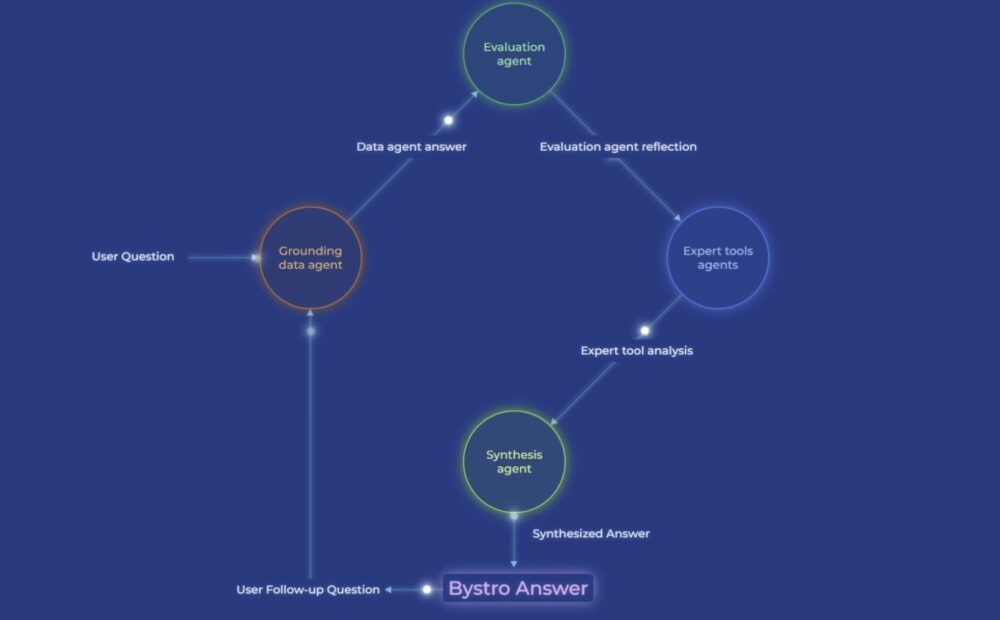
Technically, Bystro functions as an “agentic system” rather than a standard chatbot.

Why Families Like the Mayes Spark Interest in Genetics
The sustained excellence of athletic dynasties—such as the Maye family, where four brothers have achieved elite status across multiple NCAA sports—inevitably sparks questions about the biological limits of potential. While environmental factors and elite training are undeniable, the recurrence of peak performance within a single household suggests a shared “competitive DNA.” Kotlar believes this curiosity is the natural evolution of patient empowerment.
For a sports medicine professional, a family like the Mayes represents the pinnacle of “biological advantages”. In a world where 5% of ChatGPT searches are already health-related, athletes are increasingly looking for scientific explanations for their unique traits. Kotlar views this as a shift toward democratization, where“an empowerment of what a patient has access to” allows athletes to understand why their bodies respond to stress or training differently than their peers. This isn’t about “creating super-athletes” but rather understanding the baseline traits—recovery speed, endurance, or muscle composition—that are etched into an individual’s 3 to 5 million unique genetic variants.
What DNA Can (and Can’t) Tell Us About Performance
In the context of elite athletics, the difference between a podium finish and an injury can lie in how a body binds oxygen or repairs tissue. Kotlar points to the example of EPO (erythropoietin), which increases hemoglobin and allows the body to bind more oxygen, a critical factor for cyclists and endurance athletes.
“I may want to know based on my genetic profile… where I fall in terms of that,” Kotlar explains, noting that DNA can reveal if an athlete is naturally predisposed to excel at long distances or if they risk poor outcomes by pushing too hard.
However, interpreting this data requires extreme nuance. Kotlar is quick to distinguish between a “mutation” and a “variant.” Every individual has millions of differences from the “reference” human genome, which was originally built from just a handful of individuals.
“It doesn’t necessarily mean anything. There’s just differences from the reference,” Kotlar cautions.
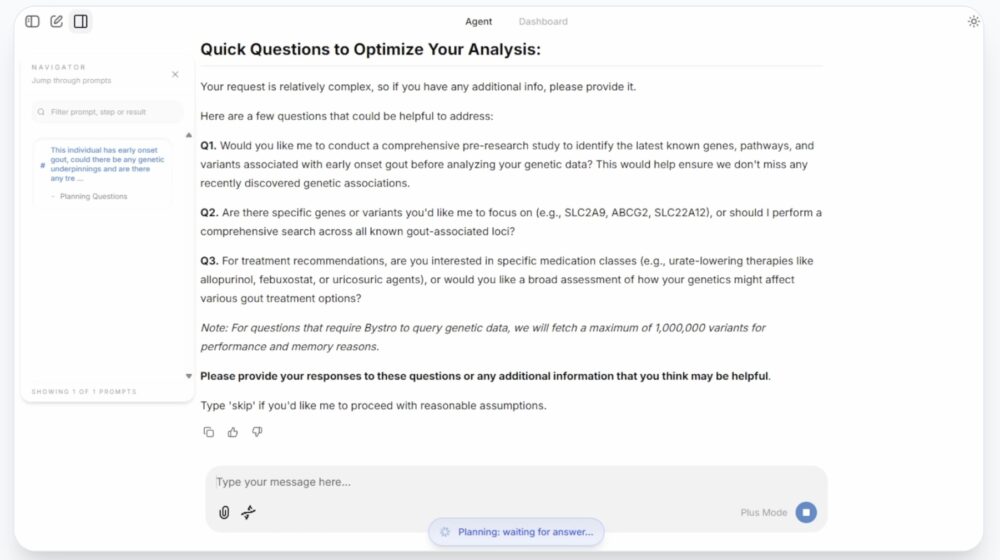
Furthermore, the platform automatically infers ancestry because “all of genetics is incredibly tightly rooted in your ancestral makeup.” A genetic variant that indicates high performance in one population might be common and insignificant in another, making the AI’s ability to “zoom in on just the spots of the data that we care about” essential for accurate interpretation.
How AI is Making Genomics Accessible Outside Elite Labs
Historically, the level of genomic analysis required to inform a professional athlete’s training regimen was reserved for elite research institutions with teams of statisticians. Kotlar realized early in his PhD that even brilliant molecular biologists often lacked the programming skills to manipulate raw genetic data.
“Usually what happens is they send off the analysis to be done by like a group of statisticians,” he says. Bystro removes this bottleneck by saving what Kotlar calls “an aggregate year… per analysis”.
By collapsing years of work into “10, 20 minutes,” the platform allows sports medicine clinics to process massive datasets—such as whole-genome sequences of entire teams—with “orders and orders of magnitude” more efficiency. This speed does not come at the cost of accuracy. Because LLMs are “way, way too inaccurate to do any kind of health work” and “hallucinate way too much,” Bystro uses an agentic system where the AI acts as a guide to execute deterministic, expert-level code.
For a team physician, this means receiving a “verifiable” report where they can “export the entire set of analyses… and verify them yourself if you need to.”

The Growing Curiosity Among Athletes and Everyday People
The ultimate utility of Bystro AI in the sports world is its ability to answer the shifting questions of an athlete’s lifespan. While the genome is fixed, the “life experiences” an athlete encounters—from a new training cycle to a recurring injury—change the questions they ask of their DNA. Kotlar has observed users returning to the platform to “optimize sleep so that they get… better outcomes on tests” or to understand a new physical sensation.
“If there’s something in their genome that can help explain… what they should expect, that happens a lot,” Kotlar says.
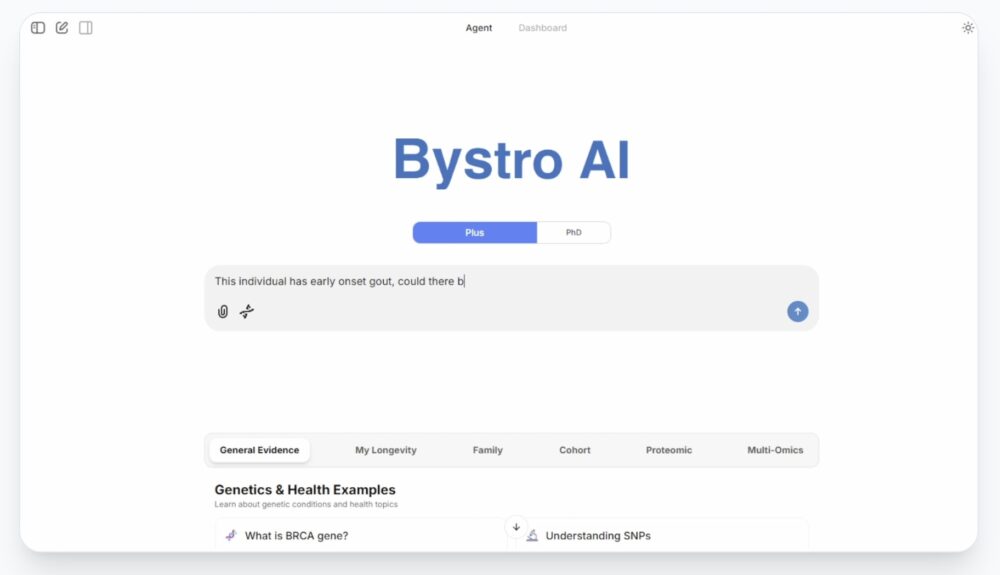
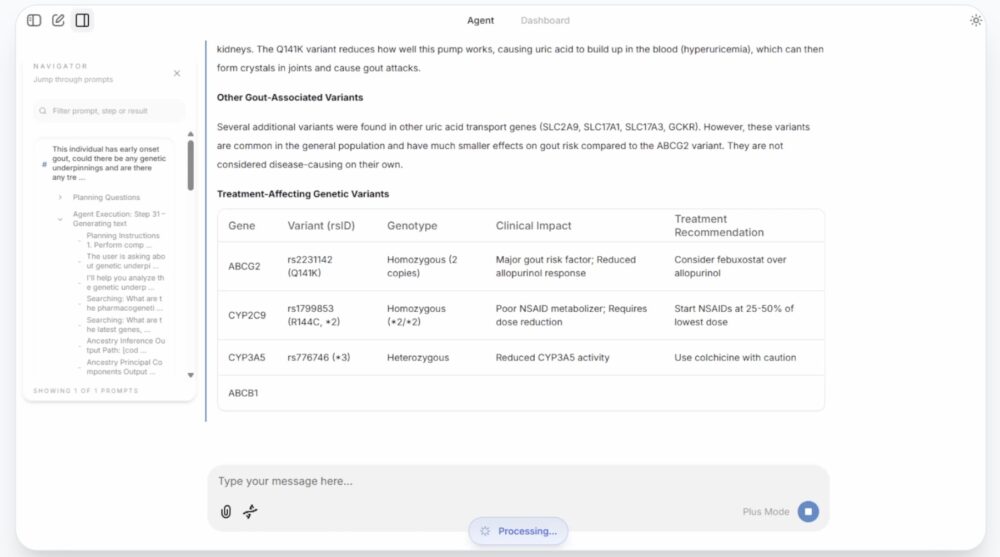
This growing curiosity extends to proactive injury prevention. For example, the platform can identify if an individual has an “early onset risk” for conditions like gout or joint inflammation, allowing them to adjust their medication or training before permanent damage occurs.
“The future of medicine isn’t going to be that you go to your doctor when you’re feeling really bad,” Kotlar posits.
Instead, it will be about receiving “preventatively” tailored interventions that stave off onset. For athletes and the professionals who treat them, Bystro serves as a “research partner” that transforms raw biological data into a roadmap for longevity and peak performance.