


New standards in trauma care and growing evidence on long-term outcomes are accelerating the adoption of structured peer-support and survivorship programs within trauma systems.
In a hurry? Here are the key takeaways
- Survival is no longer the sole benchmark of trauma care.Increasing evidence shows many trauma patients experience long-term physical, cognitive, and psychological sequelae, underscoring the need for structured survivorship support integrated into trauma systems.
- The Trauma Survivors Network (TSN) provides a scalable model for survivorship care.Through peer mentorship, PTSD screening pathways, education programs like NextSteps, and hospital-based coordinators, TSN connects survivors and families with resources that support long-term recovery.
- New funding aims to expand local survivorship programs.The 2025–2026 TSN Site Grant Program will provide targeted grants to trauma centers to strengthen peer support, family engagement, and community-based recovery initiatives aligned with national trauma care standards.
For decades, trauma systems have measured success by a single metric: survival. Advances in emergency medicine, trauma surgery, and critical care have significantly reduced mortality after severe injury. Yet many survivors face persistent functional limitations, chronic pain, neurocognitive impairment, or psychological sequelae such as post-traumatic stress disorder (PTSD), depression, and anxiety long after discharge. As a result, clinicians increasingly recognize that survival alone does not equal recovery—prompting trauma systems to expand their focus from acute resuscitation to long-term survivorship and rehabilitation.
In response, the Trauma Survivors Network (TSN)—a program of the American Trauma Society—has emerged as a national framework for integrating survivorship support into trauma care delivery. Momentum for this model has accelerated following updated verification standards from the American College of Surgeons Committee on Trauma (ACS COT), which now emphasize structured peer support as a component of comprehensive trauma care. By embedding peer mentorship, psychosocial screening, and self-management education into hospital-based trauma programs, TSN addresses a critical gap between acute stabilization and long-term recovery.
As trauma centers prepare for National Trauma Survivors Day on May 20, 2026, clinicians and system leaders are increasingly viewing survivorship programs not as adjunct services but as essential infrastructure for improving functional outcomes, patient engagement, and holistic recovery after injury. To help expand these efforts, the Trauma Survivors Network’s 2025–2026 Site Grant Program will award funding to trauma centers and rehabilitation hospitals to support peer visitation, survivor support groups, family resources, and innovative local programs designed to strengthen recovery pathways for patients and caregivers.
Closing the Survivorship Gap by Embedding Structured Peer Support and Self-Management
Advances in trauma systems have dramatically improved survival after serious injury. Yet survival alone does not equate to recovery. For patients and families, traumatic injury often marks the beginning of a prolonged and disorienting journey, one defined not only by physical rehabilitation but also by psychological distress, social disruption, identity reconstruction, and uncertainty about the future. Historically, trauma systems excelled at saving lives but lacked structured pathways to support survivors once the immediate crisis stabilized.
The Trauma Survivors Network (TSN) was created to close that survivorship gap by embedding structured peer support and self-management education within trauma systems to help individuals and families move from crisis toward meaningful recovery.
The TSN is a program of the American Trauma Society (ATS), developed from grassroots efforts to connect survivors and strengthen the continuum of trauma care. In the early 2000s, ATS partnered with a Level I trauma center that had launched a local survivor initiative called “Rebuild.” What began as a hospital-based support program evolved into a scalable national framework through collaboration with multidisciplinary professionals and survivors. A structured self-management curriculum, NextSteps, was developed to equip survivors with practical coping tools, and research partnerships further refined and strengthened the model. The TSN officially launched in 2008 and has expanded steadily since.
The release of the American College of Surgeons Committee on Trauma (ACS COT) 2022 Optimal Care of the Injured Patient standards, requiring Level I and II trauma centers to provide peer support services, marked a turning point. What began as an innovative survivorship initiative is now recognized as a core component of high-quality trauma care. Today, the TSN supports more than 300 centers across the United States, Canada, and Australia.
Core Elements of the TSN: The Survivor’s Toolkit
The TSN is implemented and managed by a designated hospital-based coordinator and includes both inpatient and outpatient components designed to ensure continuity across the recovery trajectory.
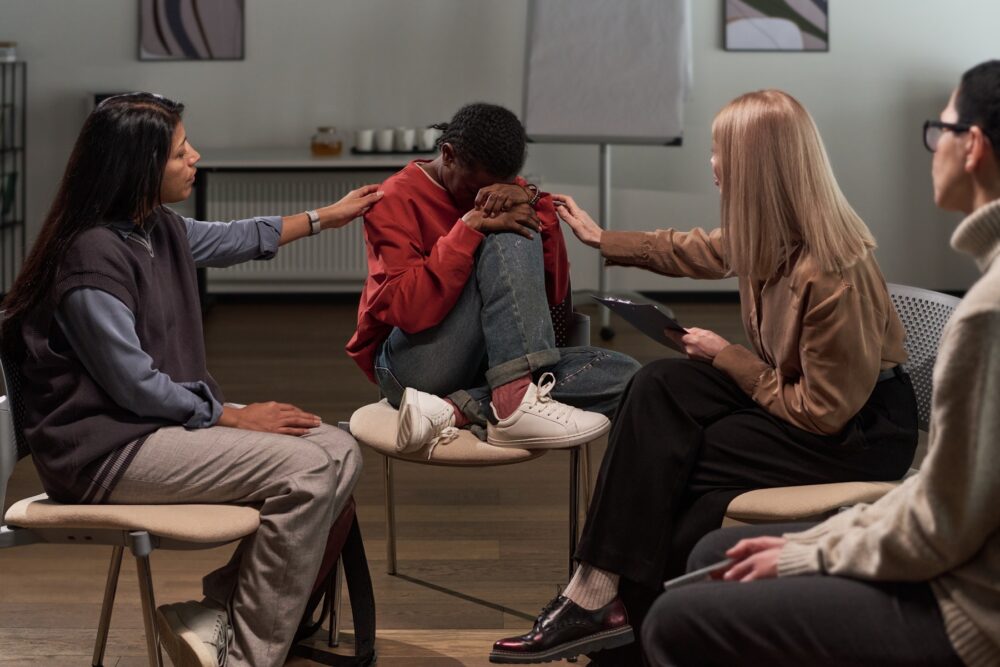
Inpatient services provide timely access to education and support for patients and families during hospitalization. Coordinators introduce the program, distribute patient and family handbooks, and connect individuals to peer visitors, trained survivors who offer hope through shared experience. Many centers incorporate post-traumatic stress disorder (PTSD) screening and referral pathways into TSN workflows, acknowledging the high prevalence of psychological distress following traumatic injury. Early identification and normalization of these responses can reduce stigma and encourage engagement with behavioral health resources.
Outpatient services extend support beyond discharge. These include survivor and caregiver support groups, peer visitation programs, advocacy opportunities, and the six-week online NextSteps self-management course. National virtual programming ensures access for survivors without a local TSN site.
At its core, the TSN addresses a critical need: trauma recovery is not solely medical. Survivors require tools to manage thoughts, emotions, relationships, and identity changes that accompany life-altering injury. Peer support and structured self-management interventions foster empowerment, autonomy, and resilience.
The Power of Peer Support: Spinal Cord Injury, Paralysis, Profound Loss
The impact of peer support is best illustrated through lived experience.
A 33-year-old father sustained a spinal cord injury in a motorcycle crash. Once defined by adventure and physical independence, he awoke to a new reality shaped by paralysis, medical regimens, and profound loss. Rehabilitation initially felt abstract and disconnected from the life he once knew. Then he met a peer mentor, another individual living successfully with a similar injury.
That encounter shifted his trajectory. Seeing someone who had rebuilt a meaningful life transformed rehabilitation from “fairy tales” into possibility. He re-engaged in therapy, returned to work, rebuilt relationships, and ultimately became a peer mentor himself. His journey from survivor to advocate reflects a central truth: relatability fosters belief, and belief fuels recovery.
Peer support interventions are associated with reductions in perceived isolation and depressive symptoms, along with improvements in self-efficacy and rehabilitation engagement. Beyond measurable psychosocial outcomes, peer connection restores identity, agency, and purpose, elements that profoundly influence long-term recovery yet are difficult to address through clinical intervention alone.
Implementation and System Integration
Implementing the TSN requires four streamlined steps: securing ATS institutional membership, completing a participation agreement, identifying a dedicated coordinator or team, and engaging in structured onboarding with national TSN staff. Participating centers receive access to implementation guidance, educational programming, technical assistance, and a national network of coordinators.
Importantly, the model is adaptable. Centers with full-time coordinators may offer comprehensive inpatient rounding, peer programs, and monthly support groups. Those with more limited resources can leverage virtual programming and integrate TSN education into existing workflows. The emphasis is on building sustainable infrastructure that aligns with each trauma center’s capacity and community needs.
Participation offers several system-level benefits, including enhanced patient and family experience, strengthened advocacy efforts, expanded community engagement, and improved alignment with national verification standards.
Collaboration with Palliative Care
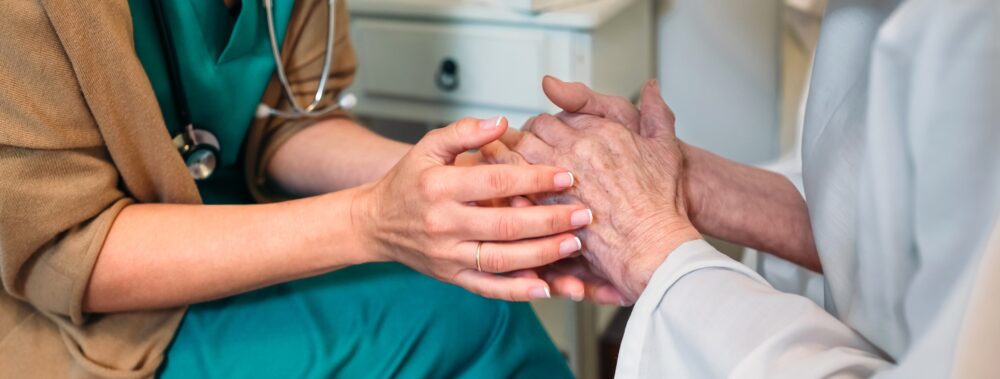
Palliative care (PC) focuses on improving quality of life through symptom management, emotional support, and goal-concordant care for patients with serious illness or injury. Although often associated with end-of-life care, PC principles apply across the continuum of trauma recovery.
The integration of PC and TSN reflects shared priorities: trauma-informed communication, attention to psychological and spiritual well-being, and support for complex decision-making. Survivors frequently face ongoing procedures, prolonged recovery trials, or changing functional trajectories. Revisiting goals of care, addressing symptom burden, and supporting families during transitions are essential components of holistic recovery.
Advance care planning discussions, time-limited recovery trials, and shared decision-making conversations are particularly important when patients regain decision-making capacity after critical injury. Incorporating these principles into survivorship programming ensures that recovery remains aligned with individual values and preferences.
Ultimately, both TSN and PC center on excellent, patient-focused communication, recognizing that healing extends beyond physical stabilization.
Recovery as an Active, Supported Process
The Trauma Survivors Network has evolved from a grassroots initiative into a nationally recognized framework for survivorship care. By embedding peer support, self-management education, and coordinated follow-up into trauma systems, the TSN reframes recovery as an active, supported process rather than an assumed outcome. Survival is no longer the sole benchmark of trauma excellence. In collaboration with palliative care and multidisciplinary teams, it empowers survivors and families to navigate the new reality after injury with connection, purpose, and hope.