

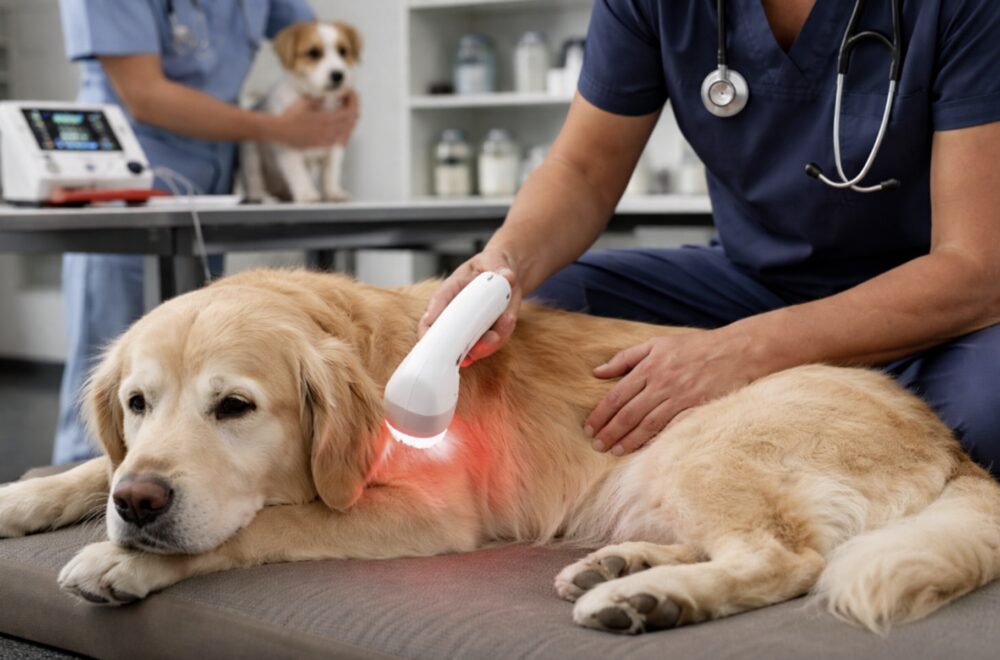

As Veterinarians seek non-pharmacologic options for pain, companies such as YJT are producing light therapy devices adapted to various situations.
As veterinarians seek alternatives to pharmacologic pain management, photobiomodulation (PBM) therapy is increasingly moving beyond specialty referral centers and into general practice, rehabilitation suites, and supervised at-home care. Advances in portable and wearable light therapy devices are reshaping how these treatments are delivered, while also sharpening focus on evidence quality, dosing standards, and safety oversight.
PBM refers to the therapeutic use of red and near-infrared light, delivered via light-emitting diodes (LEDs) or lasers, to modulate cellular function. Once largely confined to referral hospitals with dedicated laser suites, PBM is now being incorporated into everyday veterinary workflows, driven by growing clinical evidence and demand for non-pharmacologic adjuncts in pain, inflammation, and wound management.
Industry & Medical Evidence: The Science Catching up to Clinical Demand
At a mechanistic level, PBM acts primarily at the cellular scale. Red and near-infrared wavelengths interact with mitochondrial chromophores, most notably cytochrome c oxidase, leading to increased ATP production, improved microcirculation, and modulation of inflammatory signaling pathways. These mechanisms, well described in translational and veterinary reviews, provide biological plausibility for observed clinical effects.
Over the past decade, the veterinary evidence base has expanded. Randomized and blinded clinical trials in dogs with osteoarthritis have reported improvements in activity and gait scores following PBM therapy. A randomized controlled trial published in Veterinary World demonstrated significantly faster reduction in chronic wound area in dogs treated with PBM compared with controls. Additional randomized studies have documented benefits in postoperative pain scores and bone healing parameters following orthopedic procedures.
While effect sizes vary and optimal treatment protocols remain under investigation, the preponderance of controlled studies now supports PBM as a useful adjunct for selected indications, particularly wound healing, musculoskeletal disease, and postsurgical recovery.
Variability in Devices and Protocols Remains a Challenge
Despite growing support, the literature consistently highlights substantial heterogeneity across studies. Differences in wavelength, power output, irradiance, total energy delivered, treatment frequency, and outcome measures complicate direct comparisons and clinical translation.
Veterinary authors repeatedly call for standardized protocols, larger multicenter trials, and more objective outcome measures such as accelerometry, force-plate gait analysis, and validated wound metrics. Head-to-head comparisons of LED-based systems versus laser devices are also limited, leaving clinicians to extrapolate from heterogeneous data sets.
Safety events associated with PBM are uncommon but have been reported, including transient discomfort or behavioral changes. These findings underscore the importance of species-specific dosing, case selection, and appropriate operator training.
Regulatory classification plays a decisive role in how PBM devices are deployed in practice. In the United States, the FDA classifies lasers by hazard level (Class I–IV). Class IIIb and Class IV lasers, which deliver higher power and deeper tissue penetration, are explicitly recommended for use only by trained personnel with appropriate engineering and administrative controls.
Many veterinary hospitals and universities now require laser safety programs, including hazard analyses, protective eyewear protocols, staff training, and device inventories for higher-class lasers. Veterinary laser safety handbooks and institutional environmental health and safety (EHS) guidelines echo these requirements, emphasizing that portability does not reduce regulatory responsibility.
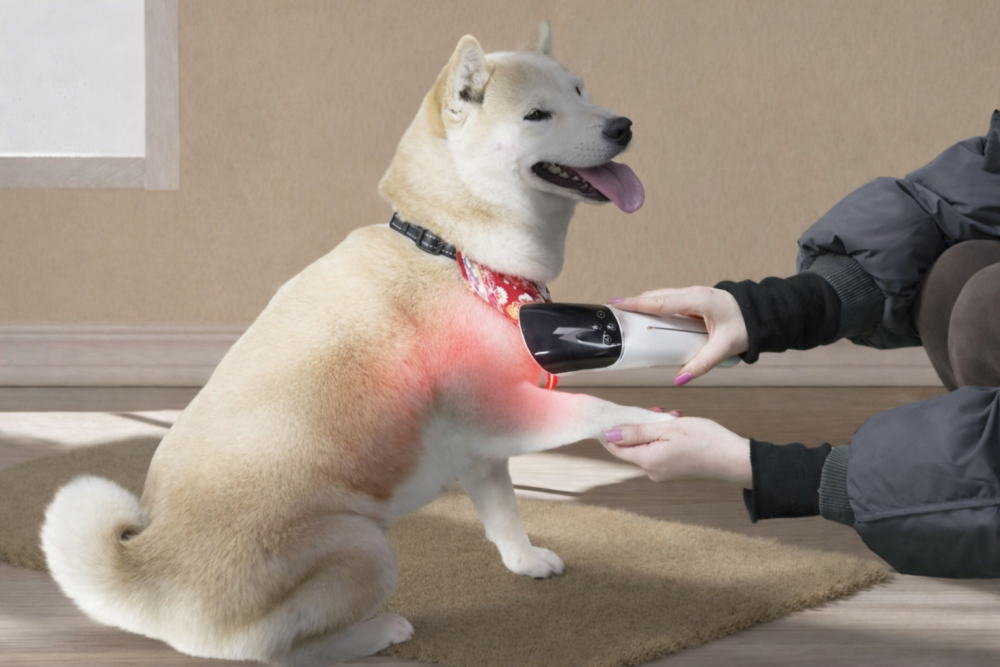
Industry Responds With Portable and Wearable Options
Against this backdrop of expanding evidence and regulatory scrutiny, manufacturers are developing devices designed for portability and workflow flexibility. One example is YJT, a China-based manufacturer founded in 2005 that produces a range of phototherapy devices for veterinary and human use.
According to company materials, YJT’s veterinary portfolio includes handheld red/near-infrared LED therapy devices, LED therapy gloves, wearable LED pad systems, a handheld Class IIIb laser device, and a handheld veterinary Class IV laser device. These categories align with those most frequently discussed in the veterinary literature, where lower-fluence LED systems are commonly associated with superficial conditions and wound care, and higher-power laser devices are used for deeper musculoskeletal indications.
Wearable LED pads and gloves are designed to allow prolonged, low-stress treatments and may be particularly suited to geriatric patients, hospitalized animals, or supervised at-home continuation therapy. Handheld Class IIIb lasers are often used for targeted soft-tissue or postsurgical applications, while Class IV devices provide higher power and deeper penetration but require more stringent safety protocols.
YJT reports FDA registration and operation under an ISO 13485 quality management system, with markets in the U.S., Europe, and Asia. As with any device, clinicians are advised to review manufacturer documentation carefully, including wavelength specifications, irradiance (mW/cm²), total energy per treatment site, recommended treatment times, and declared safety certifications.
Practical Implications for Veterinary Practice and Looking Ahead
For clinicians, the takeaway is not that all light therapy devices are interchangeable. Therapeutic success depends on matching the device type and dosing parameters to the indication, patient, and clinical setting, while adhering to regulatory and institutional safety requirements.
Portable and wearable PBM technologies are expanding access to care and enabling hybrid treatment models that combine in-clinic initiation with supervised continuation outside the hospital. At the same time, these technologies place greater responsibility on veterinarians to ensure evidence-informed use, staff training, and outcome tracking.
Three trends are likely to shape the next phase of PBM integration in veterinary medicine. First, the evidence base will continue to improve, with more randomized, blinded trials using objective outcome measures. Second, hybrid care models will become more common as portable devices facilitate continuity of therapy beyond the clinic. Third, regulatory and institutional frameworks will continue to mature, formalizing training requirements and safety standards.
PBM is no longer a niche modality. For selected veterinary indications, it represents a validated adjunct to conventional care—provided it is deployed with appropriate evidence, dosing discipline, and safety oversight.
Sources:
- Millis, D.L., “Laser Therapy,” Veterinary Clinics: Small Animal Practice.
- Hoisang, S. et al., “Assessment of wound area reduction on chronic wounds in dogs with photobiomodulation therapy: A randomized controlled clinical trial,” Veterinary World (2021).
- Barale, L., “Effects of low-level laser therapy on impaired mobility in dogs,” Veterinary Medicine and Science (2022).
- Alves, J.C., et al., “A randomized double-blinded controlled trial on the effects of photobiomodulation therapy following orthopedic surgery,” American Journal of Veterinary Research (2022). (see AJVR 2022, vol.83)
- FDA, “Laser Products and Instruments” (classification, safety guidance).
- University / institutional laser-safety handbook (example), “Veterinary Medical Laser Safety Guideline,” University EHS (2024).
- YJT product & company materials (manufacturer site and downloadable catalogs/manuals).