

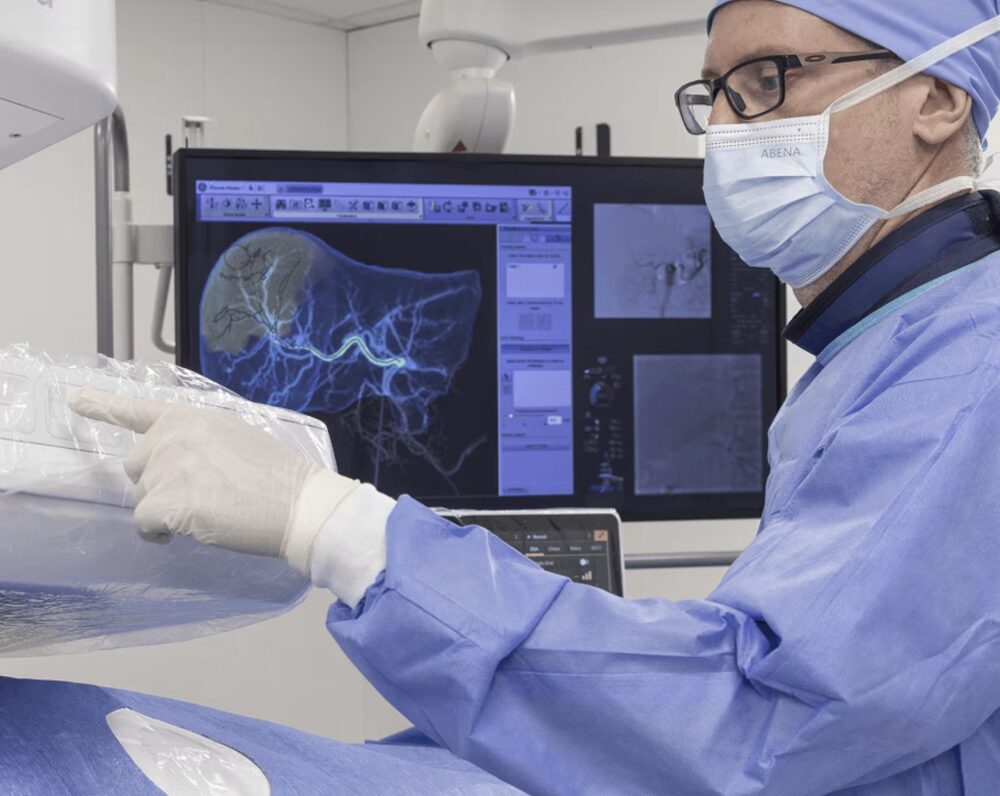

Inside the French cardiovascular operating room, GE HealthCare’s mobile interventional imaging platform Allia™ Moveo with AI-assisted 3D guidance is reshaping how complex aortic procedures are performed
In a hurry? Here are the key notes to know:
- Claimed world first: Hôpital Marie-Lannelongue says it is the first hospital globally to finalize installation of the Allia™ Moveo mobile IR system with AI-assisted 3D intraoperative guidance, but the novelty lies in the specific integration, not in AI itself.
- Technology focus: Allia™ Moveo by GE HealthCare combines mobile angiographic imaging with deep learning–based 3D reconstruction (CleaRecon DL) to enhance precision in complex endovascular procedures.
- Strategic impact: The platform reflects a broader shift toward AI-enabled hybrid operating rooms, with implications for infrastructure, workflow, capital investment, and potentially reduced reliance on open cardiovascular surgery.
When Hôpital Marie-Lannelongue announced in February 2026 that artificial intelligence was revolutionizing its cardiovascular surgery unit, the claim came with a bold qualifier: a “world’s first.” According to the hospital, it is the first institution globally to finalize the installation of the Allia™ Moveo interventional imaging system developed by GE HealthCare, enabling complex cardiovascular procedures with AI-assisted 3D imaging guidance.
Yet AI in cardiovascular care is hardly new. From automated CT analysis for aortic aneurysm risk prediction to robotic-assisted cardiac surgery, hospitals worldwide have integrated machine learning into both diagnostics and intervention. The key question, then, is not whether AI is new to cardiovascular surgery. But whether the specific configuration of mobile interventional radiology, deep-learning image reconstruction, and hybrid operating room workflow constitutes a genuine first.
From Predictive Algorithms to Intraoperative AI Guidance
Marie-Lannelongue has been experimenting with AI in cardiovascular pathways for several years. As early as 2021, teams were using algorithmic analysis to anticipate rupture risk in aortic aneurysms. It positioned the hospital as a national reference center for complex aortic disease. The 2026 announcement marks a shift from predictive AI to intraoperative AI.
At the center of this development is CleaRecon DL, a deep learning–based 3D CT reconstruction tool. The system processes volumetric imaging in real time. It reduces motion artifacts from respiration and cardiac cycles and minimizes interference from metallic implants. For vascular and aortic surgeons, this translates into clearer intraoperative visualization of landing zones, branch vessels, and device positioning.
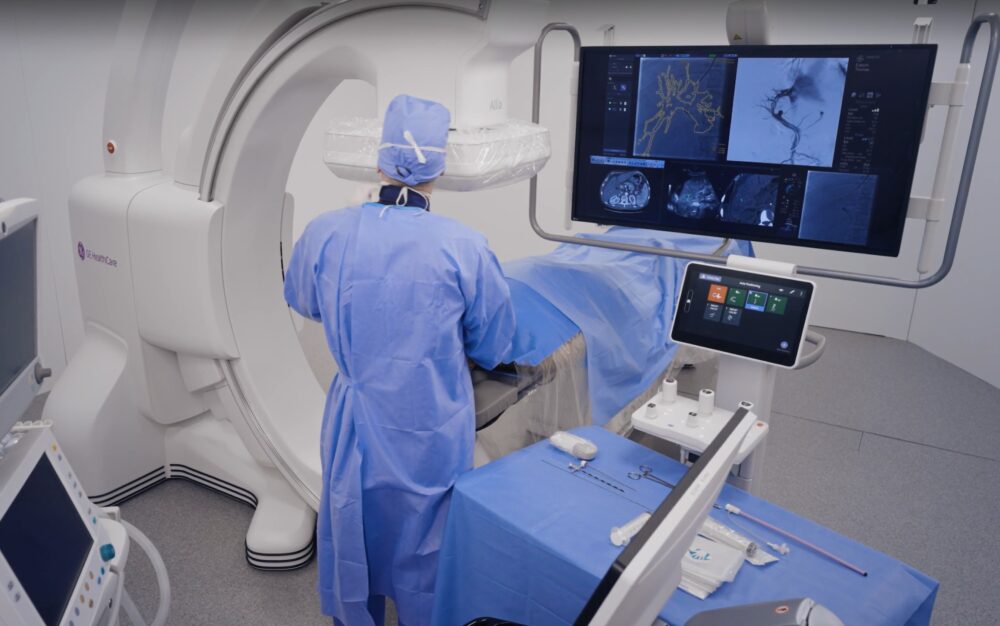
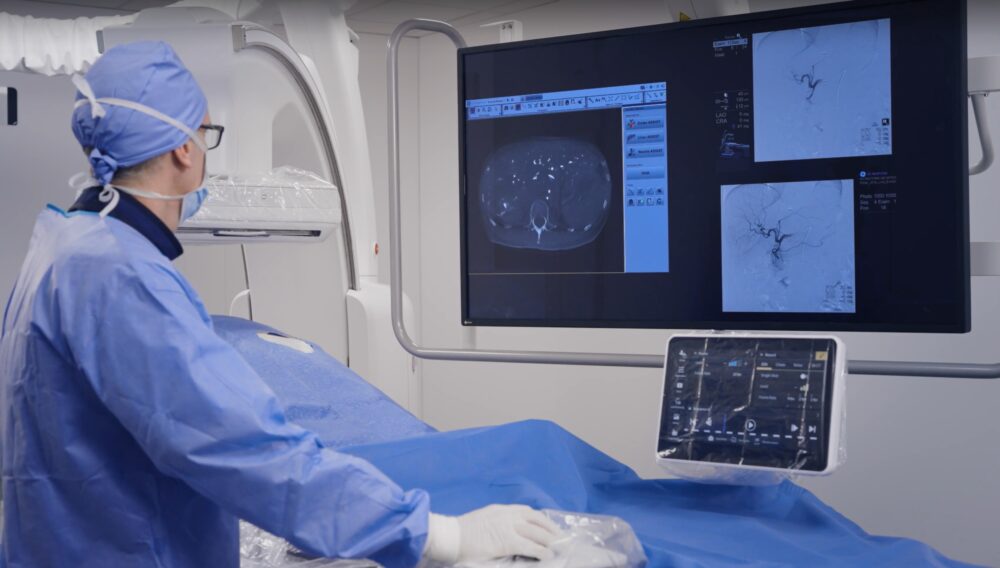
Professor Stephan Haulon, head of aortic and vascular surgery, has framed the impact in practical terms: improved certainty during delicate endovascular maneuvers. Procedures that once required open thoracotomy or sternotomy may increasingly be managed via minimally invasive approaches. The hospital argues that AI-assisted visualization reduces uncertainty in device deployment, potentially lowering perioperative risk.
Still, AI-supported image reconstruction is not unprecedented. Vendors across the imaging market now offer deep learning–based noise reduction and artifact suppression. What distinguishes Marie-Lannelongue’s claim is the integration of such reconstruction into a newly configured mobile hybrid operating environment.
What Is Allia™ Moveo and What Makes It Different?
The Allia™ Moveo platform by GE HealthCare is a mobile interventional radiology (IR) imaging system designed for flexibility. Unlike fixed angiography suites, Moveo is mounted on a motorized platform that can be repositioned around the surgical table. It adapts to workflow needs without requiring a dedicated cath lab infrastructure.
The system has received both FDA clearance and CE mark approval, and GE HealthCare officially launched it commercially in 2025 before inaugurating its installation at Marie-Lannelongue in 2026. The company promotes the platform as combining high-end image quality with mobility, supporting vascular, cardiac, and structural heart interventions.
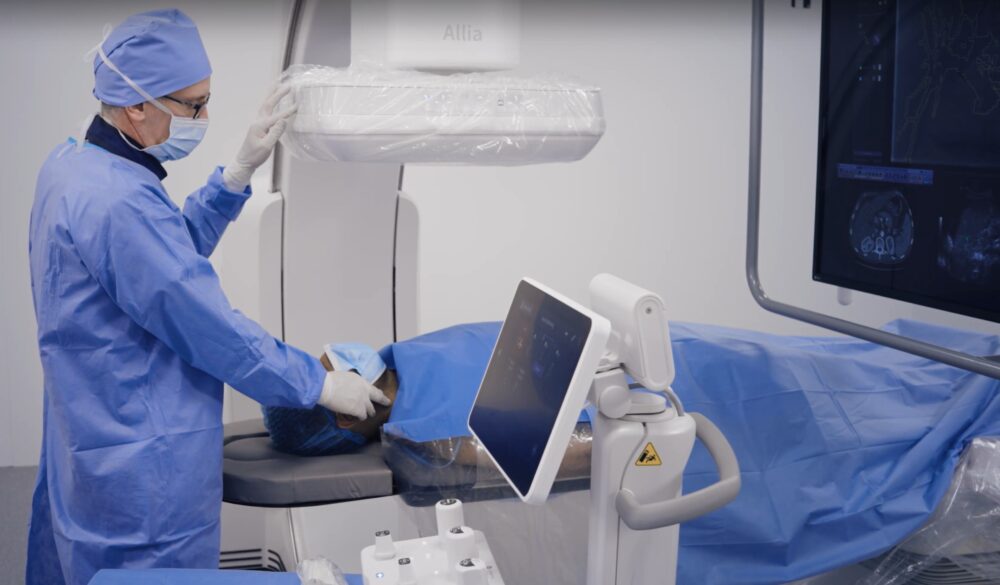
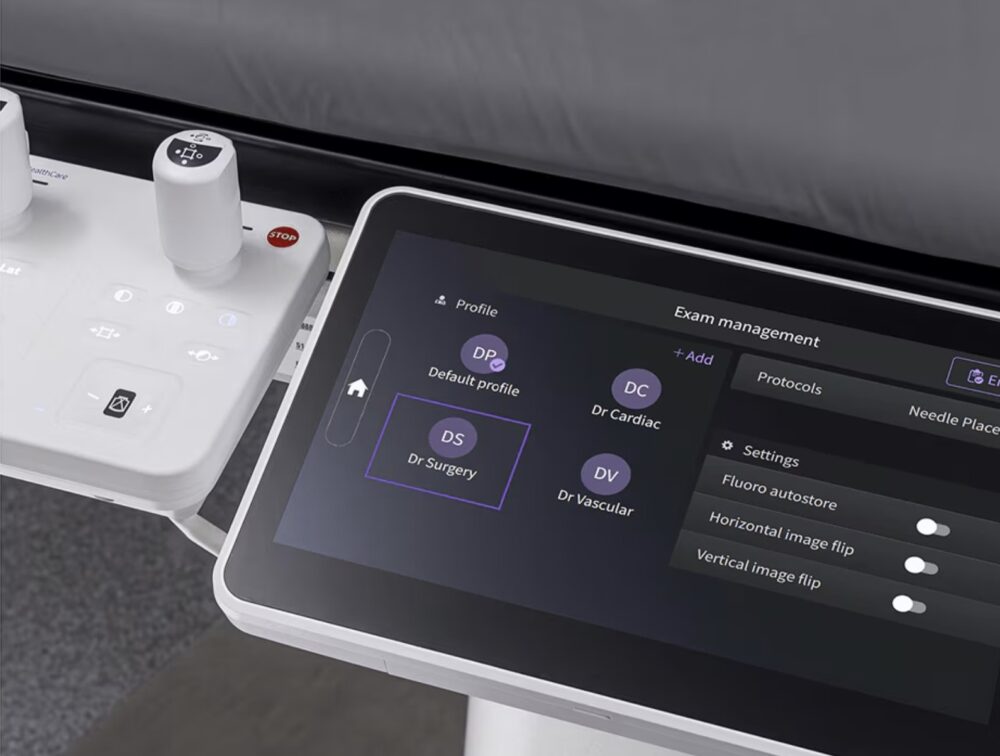
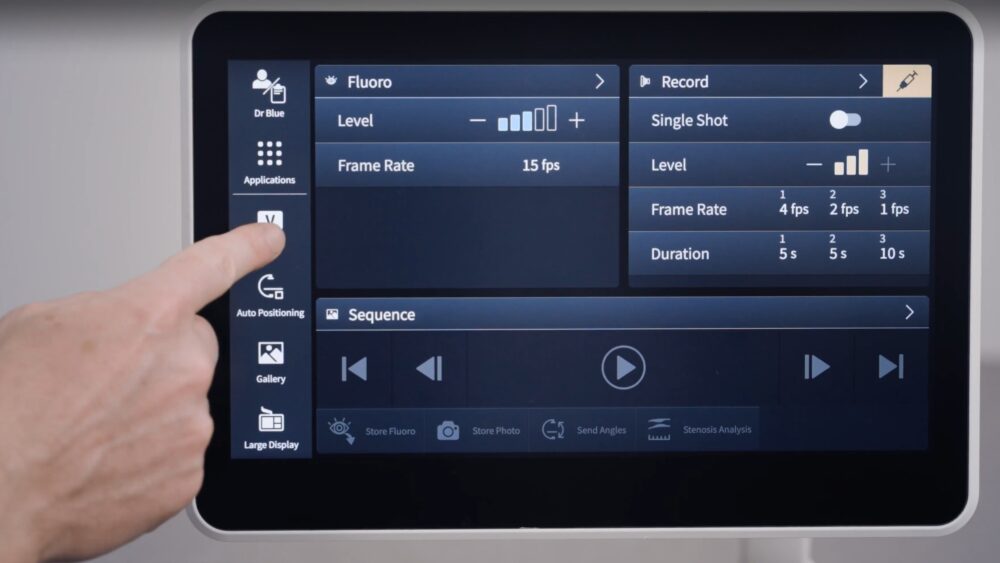
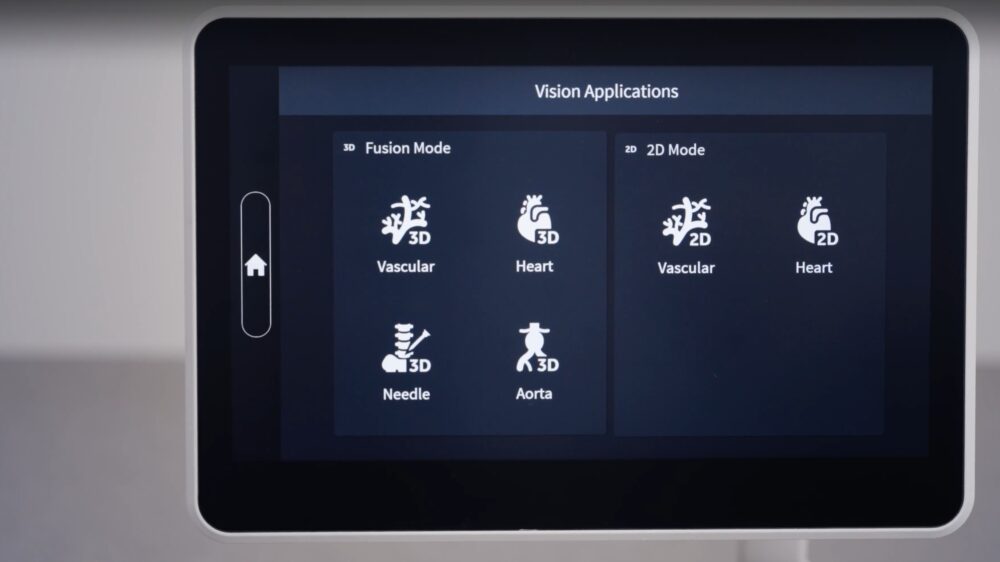
Technically, Allia™ Moveo integrates advanced flat-panel detector technology, automated positioning, and AI-enabled image processing. Its value proposition lies in merging cath lab–grade imaging with the sterility and flexibility of a surgical theater. In practice, this allows surgeons, interventional cardiologists, anesthesiologists, and imaging specialists to work simultaneously in a single space.
Is that a world first? Hybrid ORs equipped with fixed angiography systems have existed for over a decade in Europe, North America, and Asia. AI-enhanced image reconstruction is also widely deployed. What appears novel here is the combination: a fully mobile IR platform with embedded deep-learning 3D reconstruction, installed as the primary imaging modality in a cardiovascular surgery unit and used for complex aortic interventions. Whether that constitutes a “première mondiale” depends largely on how narrowly the claim is defined.
READ: The press release published by the hospital. “Marie-Lannelongue Hospital has taken a major step forward in the treatment of coronary artery disease by performing multiple robot-assisted coronary bypass surgeries for the first time in France.”
Implications for Cardiovascular Unit Design
The installation signals a structural shift in how cardiovascular surgery units may evolve. Traditionally, hospitals separated open surgery, catheter-based intervention, and imaging into distinct environments. Hybrid rooms began to blur these lines, particularly for transcatheter aortic valve implantation (TAVI) and endovascular aneurysm repair (EVAR).
With AI-driven intraoperative 3D imaging embedded directly into the surgical workflow, the cardiovascular unit becomes a data-intensive environment. Real-time reconstruction, artifact suppression, and device tracking require robust IT infrastructure, seamless PACS integration, and cybersecurity safeguards. The physical layout must accommodate both open surgical conversion and catheter-based precision.
For patients, the potential advantages are clear. Fewer open procedures, shorter ICU stays, and possibly reduced radiation exposure if image optimization decreases repeat acquisitions. For clinicians, ergonomics and radiation protection may improve through optimized system positioning.
However, adoption raises questions of cost-effectiveness and scalability. Mobile AI-enabled IR platforms represent substantial capital investment. Their value will depend on procedural volume, multidisciplinary coordination, and measurable improvements in clinical outcomes, not simply technical capability. In that sense, the “world’s first” may be less about technological novelty and more about institutional strategy. A cardiovascular center betting that AI-guided imaging in the hybrid OR will redefine how complex aortic disease is treated. Whether others follow, and whether outcome data support the transformation, will determine if this milestone marks a turning point.
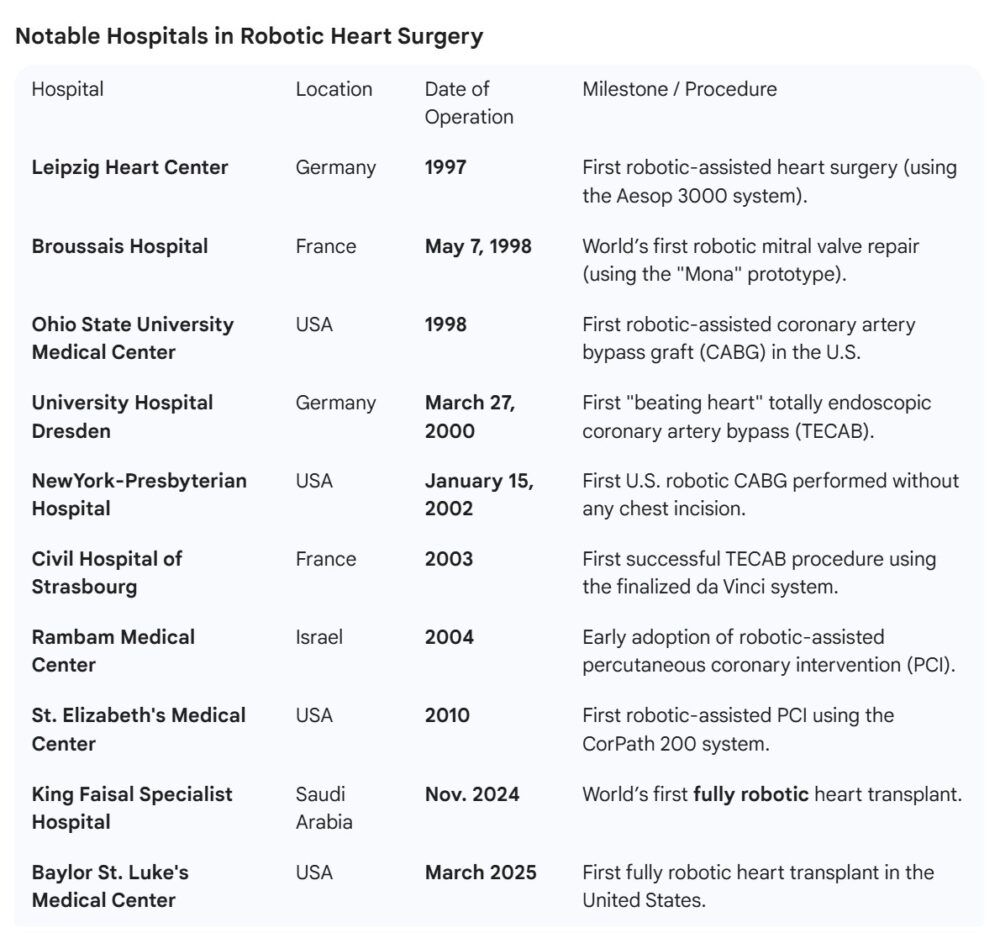
- The Early Pioneers: The late 1990s were the “golden era” of robotic discovery, with European centers in Germany and France leading the initial charge before the technology was widely adopted in the U.S.
- Technological Evolution: Early “robots” like Aesop were simply voice-controlled arms that held cameras. By the time the da Vinci system was approved for cardiac use in 2001, surgeons were performing complex internal repairs through incisions no larger than a pencil.
- Modern Milestones: The most recent breakthroughs (2024–2025) involve fully robotic transplants, where the entire organ is replaced through small ports rather than the traditional “cracking” of the breastbone (sternotomy).
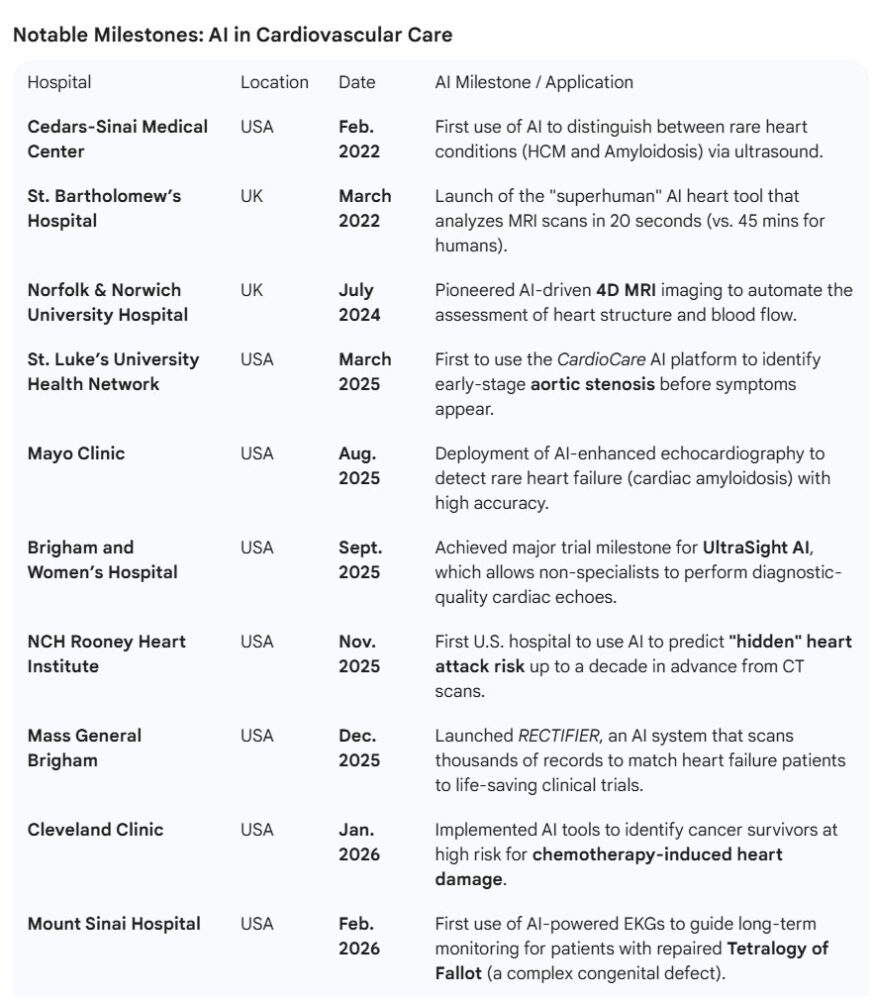
- Beyond the Scalpel: Unlike the physical robot, AI’s primary role is early detection. By the time a patient gets to a robotic surgeon, AI has often already identified the problem months or years earlier than traditional methods would have.
- Speed and Precision: The Barts Heart Centre milestone is a prime example of AI’s efficiency—reducing a 45-minute doctor’s task to a 20-second automated scan.
- Predictive Power: The recent shift (2025–2026) is toward preventative cardiology, where AI like the CaRi-Heart system at NCH identifies inflammation that human eyes cannot see on standard scans, preventing the heart attack before it happens.