


Sternal instability remains a major challenge after cardiac surgery, particularly in high-risk patients. New rigid fixation strategies using advanced biomaterials are redefining postoperative recovery and clinical outcomes.
This article was written by Antonia Miguel, Marketing Manager, NEOS Surgery – STERN FIX.
Median sternotomy remains the most common surgical approach in cardiac surgery, yet sternal closure still relies predominantly on stainless steel wire cerclage. While wires are familiar, inexpensive, and fast to apply, they do not provide true rigid fixation and allow micromovements of the sternum under physiological loads such as coughing or early mobilization. These limitations may result in sternal instability, dehiscence, prolonged postoperative pain, and in severe cases, deep sternal wound infection (DSWI), particularly in patients with osteoporosis, obesity, diabetes, or chronic pulmonary disease.
In response to these challenges, the Enhanced Recovery After Surgery (ERAS) guidelines for cardiac surgery recommend the use of rigid sternal fixation to improve sternal healing and reduce postoperative complications, especially in high-risk patients. Importantly, the guidelines state that wire cerclage achieves approximation and compression but does not eliminate lateral sternal movement; therefore, true rigid fixation is not achieved with wires alone.
A Novel Approach to Rigid Sternal Fixation
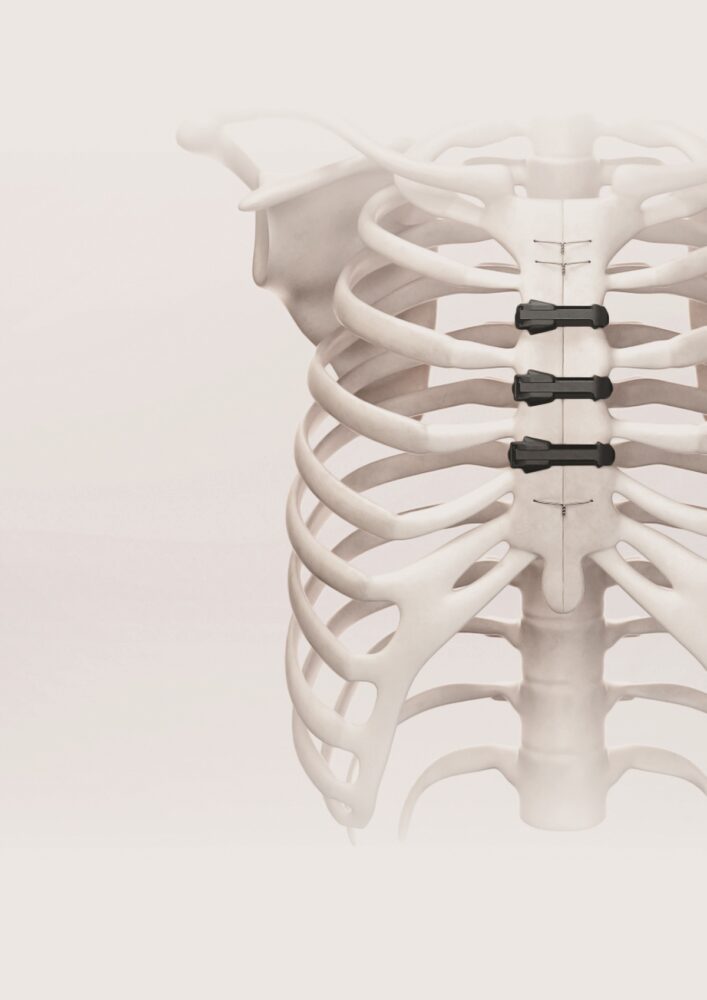
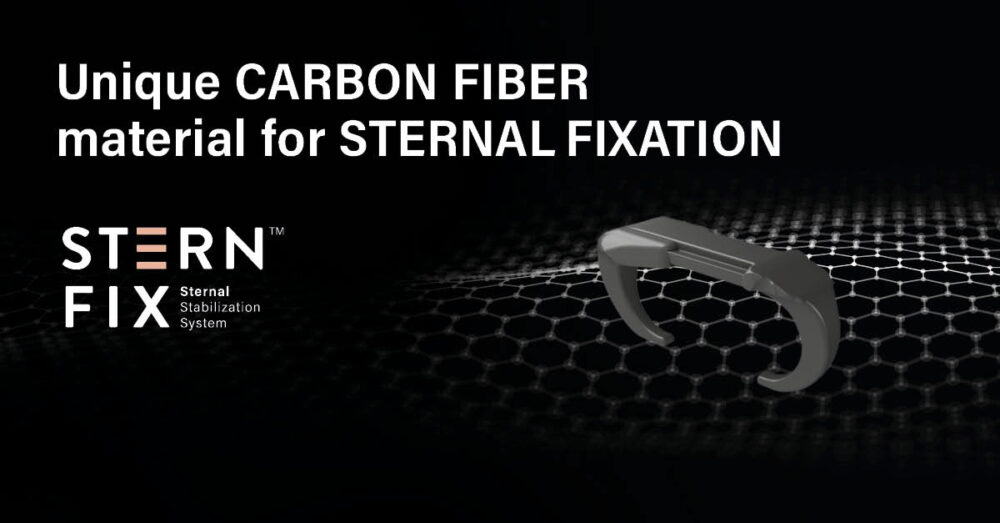
STERN FIX is a carbon fiber–based rigid sternal fixation system designed to overcome these limitations while preserving surgical simplicity. Developed by NEOS Surgery, STERN FIX combines carbon fiber with an intuitive, needle-free implantation technique.
The mechanical properties of carbon fiber closely match those of cortical bone, reducing stress concentration at the bone–implant interface and minimizing the risk of bone cut-through. Unlike metallic implants, carbon fiber does not generate artifacts on CT or MRI imaging, allowing accurate postoperative assessment of sternal healing. The material is corrosion-free, biocompatible, and does not release metal ions, supporting safe long-term implantation.
Continuous Compression and Multi-axis Stability
STERN FIX provides continuous midline compression between the two sternal halves, maintaining stable contact even under medium and severe coughing forces. Mechanical testing has shown that traditional wire cerclage may lose a significant amount of compression after repeated coughing cycles, whereas rigid fixation preserves alignment and stability.
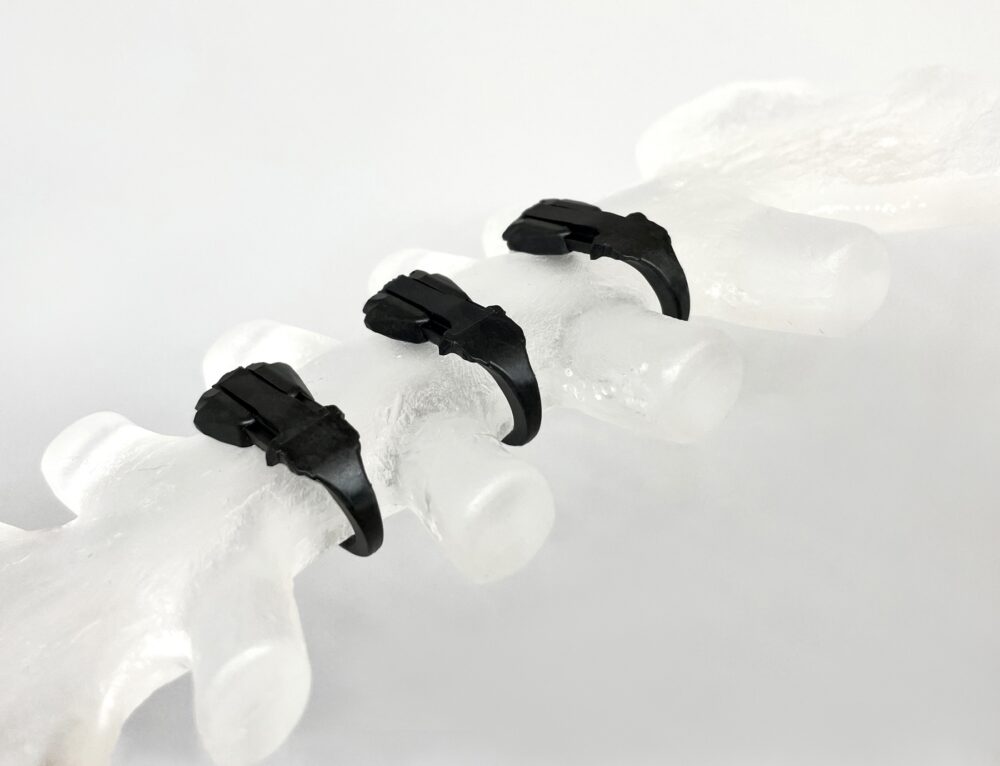
By embracing the sternum laterally at the intercostal spaces, STERN FIX achieves multi-axis stability in all three planes. Its atraumatic, rounded profile distributes pressure evenly across the bone, an important advantage in fragile or osteoporotic sternums.
Ease of Use and Surgical Workflow Integration
Designed for operating room efficiency, STERN FIX consists of two interlocking parts that are manually engaged, tightened with torque-limiting forceps, and trimmed with a dedicated cutter. The needle-free approach reduces the risk of intercostal fascia perforation and associated bleeding.
The system is compatible with full and partial sternotomies, including minimally invasive cardiac surgery (MICS). In case of emergency re-entry, the device can be quickly removed using a standard wire cutter, without specialized instruments.
Carbon fibre-enforced stabilization system for ministernotomy resynthesis – PubMed
Clinical Evidence and Conclusion
Clinical results from a prospective investigation at Hospital Clínic of Barcelona demonstrated excellent sternal stability in all patients, including those at high risk, with low pain scores and no device-related adverse events at six months follow-up. CT imaging confirmed satisfactory sternal healing without implant-related artifacts.