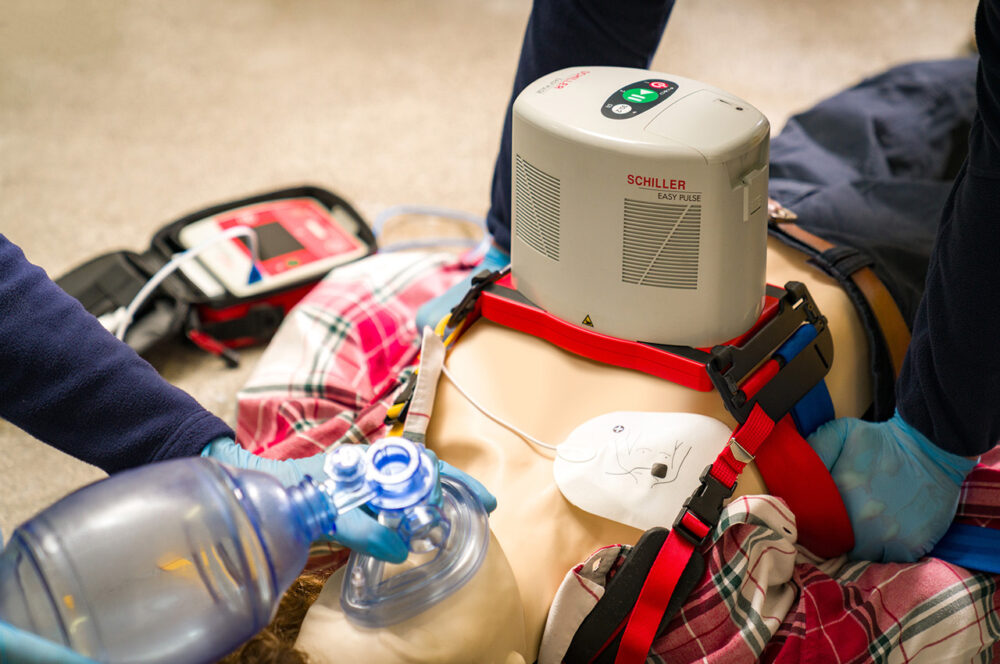

A cardiac arrest does not wait for the perfect place for an emergency response. It can happen in an ambulance, on the road, inside a building, in the mountains – and sometimes precisely where professional help will not arrive for several minutes. In real-world resuscitation, the challenge is often not simply having the right technology available but getting it to the patient and being able to use it effectively under challenging conditions. The defibrillator and resuscitation technology need to come to the patient, to where it is needed – not the other way around. With the FRED easyport plus and the mechanical chest compression device EASY PULSE, SCHILLER offers two compact solutions for different phases of resuscitation.
By Rolf Schuler, Director Research & Development at SCHILLER
FRED easyport plus: Small Enough for Rapid Deployment
Weighing just 780 grams, the FRED easyport plus is an exceptionally lightweight defibrillator. This makes a difference when equipment cannot simply be kept in a vehicle but needs to be carried by the responder: by first responders, medical support teams, police and fire services, rescue organisations or during operations in difficult-to-access terrain.
At just 780 grams, the FRED easyport plus can be carried rapidly to the patient – an important advantage when responders have to cover longer distances on foot or operate in difficult-to-access locations.
Its strength lies not only in its weight. The FRED easyport plus guides the user through resuscitation with a 1-2-3 step workflow and supports chest compressions with a metronome and real-time CPR feedback. Pre-connected electrodes enable rapid application to the patient. The colour screen automatically adjusts its brightness to the surrounding conditions. Intervention data can be transferred via Wi-Fi or USB. Automatic self-tests monitor operational readiness. For training purposes, FRED easyport plus Trainer is available.
Another key advantage is the system’s flexibility: the FRED easyport plus is available in different configurations to support different user profiles and operational environments – from automated AED operation to semi-automatic and manual defibrillation. This allows the same basic device concept to be used across different emergency response systems. Which individuals are permitted to use a defibrillator, and what training is required, is determined by the applicable legal, regulatory and organisational requirements.
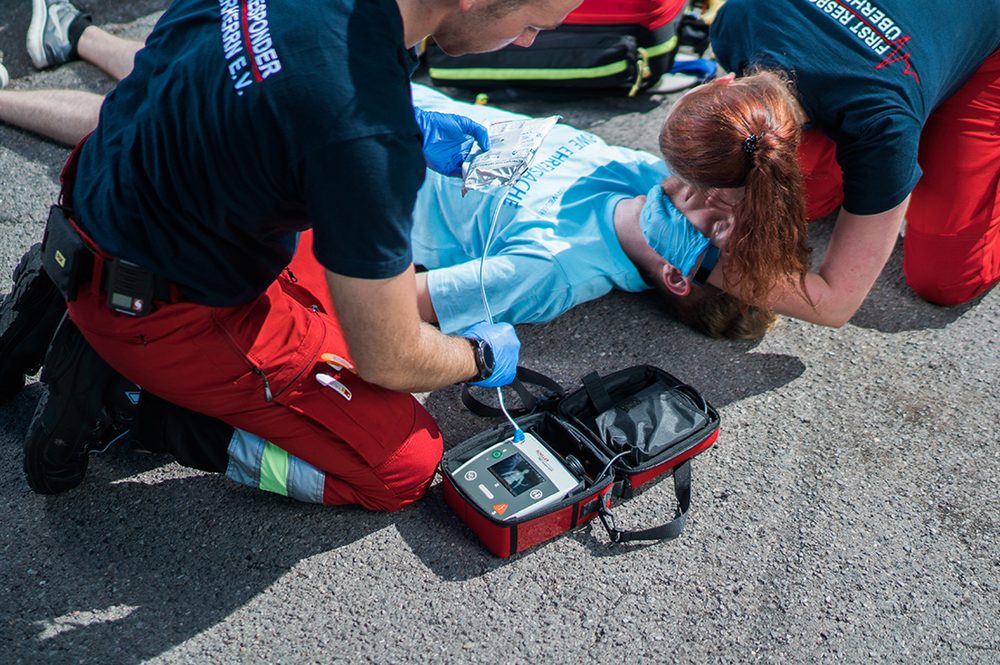
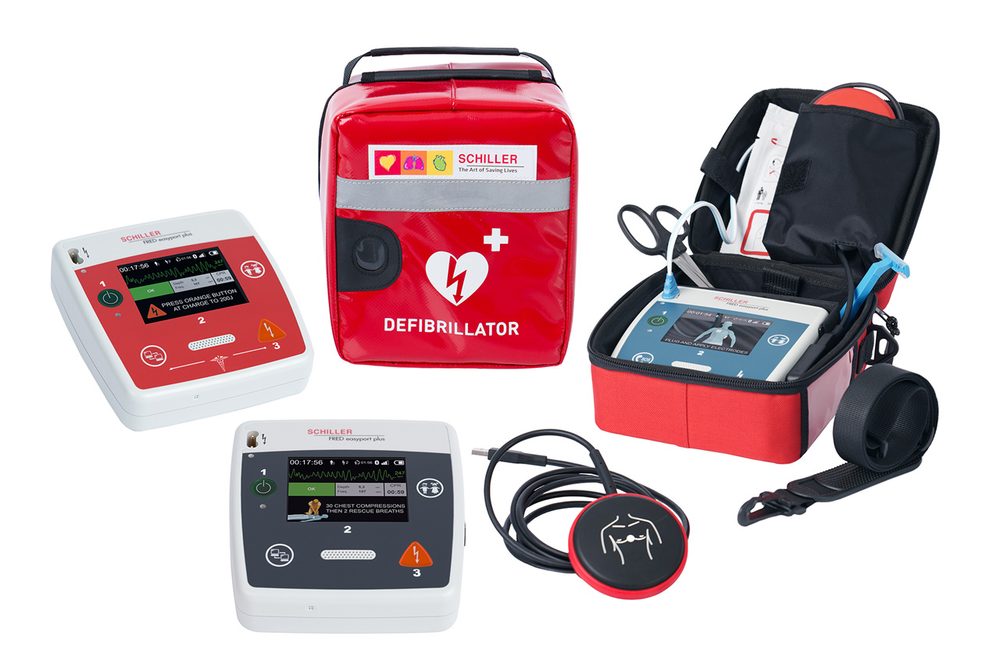
semi-automatic and fully automatic defibrillator
The option of switching to paediatric use with the same electrodes adds further flexibility when responding to different patient needs.
This opens up a broad range of applications – from professional emergency medical services, ambulance and air rescue services to police, fire and rescue services, Samaritan organisations, first responders and appropriately trained lay responders. The principle is particularly important for first-responder systems: there is no need to wait for professional emergency services to arrive before life-saving care can begin; early access to defibrillation can make a crucial difference.
EASY PULSE: Reliable Chest Compressions in Challenging Conditions
During resuscitation, many tasks have to be managed simultaneously. Chest compressions, ventilation, defibrillation, monitoring, communication and, where necessary, transporting the patient all place demands on the emergency team. In these real-world situations, maintaining high-quality manual CPR can become physically demanding, difficult to coordinate or potentially unsafe for the team. This is precisely where EASY PULSE comes in.
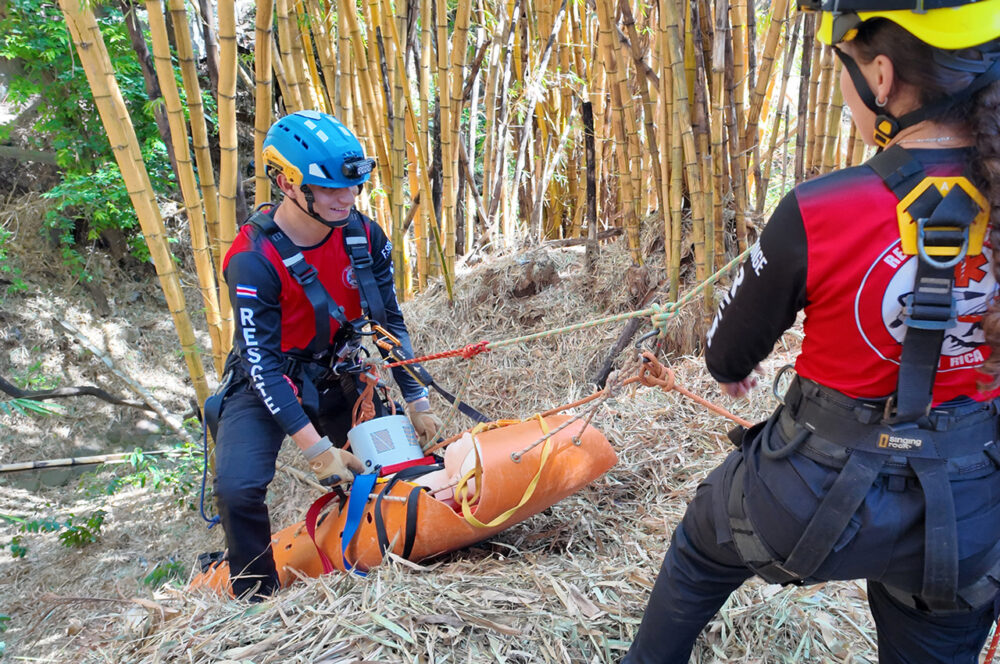
compression becomes difficult
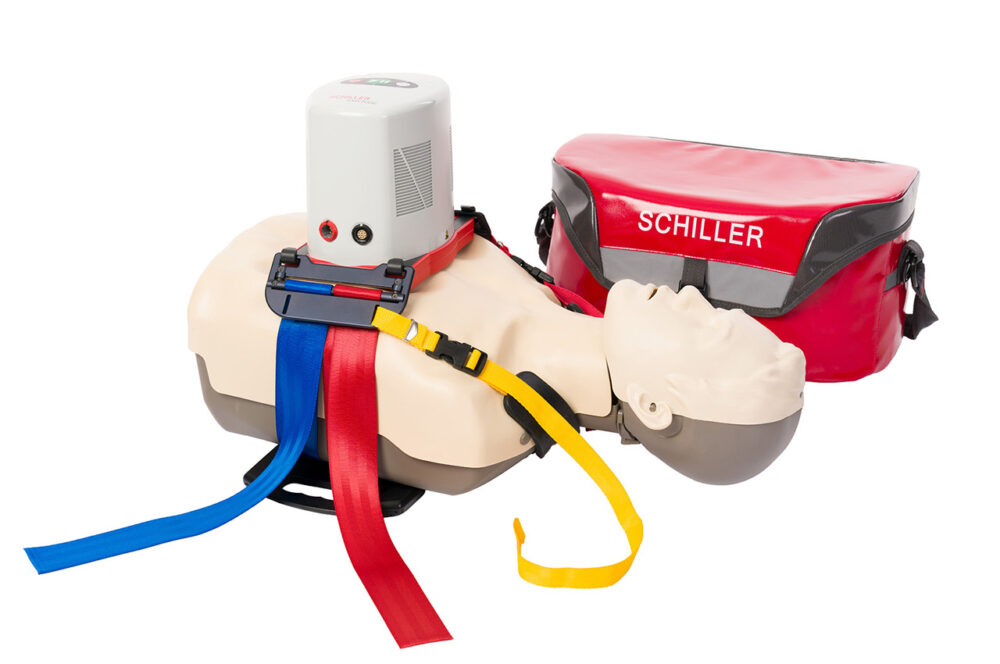
the rescue team can focus on other tasks
The compact device, weighing around 5 kilograms as a piston-band-system, automatically performs mechanical chest compressions. A combination of a piston and a band generate three-dimensional compression. The rate and compression depth remain constant while the rescue team can focus on other tasks. The system can be applied to the patient by a single person using a slider and strap system.
EASY PULSE provides consistent mechanical chest compressions in situations where high-quality manual CPR may be difficult to maintain – for example during patient transport, in confined spaces or where movement and limited access make manual compressions difficult or potentially unsafe for the rescue team.
EASY PULSE demonstrates its particular value in situations where manual resuscitation becomes especially difficult: during transport, in confined spaces, during stairway or rope rescues, or in air rescue operations. These are precisely the situations in which the reality of resuscitation differs from the ideal scenario: the patient may need to be moved, the team may have limited access, and maintaining effective manual compressions may be difficult or unsafe. The device can also be used with the patient’s upper body elevated by up to 45 degrees, providing additional flexibility in situations where the patient cannot remain in a conventional horizontal position. With a typical battery life of up to 45 minutes, EASY PULSE is also designed to support longer resuscitation and transport phases.
The two devices therefore address two important challenges in real-world resuscitation: bringing defibrillation to the patient as early as possible and maintaining consistent chest compressions when high-quality manual CPR becomes difficult to perform.
Life-Saving Technology Must Keep Pace with the Location of the Emergency
Whether in emergency medical services, air rescue, fire and rescue services, police, Samaritan organisations, as a first responder or as a trained first-aider: requirements vary, but the goal remains the same. Early recognition, immediate high-quality CPR and rapid defibrillation when indicated remain fundamental elements of successful resuscitation. Technology alone cannot replace these actions – but it can help responders deliver them as early and consistently as possible, wherever the cardiac arrest occurs.
As little valuable time as possible should therefore be lost between cardiac arrest, the start of CPR and access to defibrillation.
Modern resuscitation begins where the emergency happens – not where it would be most convenient to provide care. That means resuscitation technology must be mobile, rapidly deployable and capable of supporting teams when conditions are far from ideal.
The FRED easyport plus is designed to make defibrillation as straightforward and mobile as possible. EASY PULSE takes this one step further by bringing consistent resuscitation quality to where it is needed most: during transport, in confined spaces or in difficult terrain.
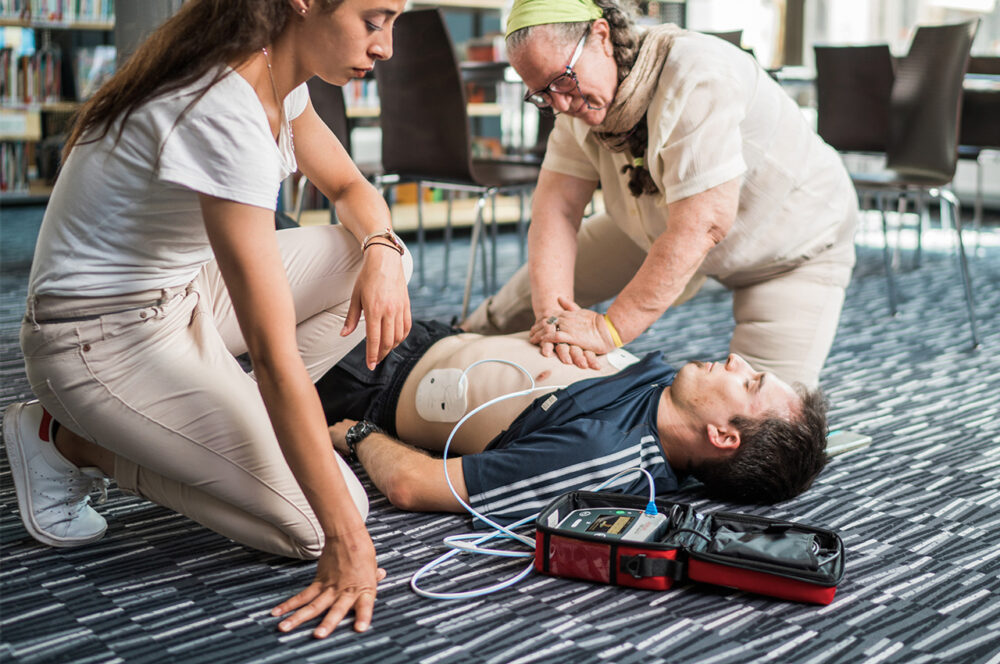
defibrillation can make a crucial difference
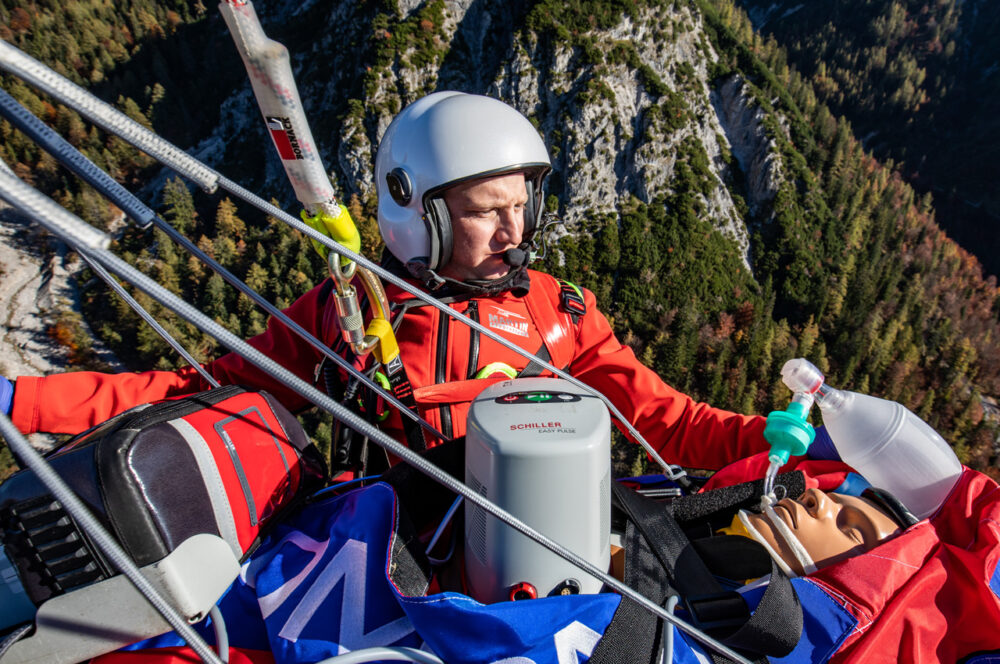
quality to where it is needed most
Because resuscitation begins where the emergency happens. The technology has to come to the patient – and it has to perform when real-world conditions make resuscitation more difficult.
Bringing the right technology to the patient quickly and enabling responders to use it effectively under challenging conditions can help protect what matters most in resuscitation: valuable time.
Learn more about FRED easyport plus
Learn more about EASY PULSE