

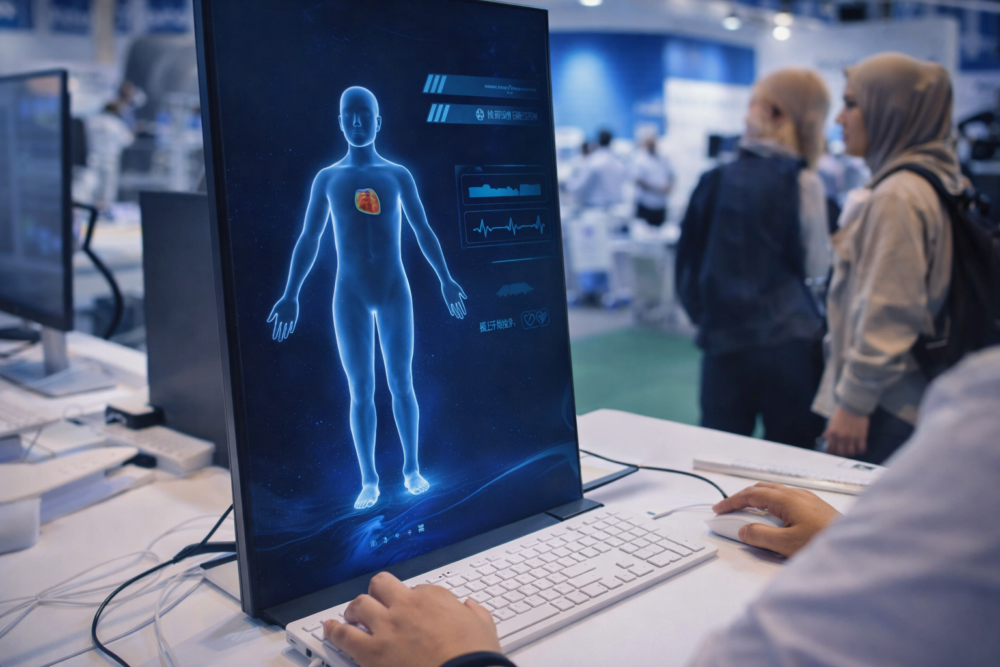

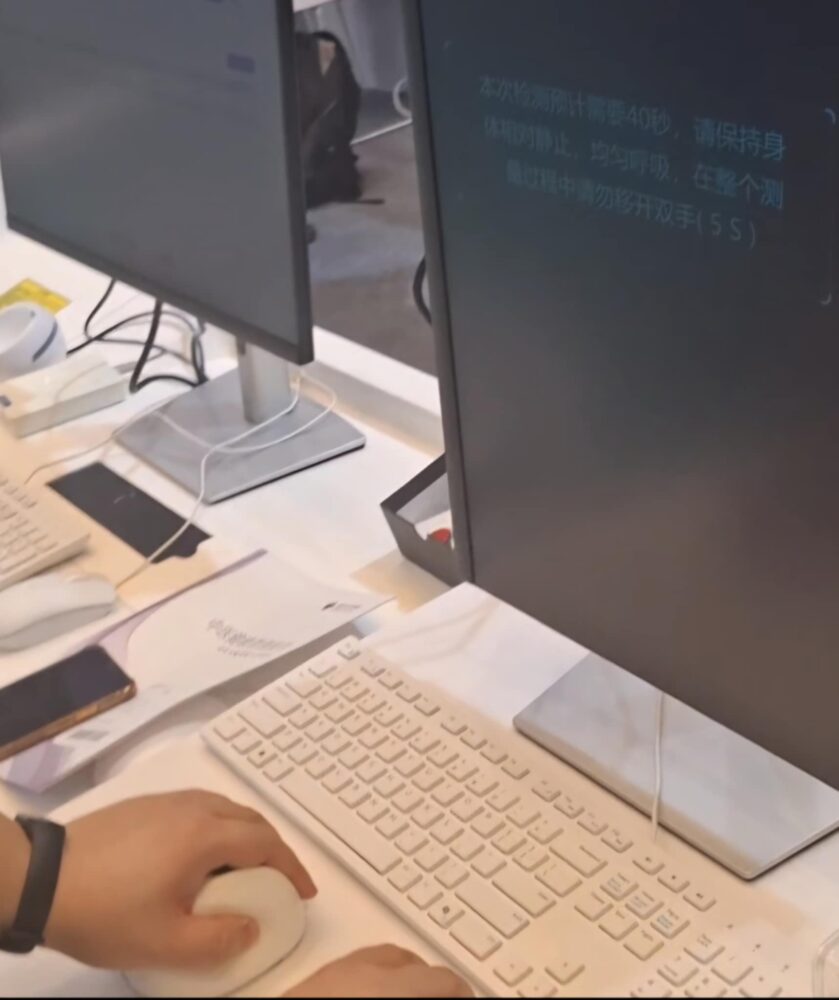
During the Canton Fair in China at the end of last year, representatives from MedValley Technology assisted me as I tested an AI-based device to analyze my health.
At medical trade fairs, journalists are often invited to observe innovation from a distance. At this year’s Canton Fair, I was invited to do something different: to become the subject of the technology I was there to report on.
MedValley Technology, a Chinese health-tech company specializing in intelligent diagnostic systems, asked me to undergo a rapid health analysis using its finger- and palm-based full-body assessment device. The test took only minutes. The results were immediate and unexpectedly precise.
What follows is not a clinical case study, but a professional reflection: on what the device detected, how it works, and what such technologies may mean for the evolving role of screening, prevention, and physician decision-making.
WATCH our video tour of Canton fair where we highlight several innovations, including devices by MedValley.
A Personal Health Snapshot: Functional Signals, Not Diagnoses
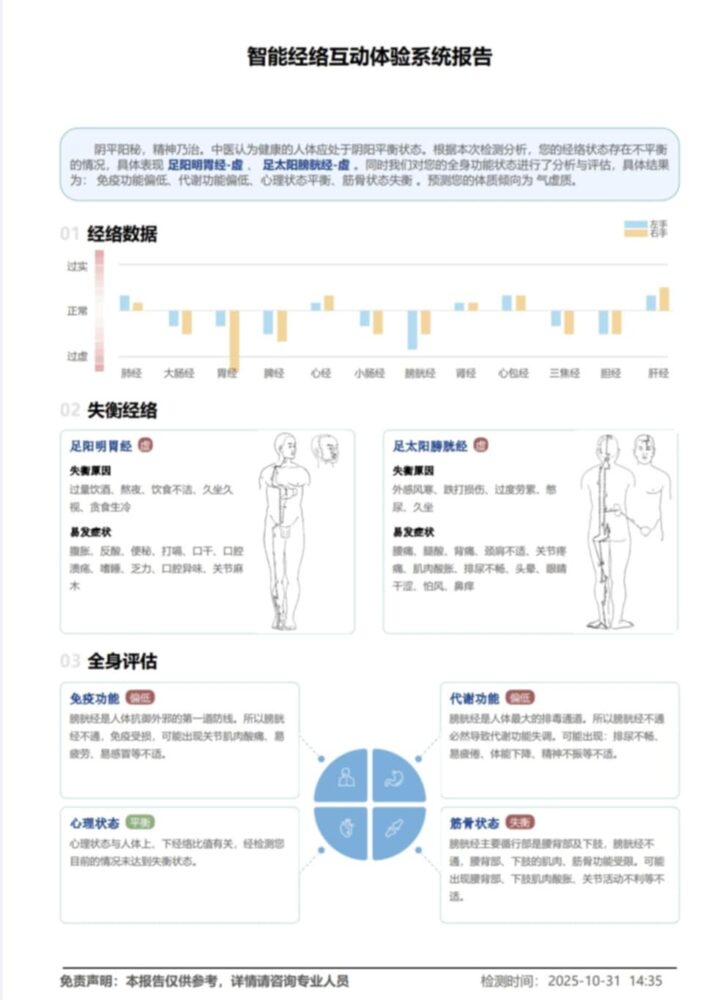
The MedValley analysis did not present itself as a diagnostic verdict. Instead, it delivered a functional overview, a map of physiological tendencies rather than disease labels.
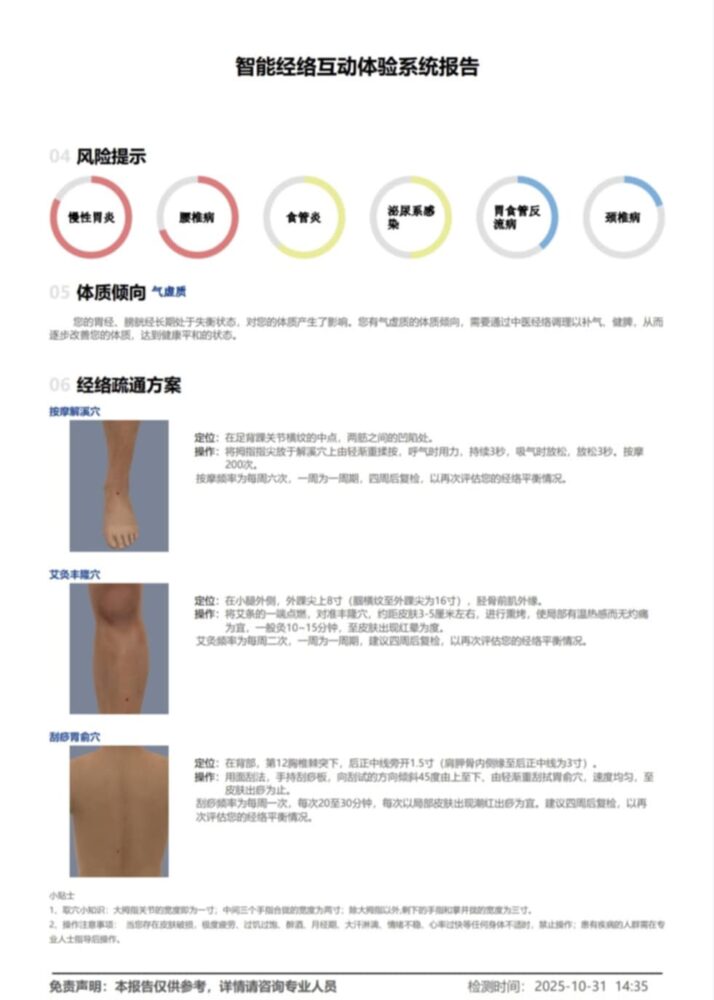
The scan highlighted several areas of imbalance: Signs of digestive stress, consistent with tendencies toward gastritis or gastroesophageal reflux; cervical and lumbar musculoskeletal strain, likely postural in origin; indicators of reduced metabolic efficiency and low energy reserve, described within the system as a “Qi-deficiency–type constitution;” mild immune fatigue and stress-related autonomic imbalance.
For a clinician, none of these findings are surprising in isolation. Long hours seated, irregular meals, frequent travel, and chronic cognitive load are well-known contributors to these patterns. What was striking was how quickly the system identified them and how closely they aligned with my own symptom awareness.
Importantly, the report was careful in its language. It did not claim pathology. Instead, it positioned the findings as early functional signals, prompting lifestyle correction or, if symptoms persist, further clinical evaluation. This distinction matters, especially as AI-assisted health tools enter mainstream practice.
How the MedValley System Works: Translating Subtle Signals into Structured Insight
MedValley’s device operates at the intersection of biosensing, pattern recognition, and integrative medical theory. Using fingertip and palm contact, the system captures multiple physiological parameters, including optical, electrical, and circulatory signals. These are then analyzed through proprietary algorithms. These algorithms draw on large datasets correlating signal patterns with functional states of organ systems, metabolism, and musculoskeletal stress.
From a biomedical perspective, this approach aligns with a growing interest in non-invasive physiological proxies: indirect markers that reflect systemic regulation rather than isolated biochemical endpoints. From an integrative medicine perspective, it digitizes what has traditionally been subjective — pulse, skin tone, circulation, and systemic balance — and renders it measurable and reproducible.
The output is not a diagnosis but a decision-support snapshot. For clinicians, this distinction is critical. The value lies not in replacing laboratory tests or imaging, but in prioritization: identifying which systems may warrant attention before symptoms escalate or pathology becomes established.
Using fingertip and palm contact, the system captures multiple physiological parameters.
Beyond One Device: MedValley’s Broader Vision for Intelligent Diagnostics
The palm-based analyzer is only one element of MedValley Technology’s broader ecosystem. The company has developed a portfolio of intelligent medical and educational devices, including:
- AI-assisted diagnostic simulation systems for physician training
- Digital “four-examination” platforms, integrating observation, inquiry, palpation, and analysis
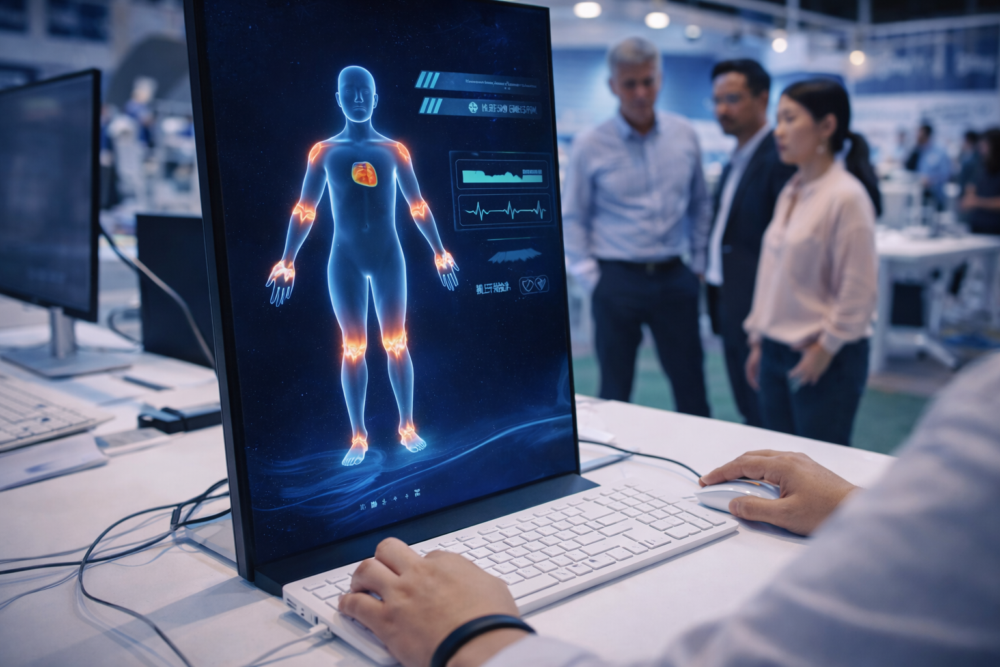
- Meridian and systemic assessment tools designed to visualize functional relationships within the body
- Smart consultation systems that standardize intake and data interpretation
What unifies these tools is a focus on standardization and objectification, long-standing challenges in both traditional and integrative medicine. By converting qualitative clinical impressions into structured datasets, MedValley aims to reduce variability, support education, and enhance longitudinal tracking.
For medical professionals, this raises important questions. Can such systems improve early detection of functional decline? Can they reduce unnecessary testing by guiding more targeted diagnostics? And can they enhance patient engagement by making abstract physiological concepts tangible?
Implications for Clinical Practice: Screening, Not Substitution
As someone trained to be skeptical of technological promises, I approached the MedValley experience cautiously. That caution remains, but it is now informed by firsthand exposure.
Used appropriately, systems like this occupy a space between wearables and formal diagnostics. They are not meant to replace clinical judgment, laboratory testing, or imaging. Their strength lies in pattern recognition and trend awareness, especially in asymptomatic or subclinical populations.
For primary care, occupational health, rehabilitation, and preventive medicine, such tools may offer value as: rapid screening instruments, patient education aids, baseline and follow-up comparison tools, and triage support for further investigation.
The risk, of course, lies in overinterpretation. Without proper framing, patients may mistake functional imbalance for disease. Or, conversely, dismiss symptoms because a screening tool appears reassuring. The responsibility, therefore, remains with clinicians to contextualize results and integrate them into evidence-based care pathways.
A Measured Conclusion: Precision Meets Prevention
My MedValley health analysis did not tell me anything I did not already suspect. What it did was confirm those suspicions with structured, data-driven clarity, and do so in minutes, without needles, imaging, or laboratory delays.
For medical professionals, the significance is not the novelty of sensing technology, but the direction it represents. Healthcare is moving toward earlier, gentler, and more continuous insight into human physiology. The challenge will be to integrate these tools responsibly as complements, not competitors, to clinical medicine.
If the future of healthcare is preventive, it will depend not only on innovation, but on discernment. MedValley’s technology suggests one possible path forward where intelligence listens carefully to the body, and clinicians decide what comes next.