



In a hurry? Here are the key takeaways:
- Women’s health devices dominated the 2025 show floor, with OPTOMIC releasing three new products aimed at mobility-restricted and training-intensive clinical environments.
- AIDOT’s Cerviray AI gained attention for enabling remote cervical cancer screening and early triage in low-resource settings.
- Korean biotech ATTOPLEX previewed its fully automated GenHome molecular diagnostic system ahead of its 2026 commercial launch.
- Young-in Biotech formally launched its ESWT Array Piezo system in 2025, aiming to expand regenerative treatment pathways for orthopaedics and pain therapy.
MEDICA 2025, held from 17–20 November in Düsseldorf, delivered a clear message: medical device innovation is consolidating around three drivers—automation, accessibility, and specialist-level accuracy outside specialist settings. From femtech to molecular point-of-care testing (POCT) and regenerative treatment devices, manufacturers used the fair to introduce next-generation platforms and products designed for hospitals, training facilities, and emergent community-care models.
While AI-assisted diagnostics made headlines, it was the convergence of ergonomics, mobility, and integrated digital workflows that defined this year’s product announcements. Nowhere was this more visible than in the strong showing of female-health solutions and the expansion of Asian medical technology firms into Europe’s competitive device market.
Upswing for Women’s Health
Spanish manufacturer OPTOMIC unveiled additions to its women’s health portfolio. The display reinforced its role as a long-standing supplier of gynaecology workstations, colposcopes, and endoscopy trolleys to markets in Europe, Japan, and the United States.
The new gynaecologic examination chair from the OP-MH Series. The model incorporates motorized leg rests and provides gynaecology and obstetrics positioning options. As Marketing Manager Pablo Rial emphasized:
“Our new gynaecologic examination chair from our OP-MH Series that can lift up to 310 kg.”
Designed for elderly patients and individuals with reduced mobility, the chair aligns with broader market trends prioritizing accessibility and patient comfort. Demand for bariatric-capable, ergonomically adaptable exam furniture has risen steadily in Europe and the US—an area where OPTOMIC now positions itself competitively.
“Secondly, with OP-LAB Master we release a new, versatile multi-purpose training unit for surgical and diagnostic techniques,” Rial explained.
The motorized system can be equipped with a monitor, microscope, beam splitter, and a pneumatic bowl for holding anatomical samples, making it attractive to universities, hospitals, and surgical training centres seeking scalable simulation environments.


Diagnostics in Femtech: Cerviray AI’s Wireless Cervical Cancer Screening Device
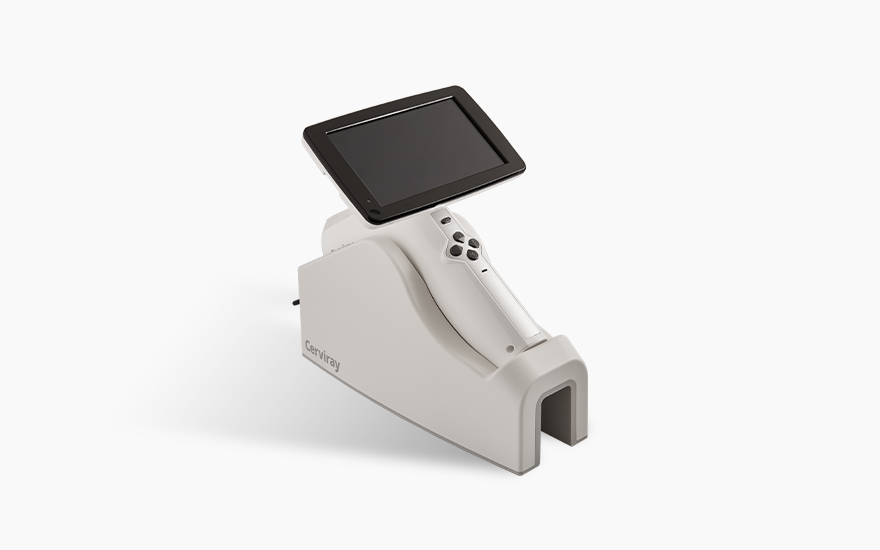
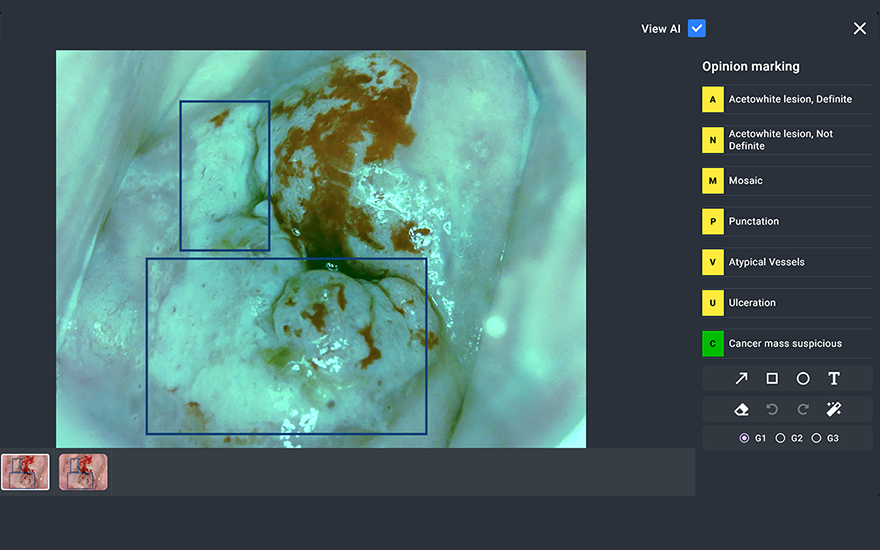
On the femtech diagnostics side, Korean manufacturer AIDOT Inc. showcased Cerviray AI, a wireless cervical cancer screening device that uses deep learning models trained on expert oncologist data.
“This mobile device works AI-based and provides four-stage AI screening results in order to detect abnormal lesions for cancer risk assessment,” said Yonghae Ra of AIDOT.
A distinguishing feature is its support for telemedical workflows, allowing remote interpretation by clinicians and enabling deployment in areas with limited access to specialist gynaecology services. Cerviray AI has already gained traction in Vietnam, Indonesia, and Korea—markets prioritizing early-stage cervical cancer detection. In Vietnam, a study shows a decrease in incidence rates, concluding that the introduction of a national screening program could contribute to the decreasing incidence and mortality trends of cervical cancer.
Automation at the Point of Care: ATTOPLEX Introduces GenHome Array
South Korea’s ATTOPLEX, a biotech startup increasingly visible in the POCT landscape, presented its GenHome Array, an automated molecular diagnostic system designed for rapid testing of respiratory, infectious, and targeted genomic markers. The system integrates nucleic acid extraction, RT-LAMP amplification, and simultaneous processing of up to eight samples—delivering lab-grade results in under 30 minutes.
Assistant Manager Jiwoo Choi explained at the fair:
“Our newest release offers fast, accurate lab-grade results in under 30 minutes… even without trained medical staff and complex laboratory equipment.”
What sets GenHome apart within the crowded POCT market is its ambition to combine automation, portability, and multiplexing. This positions GenHome as a potential competitor to Western POCT platforms that currently dominate emergency departments and small clinics.
ATTOPLEX confirmed that the system is slated for full commercial launch in 2026, with regulatory pathways underway in multiple Asian markets and pre-launch evaluations occurring in emergency and home-care pilots.

Regenerative Pain Therapy Advances: Young-in’s ESWT Array Piezo
Korean manufacturer Young-in Biotech used MEDICA 2025 to spotlight its latest orthopaedic treatment platform, the ESWT Array Piezo, officially released earlier in 2025. The extracorporeal shockwave therapy device uses high-energy acoustic pressure waves to induce cellular micro-trauma, stimulate osteogenesis, and support tissue regeneration.
Director Gue-Jin Chae explained the device’s clinical scope:
“You can use it effectively for shoulder pain or to break down calcifications in tendons, such as plantar fasciitis or heel spurs.”
Piezoelectric shockwave systems continue to gain ground over pneumatic alternatives due to their precision, durability, and ability to localize energy delivery. Young-in’s model emphasizes consistency of pulse output—a key factor for musculoskeletal clinics treating chronic tendinopathies, calcific deposits, and recalcitrant soft-tissue injuries.
The 2025 launch aligns with a broader rise in non-invasive regenerative modalities, responding to patient demand for alternatives to surgical intervention, and offering hospitals an efficient adjunct to physiotherapy, orthopaedics, and sports medicine protocols.
MEDICA Signals a Shift Toward Accessible, AI-Enabled, and Regenerative Care
MEDICA 2025 showcased a sector moving rapidly toward automation, mobility, and clinical decentralization. From AI-driven cervical screening to automated molecular POCT and advanced shockwave systems, device manufacturers are addressing both global specialist shortages and the growing need for outreach-capable medical technologies.
For clinicians, the emerging trend is clear: the next generation of devices will not only improve diagnostic accuracy and therapeutic outcomes but will increasingly meet patients where they are—whether in hospitals, decentralized clinics, or remote community settings.